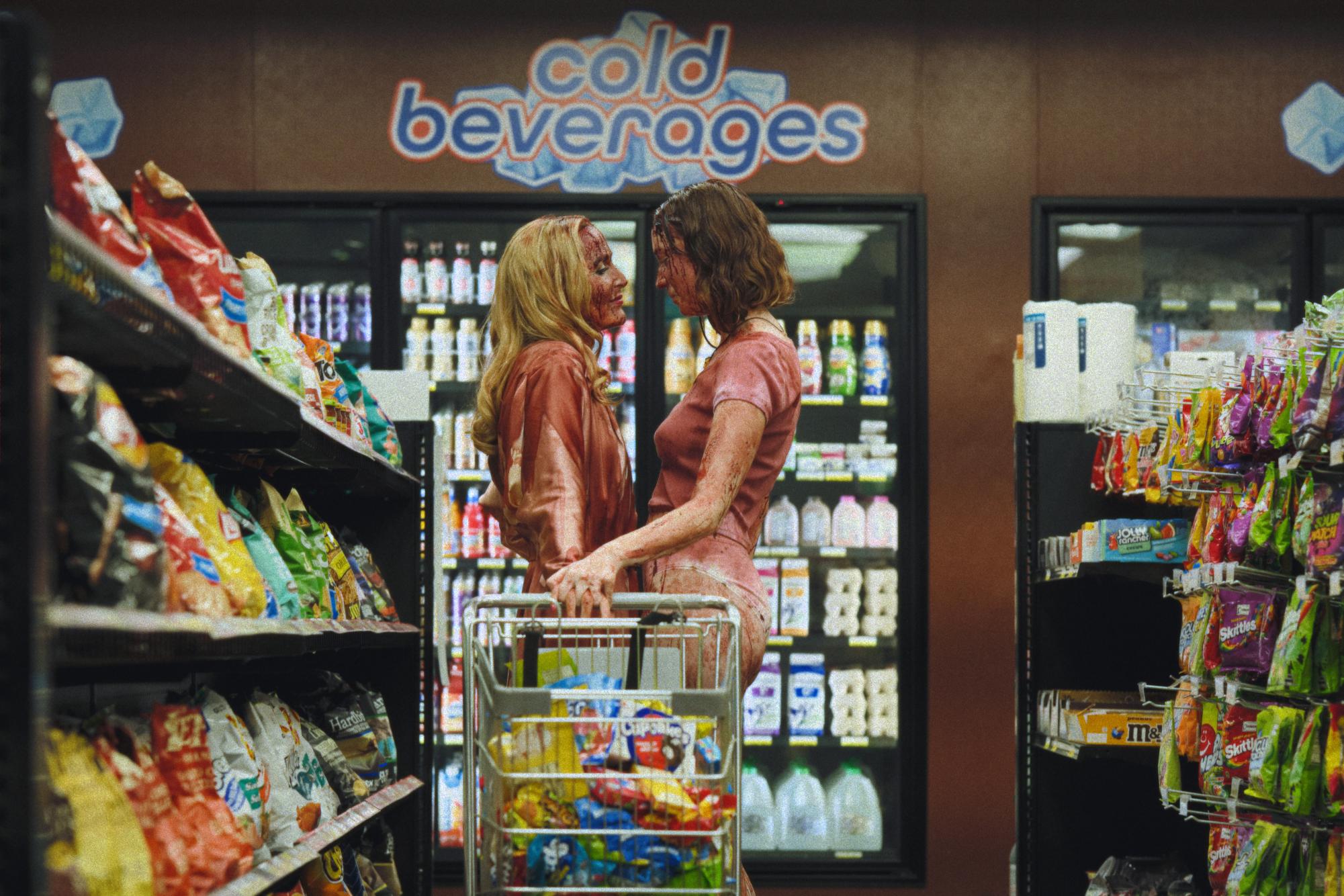
Writer-director Jane Schoenbrun is single-handedly revolutionizing the horror movie genre.
“Teenage Sex and Death at Camp Miasma” released on Aug. 14. Its premiere at the Cannes Film Festival in May earned the film the Queer Palm award for reclaiming slasher tropes to explore trans identity, dysphoria and disassociation. It is certified fresh with a 96% critics score from Rotten Tomatoes.
Hannah Einbinder, who played Ava Daniels in the comedy series “Hacks”, stars as Kris, a rising queer filmmaker tasked with resurrecting “Camp Miasma,” a controversial and problematic ‘90s horror movie franchise. Kris travels to the remote campgrounds where the first film was set. There, she meets the reclusive Billy Presley, star of the original film, who had faded into obscurity.
Gillian Anderson, who portrayed Dana Scully in “The X Files”, plays Billy. She has the accent, wit and magnetism of a washed-up Dolly Parton. As the two bond, Billy pulls Kris into her detached reality, blurring into fantasy as the two live out the “Camp Miasma” slasher narrative.
The lesbian film market is oversaturated with age-gap relationships and period pieces, as the ‘90s now qualify, but Schoenbrun used this casting to masterfully execute their unique vision of horror.
Einbinder portrays the niche role of woke, queer, loser millennial against Anderson’s refined, elegant and poised nature, which makes for a compelling and seductive dynamic. Their unique chemistry is what makes Schoenbrun’s depiction of horror so captivating.
In a script scant of jump-scares, this atypical horror film is rife with comedy, romance and the unexpected. These genres only emphasize Anderson’s commanding performance.
She will likely have audiences wrapped around her finger. In my theater, you could hear sounds of shifting in seats and soft chuckling as she somehow managed to make eating chicken tenders sexy. The audience was often belly-laughing until the shot cut back to Anderson, who would have a long, unexplained look in her eye. There was sudden and complete stillness, the audience holding its breath.
The film has your typical slasher architypes. Namely, “Camp Miasma” franchise mascot Little Death, a spear-wielding killer from the bottom of the lake with a square, boxy head reminiscent of a “Saw” trap.
The gore of Little Death’s killing sprees is so comical that the film hardly feels like a slasher. The film’s suspense is born in the sexual tension between Kris and Billy, and relief from any unease is found in their unfolding romance.
Schoenbrun’s artistic style facilitates the muddying of reality and fantasy for the lead characters and the audience alike.
Film quality, style and grain match modern scenes with Kris contrasted against the ‘90s era Billy lives in. The two meld into one as the story develops, and the audience can no longer separate the difference between them.
Alex G composed the score and soundtrack with an apt contrast of dramatic or suspenseful scenes with gentle, romantic music. It underscores the disconnect Schoenbrun explores in the film.
The film is meta, but it doesn’t execute it how modern horror films do. It’s part of a larger conversation, not just a throwaway line.
“Teenage Sex and Death at Camp Miasma” knows exactly what it is and what it has to say.
Schoenbrun approaches horror in a fresh, exciting way. They ask new questions and tell untold stories while paying homage to the genre that inspires them.
In the end, they manage to hold true to what horror boils down to: flesh and fluids.