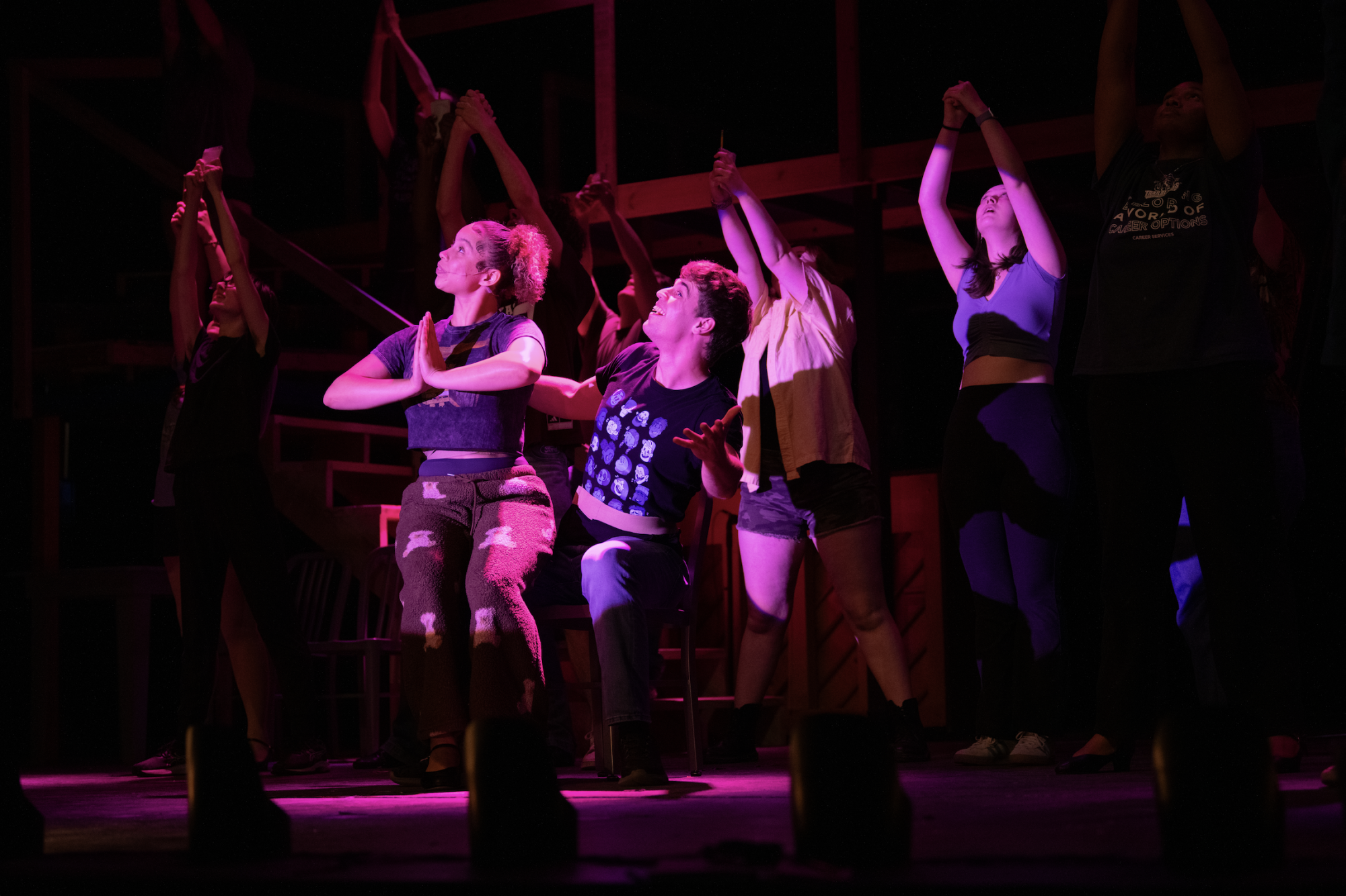
Four campus drama departments have had their budgets cut and will have to cancel productions this year.
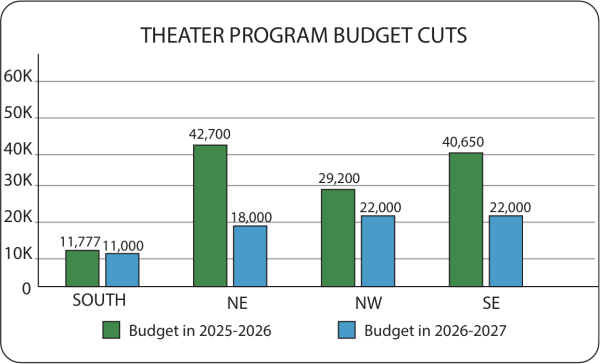
NE, SE, NW and South departments have been cut by 57%, 46%, 25% and 7%, respectively, according to the annual budget released Sept. 18.
Students said they have already felt the impact.
NE Campus drama students waited anxiously during the last week of August to hear about callbacks after auditioning for the fall play “Arsenic and Old Lace”. Instead, they were told on Sept. 2 that, due to the budget cuts, the department would be cancelling the fall musical and postponing the production of the play.
The NE Playhouse has put on two shows per semester for as long as drama student Madelynn Sill can remember. She’s been heavily involved in the program for several years and said the budget cuts were shocking.
“We’ve worked for the past few years to bring people in and to build this community up. It’s been feeling a bit like betrayal,” she said. “I’ve worked too hard to be short-ended by the powers that be.”
These cuts come just after the NE drama department sold over 1,000 tickets to its production of “Chicago” in April, requiring them to add extra chairs in the aisles.
“We all thought that the success of Chicago would mean great things for our department, and it’s incredibly heartbreaking to know that it’s not,” Sill said.
NE student Trey King joined the drama program in the spring semester because of his lifelong affinity for theater and was excited to know there would be shows throughout the year.
“The general consensus of the students share a similar tone of sadness and disappointment,” he said. “Since the cuts, it’s been hitting them like a truck.”
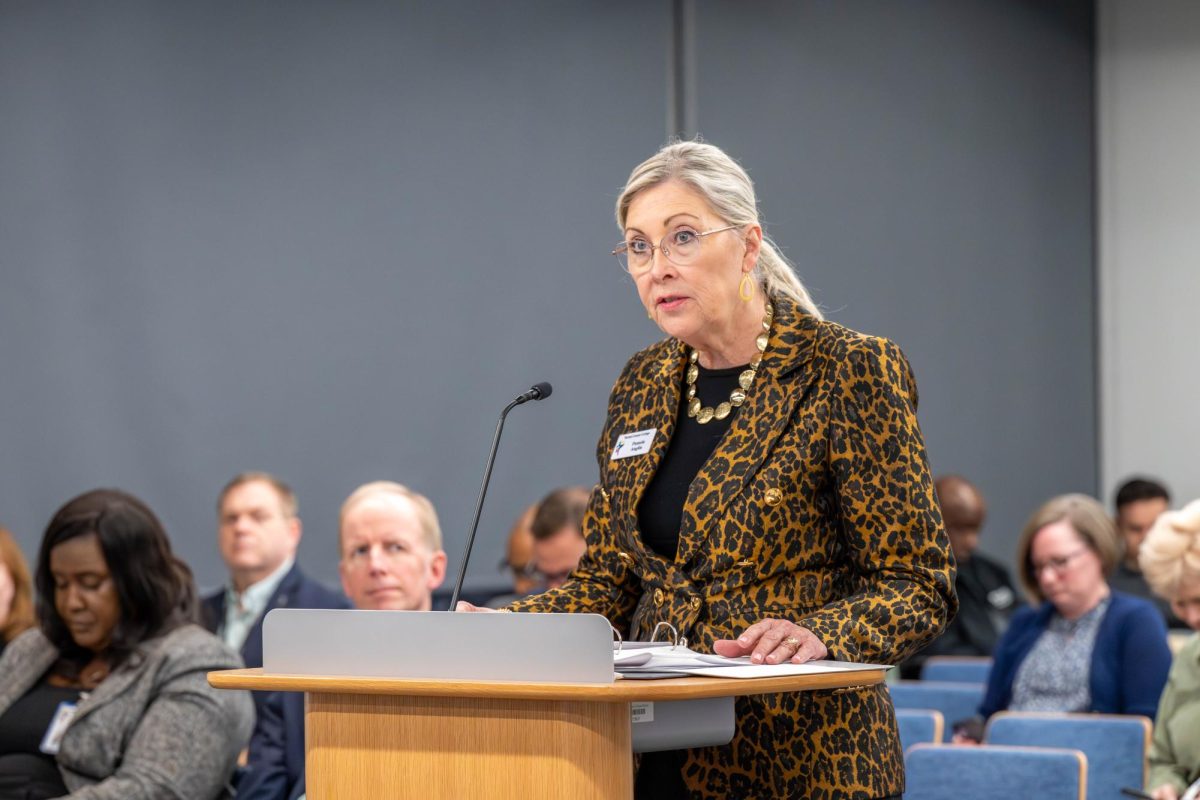
Texas community colleges receive outcome-based funding. Colleges statewide outperformed what the state can afford to pay, so TCC received $4.1 million less than anticipated, according to TCC Chief Financial Officer Pam Anglin in a board meeting on Aug. 6.
Damek Salazar, a NW Campus arts and humanities instructional support staffer, said their department was told to anticipate a 10% cut but to just “wait and see” as that number could change.
“We knew it was coming, but then we were a little surprised at how much it was actually cut back,” Salazar said.
All three departments said they are having to pivot from their original set designs and construction to something new, given these reductions.
Angela Inman, a SE associate professor of drama, said the department had planned a full season with three shows, but they will not be able to produce the student-written play planned for the spring and will now only do the musical.
To make that possible, she said the department will have to adjust the original design plans for the fall play and rely on reusing what they have in stock or items they can borrow.
“These items may not necessarily be the best design choices, which is sad, because we are supposed to be modeling expectations for how designers work in professional theatre,” Inman said. “This is why we do the plays – to train students to think and work as professional theatre artists.”
Salazar said sets and rights make musical productions very expensive, but they’re the big-ticket recruiting items. He said putting on shows like “Chicago” or “Hadestown” brings students out for auditions, so when NW needs to reduce from four to three shows in a semester, recruitment will be more challenging.
“Despite the lack of funds, we are being told to produce as usual, which is unrealistic, and quite frankly, very stressful for the faculty and staff who must somehow figure out how to make it all work,” Inman said. “I’m not sure that administrators who make the budget decisions fully understand how much it costs to produce something like a musical, and certainly, faculty were never consulted.”
The NE Playhouse is offering free tickets to see the play “Lobby Hero” Sept. 30-Oct. 3.
SE will be running “The Importance of Being Earnest” Nov. 11-13, and South Campus will be creating a Halloween show with details to come.
NW will be showing “The Wind in the Willows” Oct. 8-10 and “It Can’t Happen Here” Nov. 17-21.
“I really want everybody to get the funding that they need to be able to create the things that they are beyond capable of and deserving of because the last people who should have to suffer through bureaucracy and red tape and financial mishaps are the students,” Sill said.