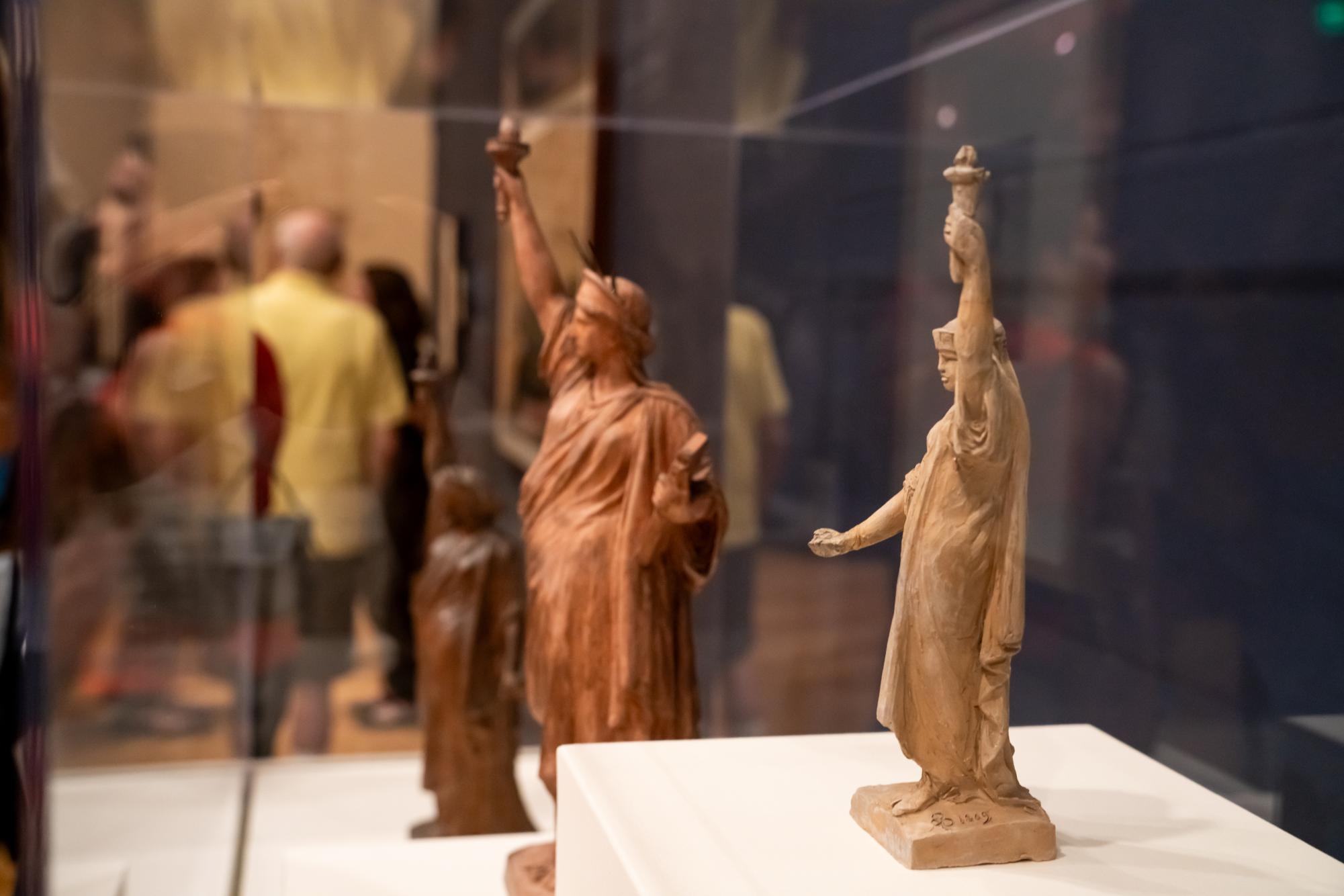

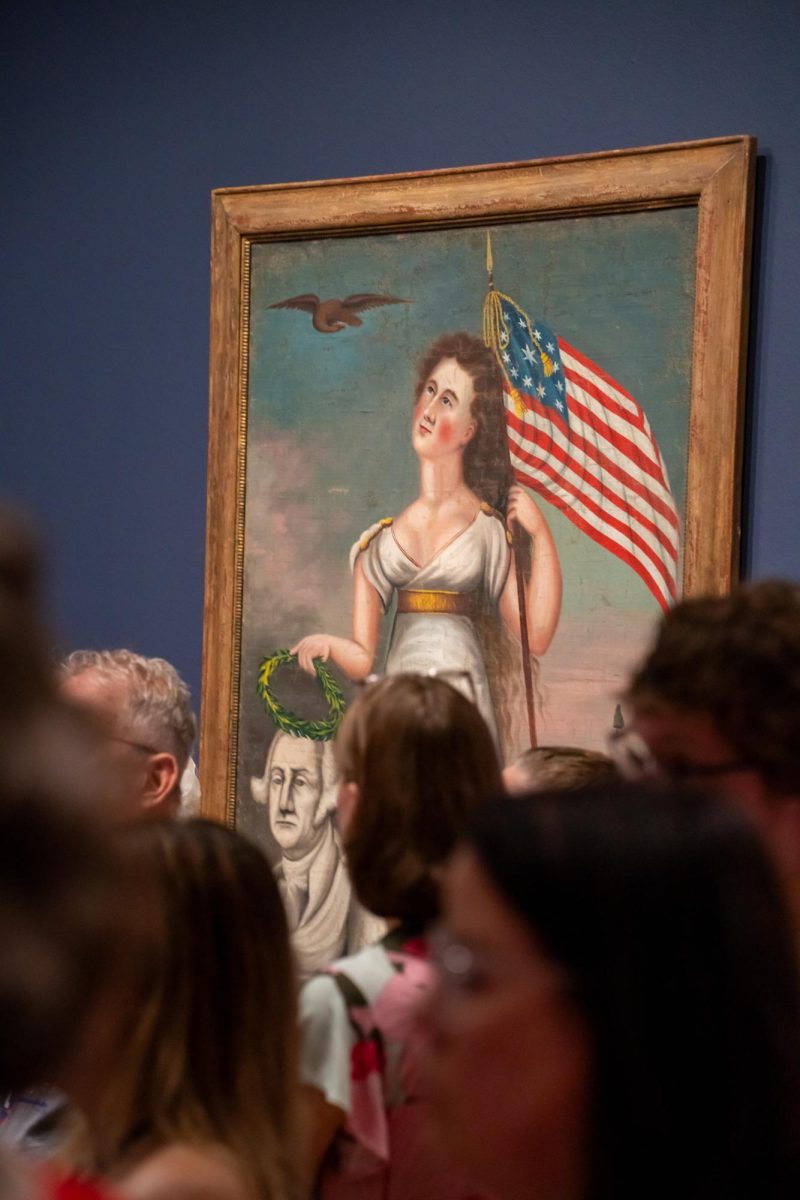
The Amon Carter Museum of American Art dissects the evolution of America’s most iconic monument, Lady Liberty, in its new exhibition “The Statue of Liberty from Bartholdi to Warhol,” open until Jan. 3.
Director of Collections and Exhibitions at the Amon Carter Andrew Eschelbacher guided a tour for the opening day of the exhibition, providing extra insight into the many works.
The tour followed a roughly chronological order, going from its original preparation and what caused it to change and grow as the symbol it was. The Statue of Liberty was erected on Oct. 28, 1886, as a symbol of America and Trans-Atlantic relations, though this feeling was not universal
“(This) was a hugely patriotic day but also hugely controversial,” Eschelbacher said. “Suffragettes said, ‘How could the statue be a woman when women cannot vote?’”
With the Suffragettes were Asian and African Americans who saw this beacon of liberty as an exclusive facade.
This is at the core of the exhibit, how its many interpretations from various groups and artists can coexist, being both a symbol of America’s grandeur and the “Mother of Exiles” simultaneously.
“It’s born into the monument’s DNA,” Eschelbacher said. “There’s not a dichotomy – it can be patriotic and evoke these questions at the same time.”
The exhibit and tour delve into the history of the statue, looking at the vison Frédéric Bartholdi’s had for the Statue of Liberty, placed right in the center of New York Harbor as he sold smaller terracotta and invited photographers to build traction and funding for the monument.
Later during the World Wars and Great Depression, it became a symbol of the nation and freedom with its wartime posters — used not only to rally the American public but the allied front as a whole.
“It’s so associated with those (soldiers) who came back to New York,” Eschelbacher said.
For New York City specifically, the statue is used to instantly identify the city, San Francisco has the Golden Gate Bridge, London has Big Bend, and New York has Lady Liberty.
From there, the works illustrate how the statue exploded into a household object or shorthand to just represent America, in pop culture with screens showing iconic scenes from “Planet of the Apes (1986)” or “Spider-Man: No Way Home” — in consumer culture as well with a large wall of toys, souvenirs and clothing.
Further reimagined through the eyes and values of those who critique the universality of the torch, or changing the imagery to represent what they view as a piece of freedom.
The statue is internationally recognized, on its engineering, cultural, and artistic marvel; the exhibit showed the history of the Statue of Liberty from its creator, to countless artists, to international proliferation. Its adoption from so many different types of Americans and how it manifests itself it so many different styles.
“It’s not just a New York symbol,” Eschelbacher said.