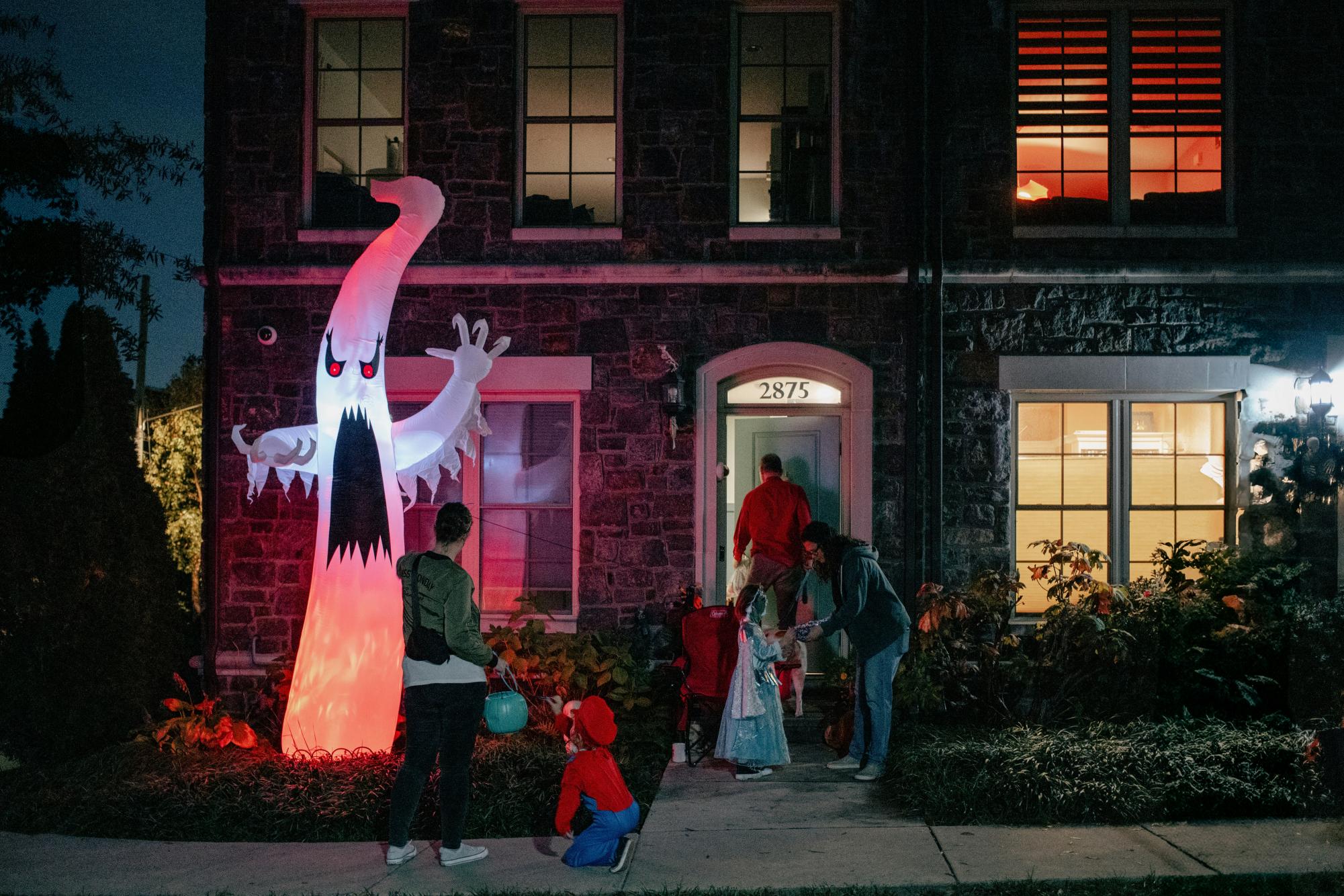
As a kid, I dreamed of the Halloween presented in movies like “Hocus Pocus,’ where leaves are falling and groups of kids, teens and adults alike roam the streets late into the night. As the years have passed, the streets have become bare.
On paper, Halloween is thriving. The National Retail Federation expects a record $13.5 billion in spending this year. But a holiday isn’t measured in receipts. It’s measured in porch lights, screams turned into laughter and footsteps on the sidewalk, and those are what I miss the most.
Some could say this feeling of loss for the holiday is due to nostalgia of trick-or-treating as kids, but the loss is real. It comes down to three things: trunk-or-treats, the COVID-19 pandemic and young people’s inability to afford homes.
Trunk-or-treats, where families decorate their car trunks in a parking lot and kids walk from car to car collecting candy, have become increasingly popular. But this method is killing Halloween by means of convenience. Nobody has to decorate a house, and the events are usually held earlier in the day, or on another day.
But Halloween is Oct. 31, not a day before nor a day after. So why are people celebrating it on another day? Convenience, and it’s stripping away what makes the holiday special.
The best part of Halloween is the day itself. Watching the clock, counting down the hours until you get home and dress up like someone else and staying out late. Even if that means being tired the next day, the universal struggle is what gets us through.
The pandemic made staying in feel normal, and neighbors have stopped talking. The American Enterprise Institute’s Survey Center on American Life found that 40% of Americans talk to their neighbors at least a few times a week, down from 59% in 2012. Stanford data showed that neighbor interaction hit the lowest point in 2021 and has yet to return to 2017 levels.
The pandemic didn’t start this retreat, but it pushed it along. Now, everyone quickly rushes inside whenever they get home.
That habit has cost us Halloween. When you don’t know the people next door, decorating and handing out candy feels like performing for strangers, and it’s hard to want to walk streets that aren’t familiar. I miss the families who set up lawn chairs and firepits in their driveways with spooky music playing, welcoming everyone to stop by.
But this isn’t just about blaming everyday people. The economy plays a part, too. The typical first-time homebuyer is now 40, a record high, according to the National Association of Realtors, and only 24% of recent buyers had children under 18, an all-time low. Fewer young families on the block means fewer trick-or-treaters at the door and fewer reasons for neighbors to light up their porches.
The holiday itself is also getting pricier. According to an article published by Talk Business and Politics, Bankrate economists estimate that a candy budget now buys 40% less candy by weight than it did in 2020. Americans are paying for less.
Halloween isn’t dead. But it takes more than a shopping list. It’s spooky music drifting down the block, parents chilling in driveways and a kid knocking on a door he has never knocked on before.
Bringing that back doesn’t take a movie set. It takes a porch light, a bowl of candy and a willingness to say hello. This Oct. 31, skip the parking lot, at least for one night, and walk around the neighborhood and knock on the door. The streets will only fill up if we show up.