Recent court rulings have allowed a group of football players, some of whom were on NFL rosters this offseason, to return to college football.
In June, a rule change was made granting NCAA athletes five years of playing eligibility instead of four. The 2022 recruiting class was on the cusp of this rule change but was only granted four years of eligibility by the NCAA.
Many of these players have successfully filed lawsuits, arguing that it’s arbitrary and unfair for future classes to get five years while they are treated as a bridge class and given fewer opportunities.
So far, the courts have gotten it right by seeing through the dysfunction of the NCAA and ruling in favor of these players being able to return to college football if they wish.
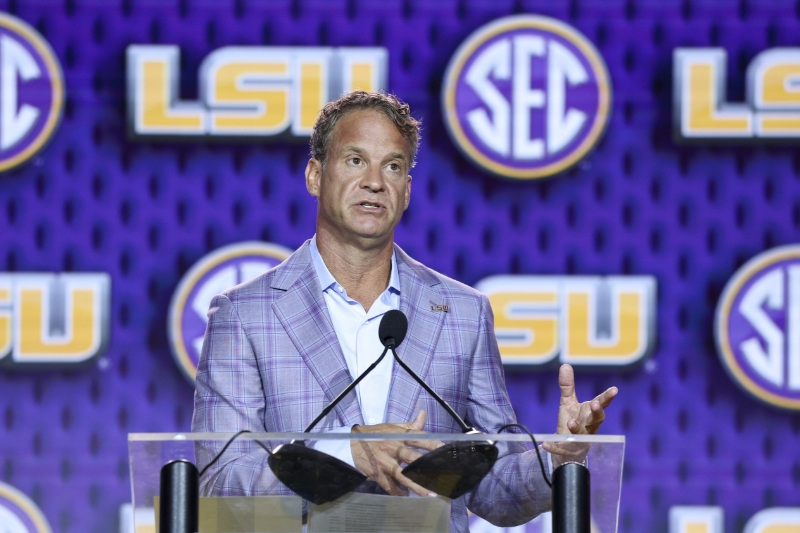
As usual, the sports world is mad at LSU’s polarizing coach Lane Kiffin. This time it’s for pursuing Dae’Quan Wright, a tight end recently granted a fifth year of eligibility by a Louisiana judge.
The argument against Kiffin is that Wright technically played for the Cleveland Browns, even though he went undrafted, played in no preseason games and was waived before the start of the NFL regular season.
There are valid reasons for so many people to dislike Kiffin. He was the coach of Ole Miss last year and bailed on his team right before the College Football Playoff to take the more prestigious job at LSU, a conference rival.
However, Wright actually played for Ole Miss last season and still chose to follow Kiffin to LSU. According to Kiffin, multiple other schools pursued Wright, but he ultimately chose LSU.
Since the rulings, the two major conferences of college football — the Big Ten and the SEC — have attempted to make rules severely punishing schools that sign players once rostered by NFL teams.
LSU is part of the SEC. However, the SEC was specifically named in a temporary restraining order, forcing it to comply with the court. This will allow Wright to play without consequence for now. But the legal battle isn’t over. And that’s only one of the many NCAA conferences.
The virtue signaling is especially rich coming from the Big Ten, represented by the last three national champions — Michigan, Ohio State and Indiana. While Indiana deserves respect, Michigan was caught cheating and Ohio State’s largest donor is Les Wexner, widely known for his ties to Jeffrey Epstein. Ohio State is actually home of the Les Wexner Football Complex. Earlier this year, the university rejected a request to remove his name from the facility. Meanwhile, the conference is blatantly defying court rulings.
Yet, giving players equal opportunities is a bridge too far for them.
Why should players and coaches be punished for legally trying to succeed?
No one is talking about three-time Super Bowl champion Patrick Mahomes returning to play for his alma mater, Texas Tech. Wright has never taken an NFL snap and was waived by arguably the worst team in the league. He isn’t currently ready for the NFL.
It’s impossible to imagine a world where Wright doesn’t return to college if given the opportunity. He would likely make more money now that college athletes get paid, and he would have another season to refine his skills, ideally resulting in actually being drafted by an NFL team and having a concrete spot on the roster.
Obviously, the skill gap between the NFL and college football is massive, so having college players who have gone through an NFL training camp isn’t ideal. But this is an isolated incident involving one class of athletes, and it’s a problem caused by the NCAA’s dysfunction. So the NCAA should have to lay in the bed it made this season.
Judges should have more power than NCAA conferences. And for a sport historically connected with players being unfairly compensated, it’s incredibly tone deaf to stifle opportunities for this class while grandstanding about maintaining the purity of the sport.
The NCAA needs to stop fighting this and give these athletes a fifth year of eligibility like it should have in the first place.