Black History Month has celebrated the achievements of African Americans annually since 1915, marking this year as it’s 100th anniversary. From civil rights activists to musicians, novelists, entrepreneurs and scientists, this month is time to honor the contributions and legacies of African Americans throughout U.S. history. Since 1976, every U.S. president has designated February as Black History Month. The month of February was chosen to recognize Black history because the birthdays of famous abolitionists, Fredrick Douglass and Abraham Lincoln, fall during this month. TCC students from different campuses share what Black History Month means to them and the Black figures who’s achievements inspire them.
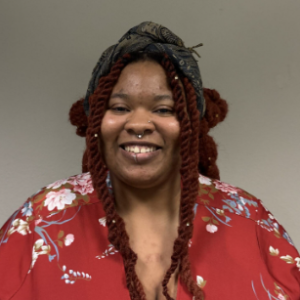 Berry Varnado, South Campus
“Black History Month, for me, just means being able to also keep myself informed. Well, to keep myself informed of all the things that we weren’t taught growing up and keep the exposure available to people who don’t grow up in the culture. It’s basically about awareness and who to thank for what, and just to be more empowered in our own culture that’s not often talked about or shared.”
Claudett Colvin
Suggested by NW student Brianna Yate.
Claudett Colvin was a civil rights activist. On March 2, 1955, 15-year-old Colvin boarded a bus home from Booker T. Washington High School in Montgomery, Alabama. The white section filled up and a white woman was left standing. When the row Colvin was sitting on was told to move for the woman, three students got up but not her. She was roughly arrested by two cops, pulled off the bus, assaulted and charged with three crimes. She would later become one of the plaintiffs on the federal case, Browder v. Gayle, which led to the desegregation of Montgomery’s buses.
“Sometimes you have to stand up for what you think is right even if you have to stand alone.”
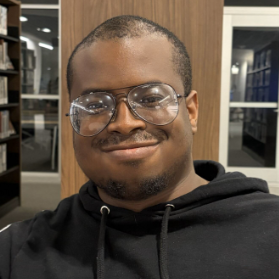 Temitope Odubona, SE Campus
“What it means to me is the celebration of all the successes of Black men and women, and all the sacrifices they went through to help people like me have the freedom to do what we want to do. I believe that Black History Month shouldn’t just be this month, should be year-round, because every day Black people always strive to be the best that we can be.”
Madam CJ Walker
Suggested by TR student Gianna Walker.
Madam CJ Walker was born Sarah Breedlove in 1867 in Delta, Louisiana on the same plantation her parents had been enslaved before the end of the Civil War. She was the first of her siblings to be born free after the Emancipation Proclamation. From farm laborer to owning the most infamous salon of the Harlem Renaissance, Madam CJ Walker is known as the first female self-made millionaire in America. She made her fortune from her homemade line of hair care products for Black women and used her fortune to fund scholarships for women at the Tuskegee Institute, the NAACP and the Black YMCA.
“I want you to understand that your first duty is to humanity. I want others to look at us and see that we care not just about ourselves but about others.”
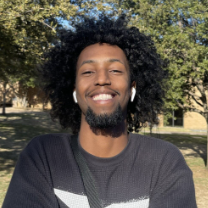 Ahmed Ahmed, NE Campus
“Well, I’m not only a Black man, I’m also a Muslim. So, right now, around February 17th, it’s going to be as well the Holy Month of Ramadan, and as a Black man in a holy month we have to fast 30 days. I mean, it’s amazing. It’s amazing especially how Black History Month, it’s not only just a symbol. … It highlights every single African American that mean a lot. … I mean, I really just walk around and think to myself that all my brothers and sisters who have worked hard, very, very much over the years kind of represent not only themselves but also represent every other Black brothers and sisters out there.”
James Baldwin
Suggested by TR student Sharie Brooks.
James Baldwin was a novelist and civil rights activist known for his works “Go Tell it on the Mountain” and “The Fire Next Time,” which addressed the struggles of African Americans during the early 21st-century. He advocated for social justice and equality through his writing and public speaking. Criticized for moving to Paris at 24 and writing novels condemning America, he said it was because he couldn’t tolerate the racism and homophobia that made him a target of violence there. An advocate of universal love, his voice is essential to the civil rights movements by expressing the Black identity and the state of racial struggle.
“I love America more than any other country in this world and exactly for this reason, I insist on the right to criticize her perpetually.”
 Mugoli Mulemangabo, NW Campus
“I think it’s a reminder that we’re all people. We’re all the same. Color doesn’t matter. And it’s just a month to remind us that we’re all united, you know? Like I said, different color doesn’t matter, we shed the same blood. So, I bleed red, you bleed red. [The] month is just like a reminder, a unity, that we’re all one.”
Eddie Hazel
Suggested by South student Jermiah James.
Eddie Hazel, founding guitarist for Parliament Funkadelic Crew, was a pioneer in blending spaced-out psychedelic rock and 70s funk. His solo in Funkadelic’s “Maggot Brain,” a 10-minute-long bluesy and emotional tune, acknowledged by artists as one of the most important guitar anthems of the decade. Hazel worked as a Motown guitarist and composer for artists like the Temptations and served as a musical director for Bonnie Pointer. The Brooklyn-born artist taught himself to play the guitar after his brother bought it for him. By 19, Hazel was touring with Funkadelic, and his acid-rock fusion with funk was recorded.
“Just keep playing that over and over.”
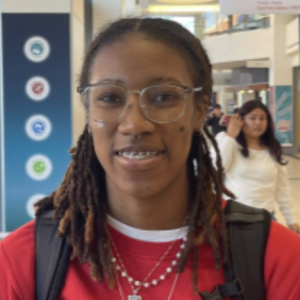 Keirson Gray, TR Campus
“Well, in today’s day and age, it means a lot to me personally because things are becoming harder for Black people. But to see that we’re still persevering and representing means a lot to me, and that’s being recognized means a lot to me and inspires me to kind of be the person to keep going.”
Muhammad Ali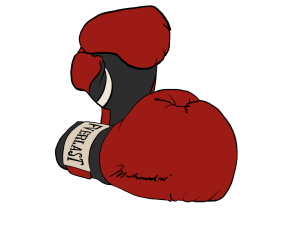
Suggested by TR student Paris Lewis
Muhammad Ali was a professional boxer and activist widely known by the nickname “the Greatest.” Regarded by some as the greatest heavyweight boxer of all time, at 18 Ali had two national Golden Gloves titles, two Amateur Athletic Union national titles and 100 victories against eight losses. In 1960, he won the light heavyweight gold medal in the Summer Olympics. However, his titles were revoked and his boxing license suspended after refusing to serve in the Vietnam War. For three years he protested against the war and in 1970 support for Ali grew, and the New York State Supreme Court ordered his license reinstated, and he returned to the ring.
“Impossible is just a big word thrown around by small men who find it easier to live in the world they’ve been given than to explore the power they have to change it.”
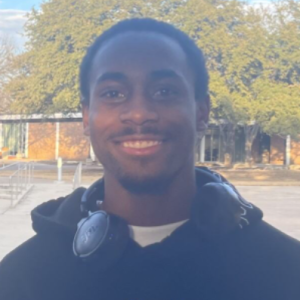 Peter Kilde, South Campus
“Black History means a lot. For one, the voices of my people. So for me, I’m not from this country, well I am but my parents aren’t, so me being able to basically go to school to educate myself and to just have the ability to have knowledge and spread that with other people, that means a lot.”