



















Americans are too comfortable with surveillance.
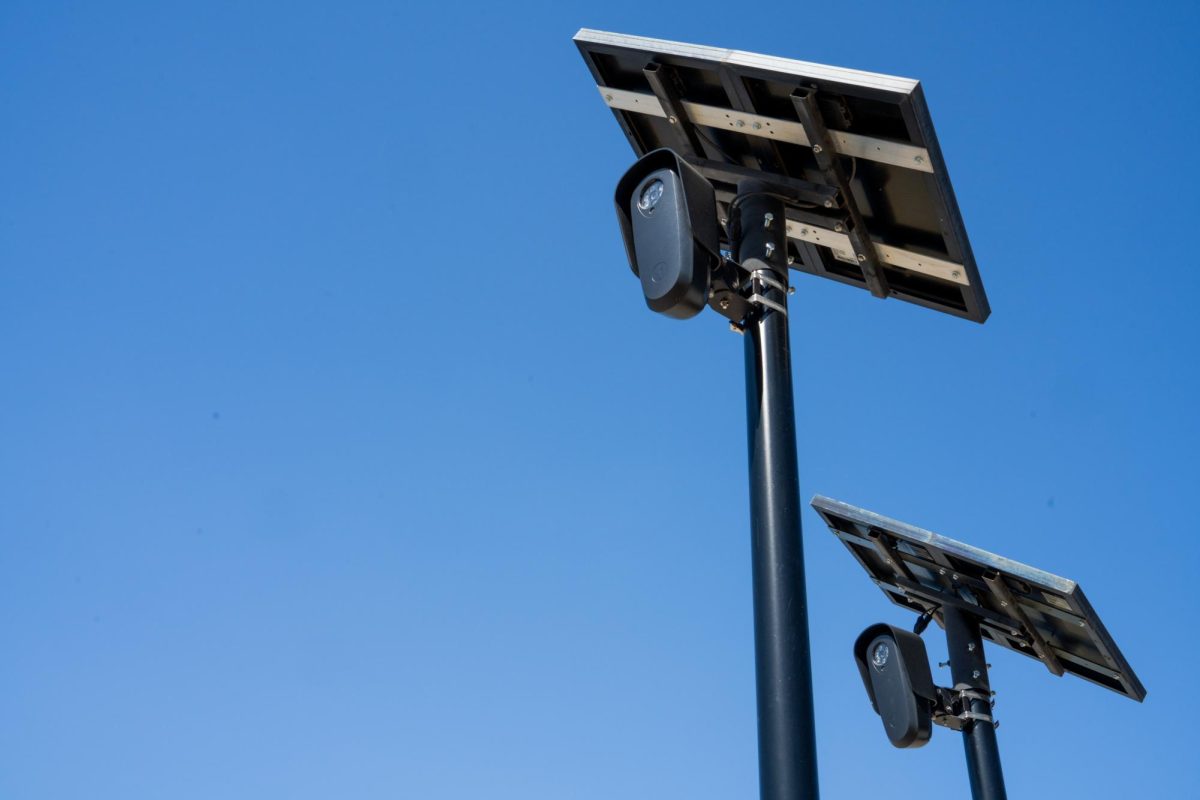
FLOCK Safety, a private surveillance company based in Atlanta, has manufactured and installed tens of thousands of automated license plate reader cameras across the country.
They look innocuous, but in reality, they are gathering personal information about your car, where you travel, who is with you and what is on your phone.
The company states its priority is public safety, and the data it collects is secure and solely for law enforcement purposes. Its website reports stolen cars recovered and criminals captured with the help of FLOCK, but news reports tell a different story.
On Aug. 2, The Washington Post reported that at least 50 law-enforcement officers have been charged or accused of using cameras to stalk unsuspecting women. In over half of these cases, the officers had a personal connection with these women.
The issue isn’t just law enforcement. There are over 600 active cameras in Tarrant County, according to DeFlock, a website created to inform citizens of FLOCK surveillance and map out camera locations.
While most of them were spotted alongside busy roads, some cameras have been found facing children’s playgrounds, residential areas and parking lots. Why would an AI-trained, face-recognizing camera watch a playground instead of tracking vehicles, like it’s advertised to? Doesn’t that defeat its original purpose?
Some Texans are choosing to reject FLOCK. Recently, the city council of Lago Vista voted to remove the city’s cameras. Burnet County also removed them after consistent vandalism.
While many are fighting back against mass surveillance, some people choose to embrace it in their daily lives.
Meta glasses are expensive smart glasses with a built-in camera and AI. They’re also the hot, new fashion accessory, according to Kylie Jenner’s recent collaboration campaign.
This seems to be Meta’s attempt to broaden its consumer base from AI-loving tech bros to women and fashion influencers. After all, is the panopticon really that bad if it makes you look trendy and chic?
Jenner may be promoting these as a “new way to see and share your world” with Instagram photoshoots and emoji captions, but the internet has a much more critical view.
In comment sections, Meta glasses are known as “pervert glasses.”
In January, the BBC reported on cases of women being secretly filmed with smart glasses in public spaces. Compare this with the AI-revenge porn issue many young women are facing in this technological age, and we are confronted with the reality that anyone wearing glasses in public could be recording to generate explicit images or videos of you without your knowledge or consent.
Another issue surrounding Meta glasses is who has access to its data.
Meta subcontracts data annotators to review the content captured by these glasses for AI-training and product improvement, according to its privacy policy.
Two Swedish newspapers published investigations on Feb. 27 into Meta’s subcontracting. They found workers sometimes review explicit and intimate content collected from Meta glasses, often without the users’ knowledge that anyone else would see this content.
“We see everything – from living rooms to naked bodies,” one anonymous data annotator told one newspaper. “People can record themselves in the wrong way and not even know that they are recording.”
Bathroom trips, sexual encounters, bank account information and more have been found in the data these workers comb through.
So not only could creeps be taking videos of you without your knowledge, but that footage is then watched by countless people across the world for data mining.
We need to think about what precedent this sets. In 20 years, will every street corner have cameras that follow your every move? Will every person point a camera at one another in the name of convenience or entertainment?
We deserve a future where our families, our friends and our neighbor’s information are not stored on some private corporation’s database or some random person’s glasses. We deserve a future where we do not live in fear of a faceless figure behind a screen watching us.