





















Even though it is the government’s responsibility and duty to keep its citizens safe, in recent years, a major approach to imprisonment in the United States has started to delve deeper into the world of privatization.
The transformation of prisons into private business opportunities completely contradicts a prison’s true intentions of rehabilitation and turns it into a form of exploitation.
Texas was the first of many states to pave the way for corporatizing the system of incarceration, now holding the most privately managed facilities in the United States with companies like CoreCivic and the GEO Group leading the business-oriented system. As of August, the companies own a combined 16 major private detention facilities, housing 6.6% of prisoners in Texas.
These private-sector prisons that once started as proper disciplinary and correctional centers have now become facilities owned by private corporations that house inmates through contracts with both the federal and state governments in a way that generates tax dollars and profit from government spending. This is done by holding inmates under minimum occupancy terms and by extracting fees from these incarcerated people and their families, such as charging for things like money transfers and medical care.
While it’s common for the federal government to lease out spaces from these private prison companies, things shifted this year when the Department of Homeland Security started to directly purchase these facilities to transition their use into detention centers for Immigration and Customs Enforcement.
The transition converts many of these properties into private federal facilities, with many contracts encouraging a fixed daily rate for inmates held in order for their contracts to stay active.
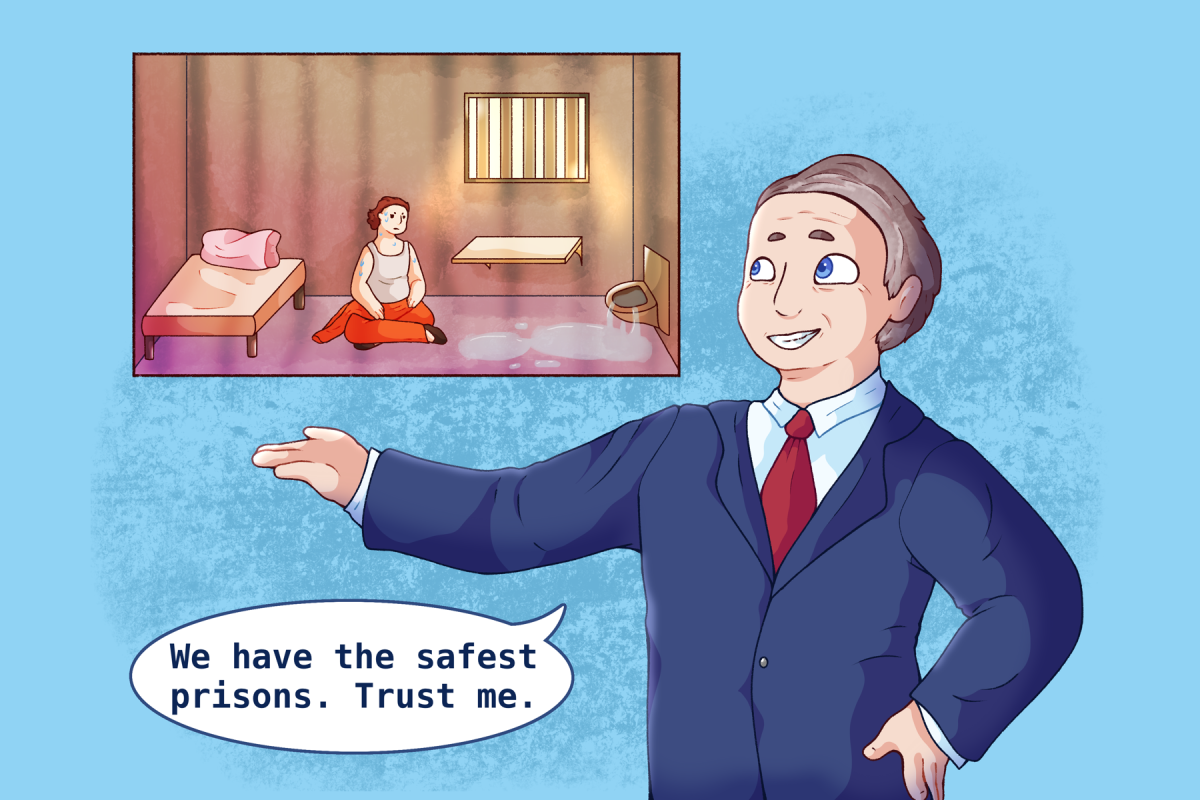
This gives these correctional facilities a corrupt incentive to house at a per-inmate rate in an attempt to meet their monthly quotas, opening the door to trying to reduce costs in other more inhumane ways and to continue profiting from putting people in cages.
Since these prisons are no longer run publicly, this means that these private institutions are not legally required to follow the same transparency laws that the average prison is held to, leaving many people in the dark about what’s happening behind closed doors.
Over the years, many former detainees have recounted instances of neglect and abuse by staff members hired by these prisons, with multiple complaints and lawsuits about the denial of medical care and abusive management by poorly trained staff. Since these private prisons are not required to provide the same level of training for employees as a public prison does, accountability flies under the radar and public responses to these conflicts are almost never addressed.
This often means that the public is only able to learn about many of these poor conditions inside the private facilities by word of mouth, but this can be difficult to verify as corporations are exempt from these open-record laws.
Just this month, U.S. District Judge Robert Pitman made a ruling that declared all Texas prisons must install fully working air conditioning units in their facilities by the end of 2029, including these for-profit prisons. This ruling follows his claim that the extreme weather conditions in this state previously disregarded by the Texas Department of Criminal Justice violates the Eighth Amendment, subjecting inmates to excessive cruel and unusual punishment.
CoreCivic has spent more than $4.4 million to settle almost 80 abuse-related lawsuits in the last 10 years, entailing many instances of violent cruelty and lack of medical care that resulted in over 20 deaths.
Many of the GEO Group’s facilities also reduce a lot of their expenses by using detained immigrants to fulfill many of the jobs that keep the facilities running, such as kitchen, laundry and janitorial work. In Texas, prisoners are generally not allowed to earn an hourly wage either, exploiting these incarcerated inmates for mandatory unethical labor without earning a dime.
This raises the moral dilemma of a private prison’s true intentions for housing inmates. Is this really a better way to handle overcrowding and security issues seen in modern-day public prisons, or is this a behind-the-bars excuse to turn the prison system into paychecks?