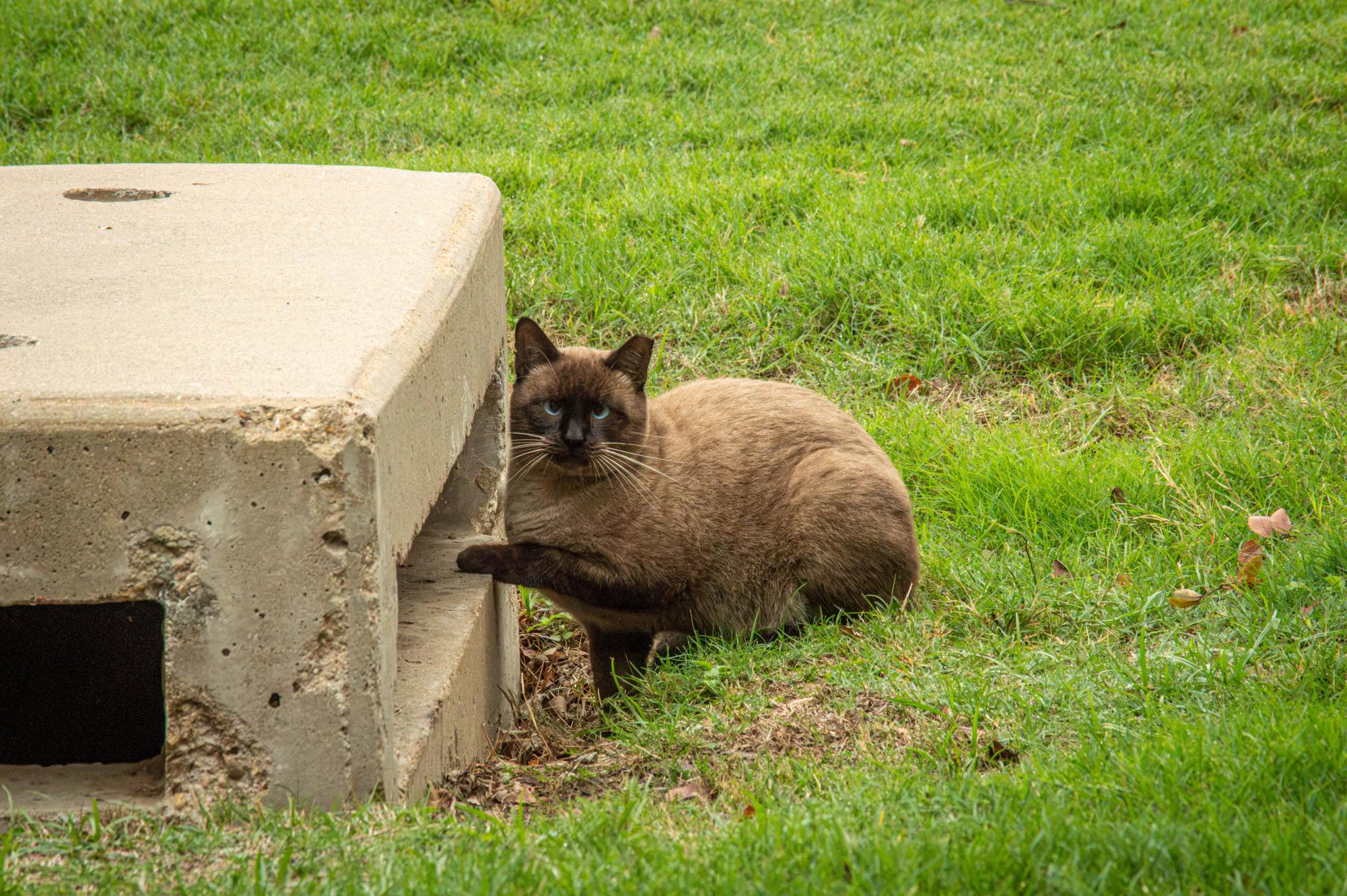
South may be a commuter campus, but it has plenty of permanent residents.
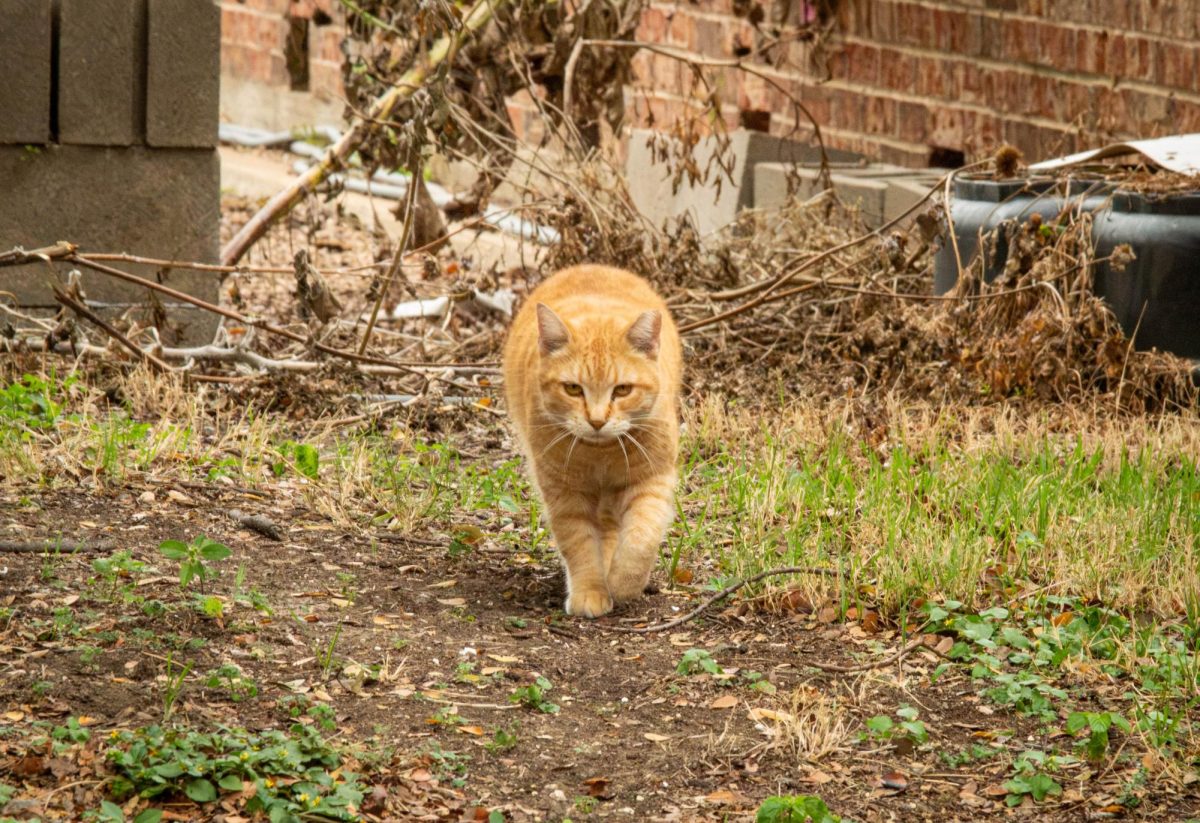
For at least 20 years, some faculty have used their free time to keep a close watch on the population of feral cats that claimed the campus as their territory.
Fort Worth has seen massive construction projects along I-20, and this has caused wildlife to be driven to South Campus, according to biology instructor Shawn Snaples.
“With the more recent warehouse and data centers going in, what wildlife had been living there is trying to find a new home,” she said in an email. “Plus, we have a lot of neighborhood homes around campus. Adult cats average about 1.5 miles of travel per day, possibly more if they aren’t fixed. We’ll never really know how or why the cats come to us.”
Snaples’ husband, professor of history Lee Snaples, also helps monitor the cats in his free time and said the population of cats stays around 10 at any given time. He said the open grass fields on South Campus also attracts diverse wildlife.
“Really, we are kind of one of the last areas to start developing around here, in terms of Tarrant County,” he said. “So, you got much more open space around here than you do in a lot of other areas, and that’s probably one of the reasons.”
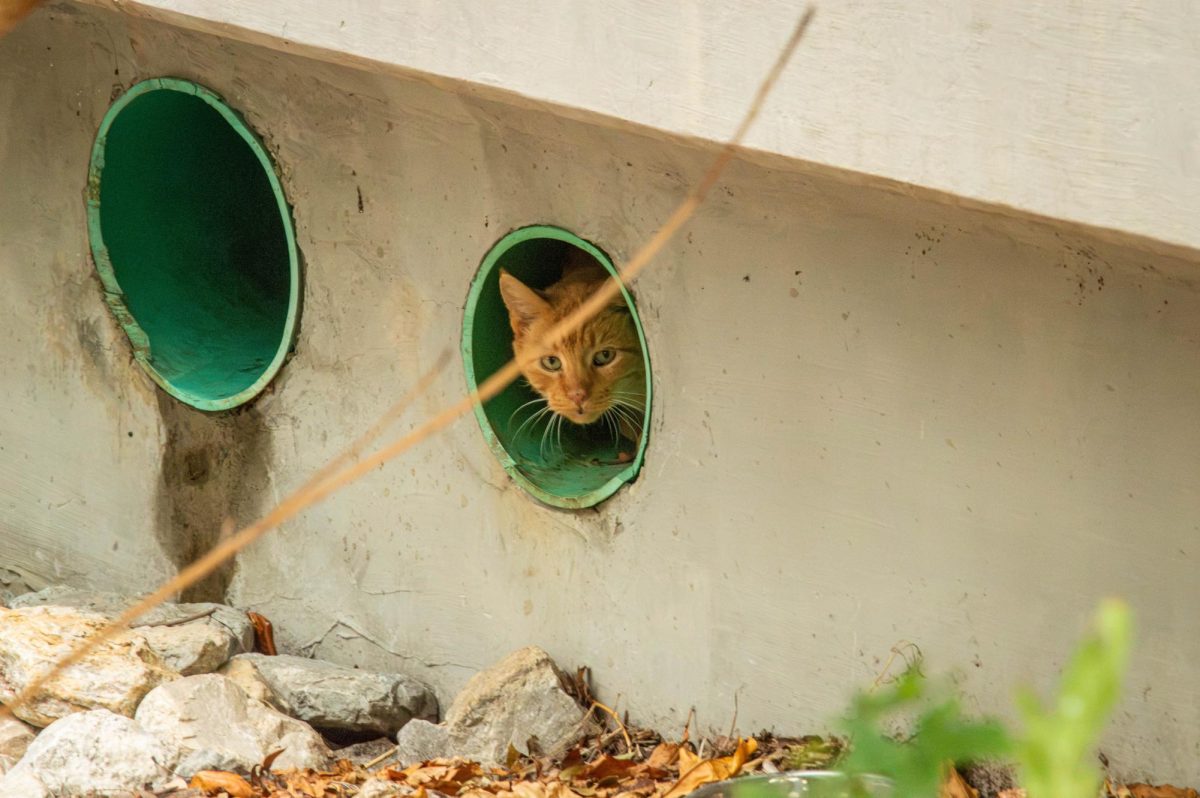
The pandemic created a unique environment on South Campus, Lee Snaples said. The absence of human activity and noise were the perfect conditions for wildlife to move in and make it their home.
“For a year and a half this was empty, and animals moved is because you left a bunch of space empty,” he said. “And that was kind of a headache right after COVID, the number of skunks and stuff.”
There have been multiple efforts over the years by campus presidents to control the animal population. Lee Snaples said displacing a population of cats will just invite new ones to come, and in one instance resulted in a spike in the mice and rat population.
“Animals basically move from areas with lots of animals to fewer, because there’s less competition,” he said. “So, if you remove the animals from campus, something else is gonna move in. If you maintain a stable population, then you don’t have as many new ones coming in because there’s already animals here. So that’s the way we handle it.”
Faculty who were monitoring the cat populations joined together to create a formal TCC cat committee in 2015, Shawn Snaples said. She said their role was to trap, neuter or spay and vaccinate the feral cats with the goal of adopting them out.
“We do try to find homes for the younger and/or friendlier cats,” she said. “We know we can’t post flyers on official bulletin boards, but we have been known to leave a flyer on some frequently used tables in the Science Building. I have picked up and recycled the remaining flyers once a home has been found for the cat.”
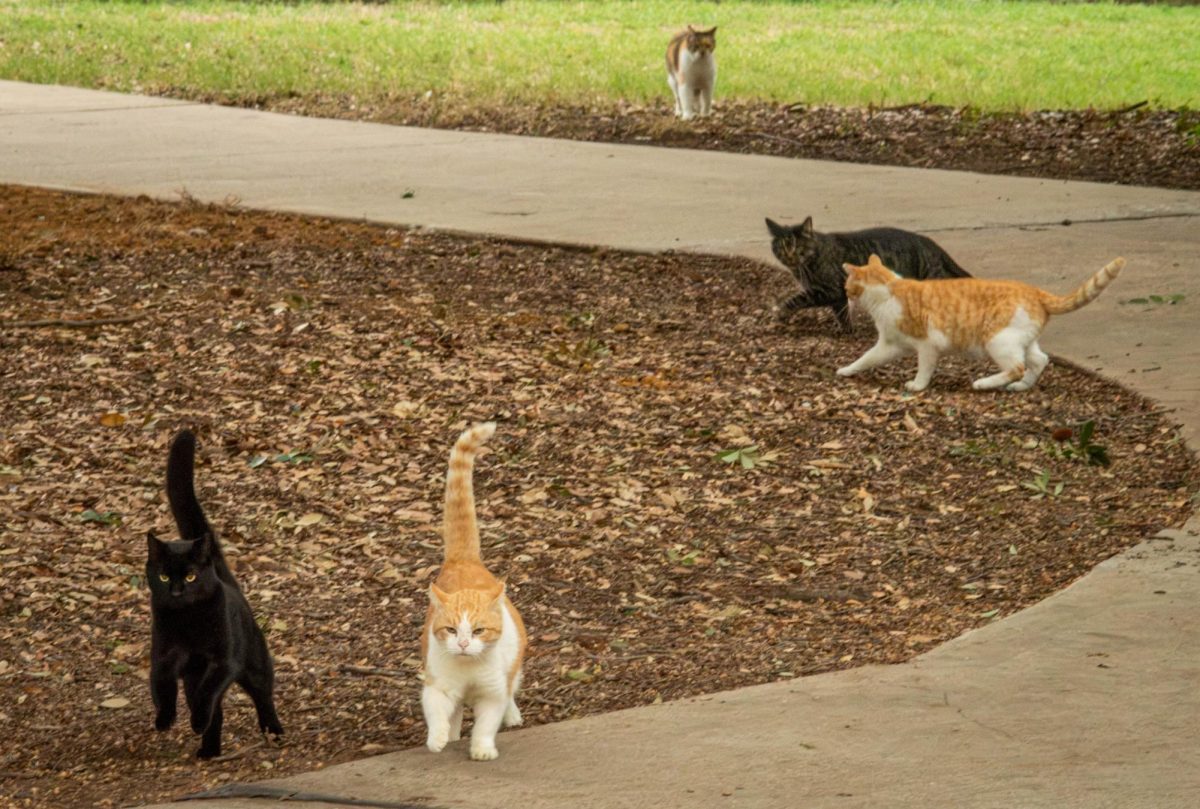
The Snaples have taken home cats over the years and given some to students and other faculty. However, many of the cats living on campus remain feral, making them difficult to adopt.
“Lee and I tried to foster Simon for 2 to 3 weeks, but he didn’t really like being inside or people,” Shawn Snaples said. “Ms. Lindsay Clark [geology instructor] fostered Simon for another 3 to 4 weeks. Simon did grow to like her dog, but never any of the humans.”
Lee Snaples said another reason for the animal population is the messy habits of students. South Campus visitors should try not to leave food trash on the ground, he said.
“Not to be mean, but you have a lot of college kids who can be a little messy and sloppy with their food,” he said. “And when you see a lot of people dropping food, and if you look around campus, you know, you find mostly empty chip bags and things like that.”
Feral cats aren’t the only wildlife that call South Campus home. Foxes, coyotes, raccoons and possums can be spotted under buildings, in trees or just passing through. The Snaples said they have even heard stories of wild turkeys roaming the grounds.
“Long ago, but I don’t remember the year, a turkey flew into one of the library windows and shattered the window,” Shawn Snaples said.
Another concern is students attempting to pet wildlife, Lee Snaples said. He said he’s been surprised by the way “city kids” handle seeing wild animals for the first time.
“What the college is concerned about is people trying to pet the skunks or the raccoons or getting too close to the foxes,” he said. “But most wild animals, including feral cats, don’t want anything to do with you. So, if you just leave them alone, it’s better.”
The effort to keep the campus animals safe doesn’t just benefit nature, it also improves the campus experience, Lee Snaples said.
“Personally, I’d much rather be here than any of the other campuses because we have so much space, and we have trees,” he said. “I’ve always thought that in order to have a true college experience, you have to be able to walk the grounds, you know. It needs to feel like something other than a high school, and I think this is perfect for that.”