Snow and ice draped over the cabin like a blanket. It was February 2021, and while Texas grappled with the catastrophic loss of power and water, Vangregory Grinnon kept his cool.
He didn’t know that what he would soon experience would change the trajectory of his life.
Within the span of a few days during the historic winter storm, he would have both of his legs amputated at the knee due to hypothermia and sepsis.
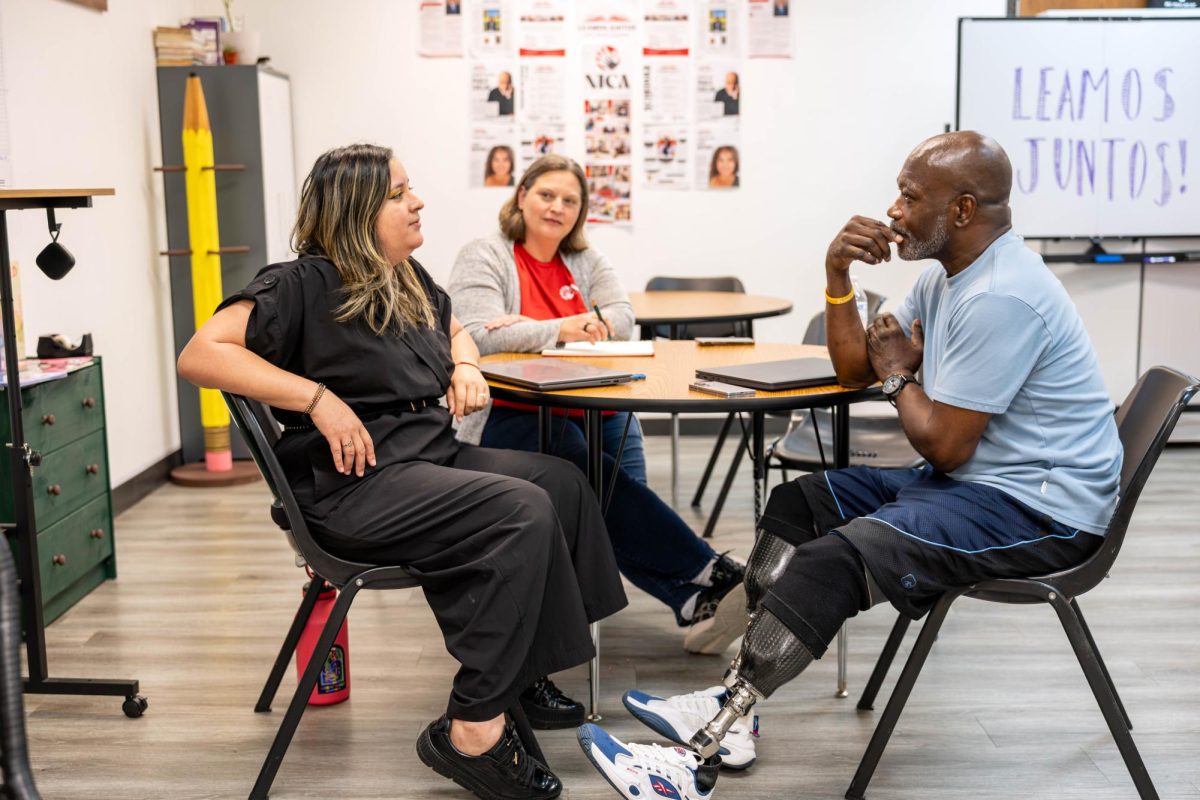
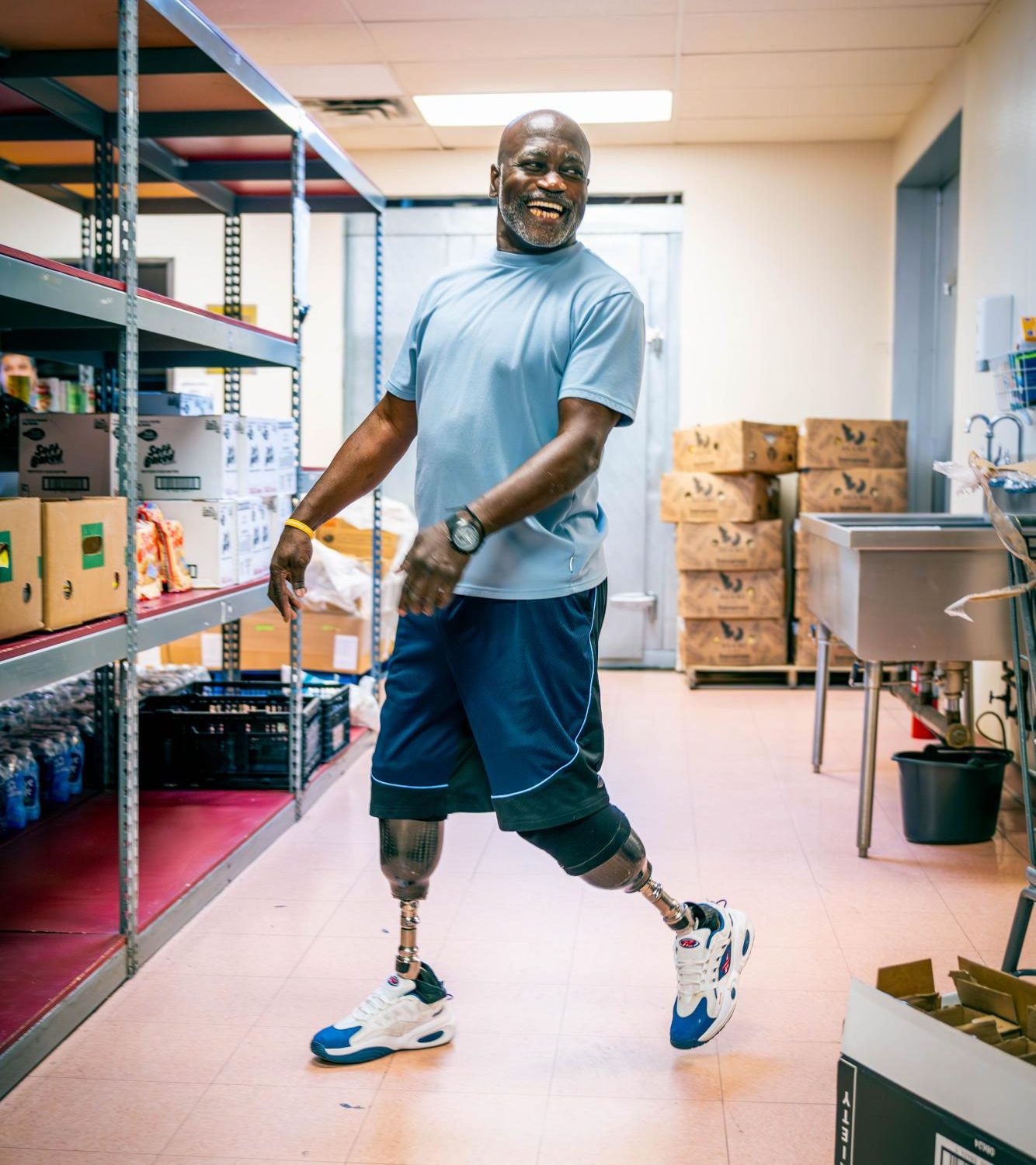
“I’ve had these for three and a half or four years now,” the NW Campus student said as he slipped his prosthetics on and off to readjust.
The prosthetics allow Grinnon to be active on his campus and in his community, something he didn’t value before the accident.
“It was a good thing that happened to me because of the lifestyle I was leading and where I was headed with what I was doing,” he said. “I would have probably ended up in jail, in prison or dead, one or the other.”
At the time of the winter storm, Grinnon was living in rural isolation in the woods in Austin. Though he was technically homeless, he had built himself a small wooden cabin. He preferred solitude, so he intentionally removed himself from society.
He was also trying to repair the roof of his cabin when the storm arrived.
“Half of it was off and half was on,” he said. “The snow just got too heavy for it, and it crashed and just caved in. I was kind of stuck.”
Despite the dangerous forecast, Grinnon had turned down an earlier opportunity to go to a shelter because of his cat.
“I just couldn’t leave that cat out there [to] freeze and die,” he said.
Grinnon had been estranged from his family and past friends for a decade. His circle consisted of his nearby neighbors in the woods and the cat. Ironically, the cat would run off every time there was bad weather, and he did so again during this storm.
Now alone in the chaos, the cold began to take hold of Grinnon.
“I had thermal clothing, but everything was wet because of condensation,” he said. “Especially in the woods when there’s no sunlight coming in. I had thermal socks on, I had jackets on. I was just sitting there. It got to the point to where I really wasn’t feeling cold anymore.”
FROM GRADUATE TO HOMELESS
Although Grinnon has retired, he was determined to rejoin society as a different man than he was before the storm. He came to TCC as part of the Continuing Education program in the fall of 2025. After taking a walking class on TR Campus, he decided to continue his education this time on NW Campus, where he currently takes classes in self defense and dance.
“I’m real careful about the classes that I take because I am retired, and I don’t want to take any tests and I don’t want to do no studying,” he said while laughing.
Grinnon originally attended Cisco College, then transferred to McMurry University, where he played football. He eventually obtained his bachelor’s degree in computer science and was working an IT job before he became homeless.
“It was drugs and, you know, just other circumstances and situations,” he said. “So I just learned how to survive and how to maintain out there. I started living off-grid immediately, using the solar panels and the car batteries and LED lights and generators and inverters and things of that nature.”
Grinnon said he was content living that type of lifestyle at the time. But losing his legs — an event most would consider tragic — changed everything for the better.
Now he goes to TCC in an effort to socialize without studying and to access disability-friendly transportation.
“I use paratransit service because I don’t drive,” Grinnon said. “They have a program I can utilize, if I take credit hours.”
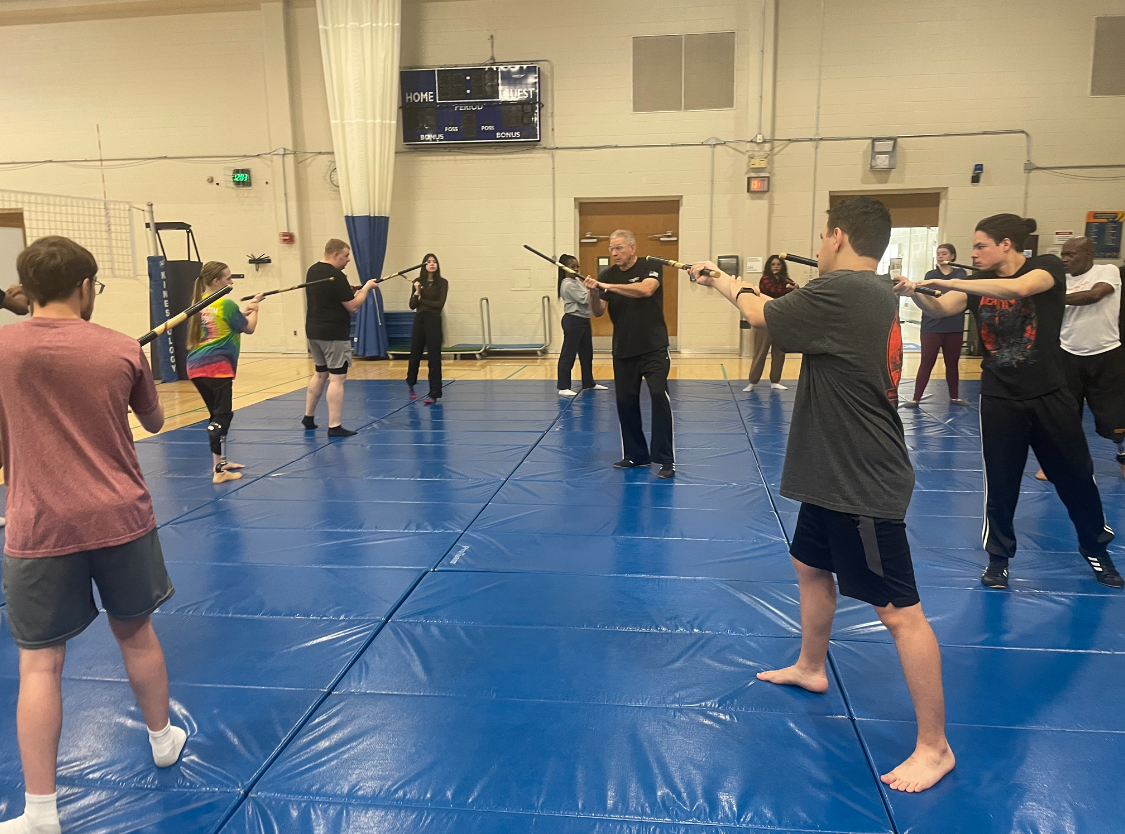
Currently, Grinnon is taking NW instructor Patrick Tart’s self-defense class.
“He is an inspiration. He’s a joy to teach. You wish sometimes everybody had the same attitude,” Tart said.
In class, they use fake props to simulate dangerous situations they may face in public. Grinnon’s class partner, NW student Zachary Todd, took turns sparring with Grinnon during a recent class.
“He’s very good. He knows when to restrain,” Todd said. “He cares about if I’m having problems, and vice versa. I care if he’s having problems. I’ll stop, ask him if he’s OK. I always try to accommodate for his limb loss.”
While he may be presented with difficulties, Grinnon doesn’t allow his challenges to keep him down.
“He listens, and then he learns, and then he’s able to transfer that to others,” Tart said.
Grinnon’s past experiences affect how he approaches this class.
“He seems very versed in experience,” Todd said. “And I’m a coach myself. I coach gymnastics, so I feel like we both have a sense of knowing when to go hard and when to stop.”
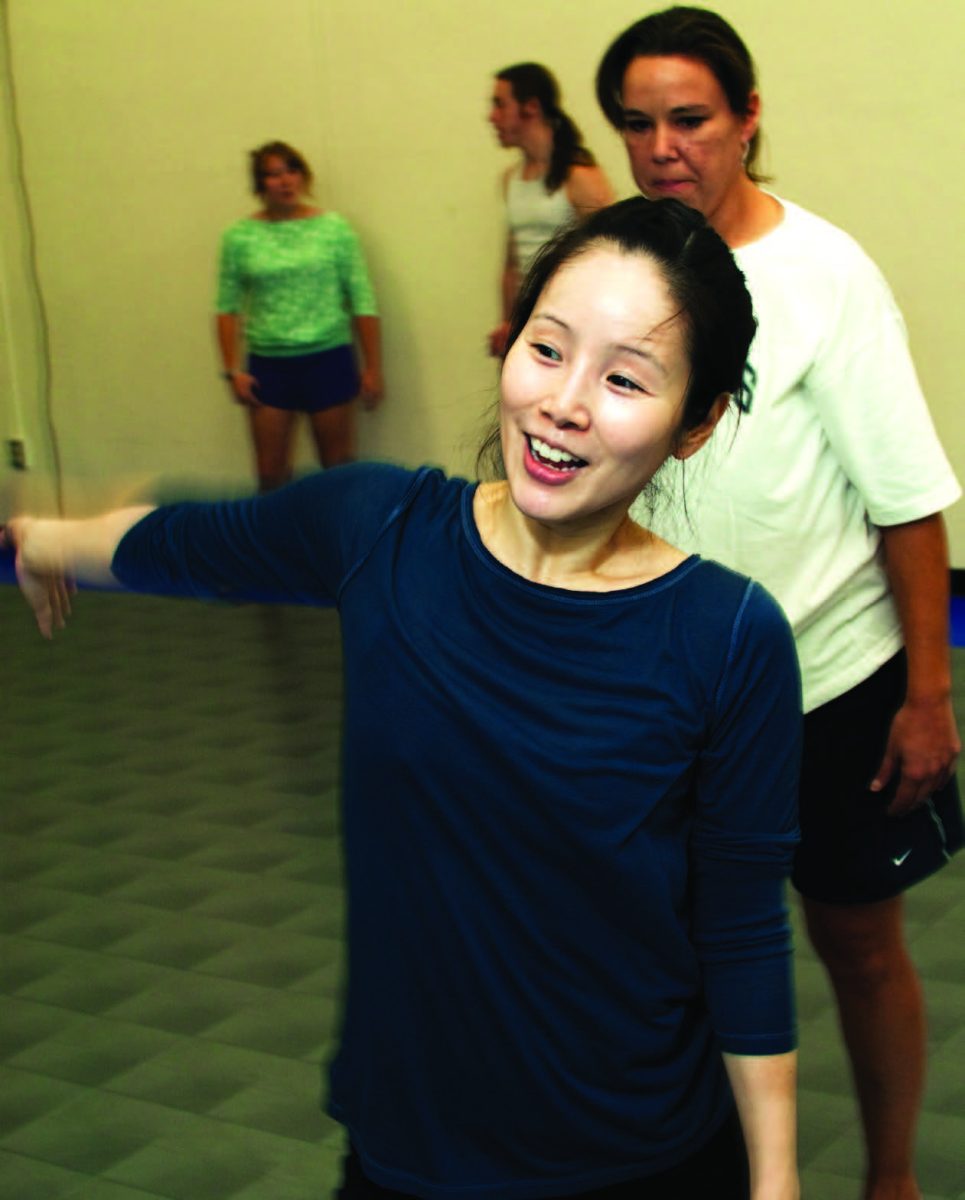
Grinnon is also taking dance from NW associate professor Lacreacia Sanders. Grinnon sees it as more than a class. He sees it as physical therapy. This is a way for him to balance his body.
In Sanders’ class, Grinnon is choreographing a dance about limb loss, limb difference and inclusivity.
Despite Grinnon’s limited knowledge of dance, Sanders sees it as a strength, one that can be used as a form of self-expression.
“He doesn’t have as much dance experiences as a lot of the other students, and so he was very concerned about a lot of that in the beginning,” she said. “But he’s one of the stronger students, and a lot of that has to do with wisdom of experience of life, experience of age, all of those different things.”
GOALS & ASPIRATIONS
Despite circumstances that most people would find difficult, Grinnon’s differences give him purpose.
His future plans consist of bringing awareness to limb loss, limb difference, sepsis and accessibility on NW Campus.
He enjoys rock climbing, running and volunteering for food pantries like the Northside Inter-Community Agency located by the Fort Worth Stockyards.
He also volunteers at Camp No Limits in Austin to help children with limb loss like him.
“Not all of us, but some of us, are able to still interject and interact within the general population and general community,” Grinnon said. “We’re still human beings. We just happen to [be] an amputee, so don’t treat us any different.”