











When he was 16 years old, Skip Hollandsworth became obsessed with a murder in his home city of Wichita Falls.
The future Texas Monthly editor and true crime author was fascinated when millionaire oilman Bobby Burns and his wife Abbie, both in their fifties, were found dead in their mansion with gunshot wounds. Their deaths were ruled a murder-suicide. Abbie had killed her husband and then herself.
Hollandsworth, in his fixation with this gruesome crime and in his disbelief that Abbie Burns could murder her husband, had become an amateur sleuth, staking out the mansion and eavesdropping on local gossip. He had wanted to understand Abbie’s motive, but it was dust in the wind.
“The story that had launched my lifelong obsession, I realized, was one I still was not able to tell,” he said in an excerpt from his latest book “She Kills.”
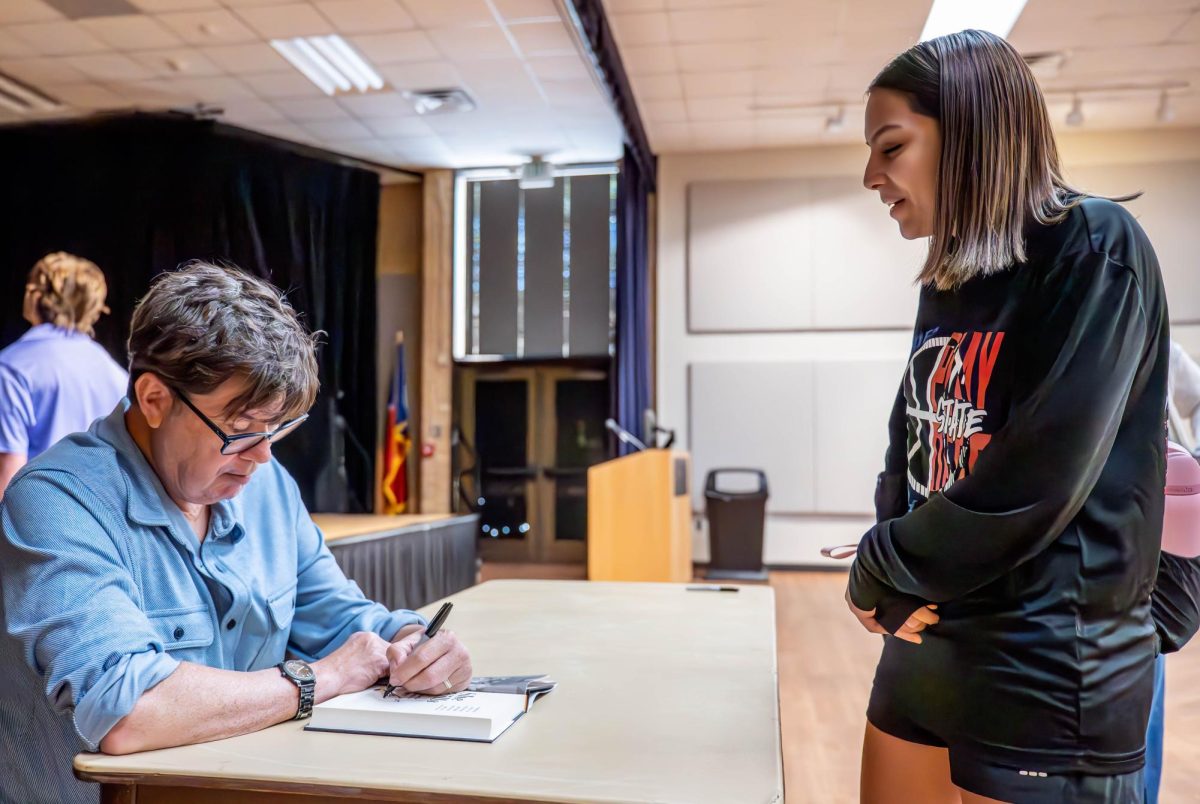
Hollandsworth visited NE Campus March 24 and 25 to discuss his recent book as well as his journey from being a “fluff” celebrity journalist to interviewing stone-cold killers face to face.
“An editor once told me, ‘When you write about someone you hate, like a serial killer, write about them with love,’” Hollandsworth said. “Because at some point, they were not these hateful people, and you sort of want to figure out what happened to them to make them digress to that point or slide downwards into this darkness.”
“She Kills,” released in October, focused on the individual true stories of Texas women who had committed murder.
“They were very human,” Hollandsworth said. “They weren’t flat out crazy, like speaking in tongues or going into some kind of megalomaniac lilt. … They seemed as if they were trying to understand their own behavior themselves.”
It can be challenging to get a subject in an interview to open up, especially if the topic is murder.
One of the women in his book, Vickie Dawn Jackson, a nurse-turned-serial-killer, insisted upon her innocence, even with evidence stacked against her. However, as Hollandsworth had spoken to her, she began to share pieces of her life with him.
“You’re never going to get your good stuff in the first interview you do with somebody,” he said. “It’ll be the second interview, but then, actually, it’ll be the third or fourth interview.”
Hollandsworth had learned how to approach both his writing and his conversations when he was a journalist. He hadn’t started his writing career scanning autopsy reports or conversing with killers. He had started as a rookie reporter for The Dallas Morning News, interviewing celebrities. After that, he wrote long feature stories for Texas Monthly.
David Hale Smith, Hollandsworth’s literary agent who spoke alongside him, had described him as a “rock star journalist.”
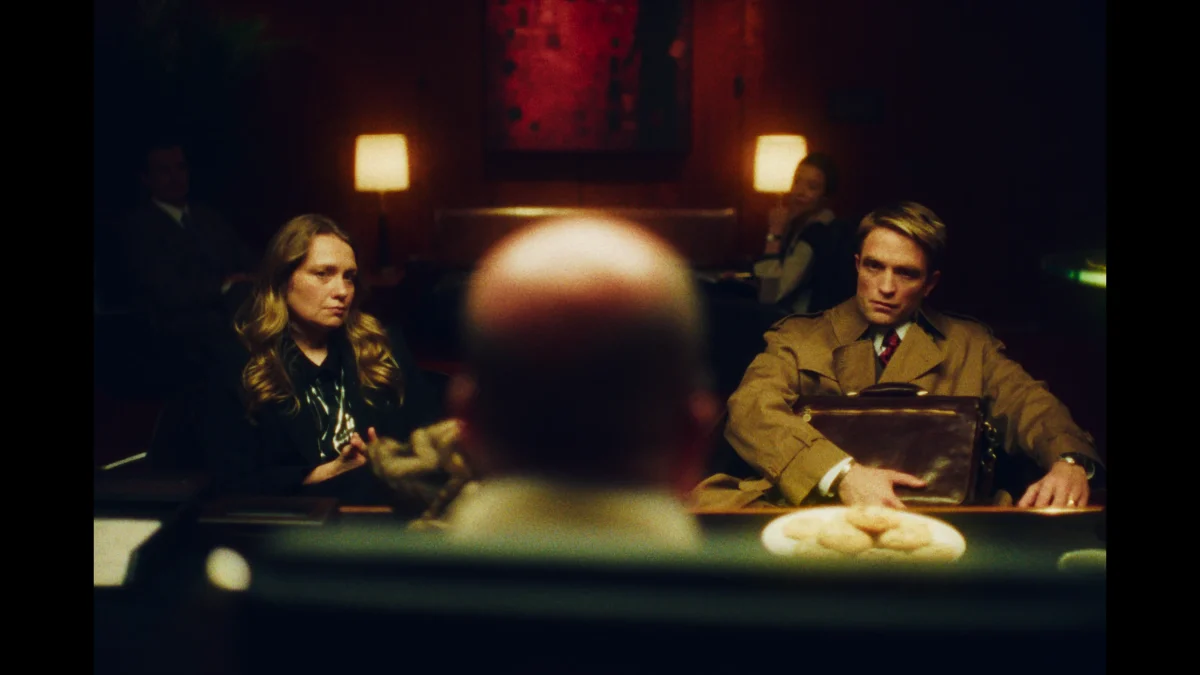
Smith, who manages several creatives for InkWell Management, has worked with Hollandsworth for decades, from his award-winning movie “Bernie” to “She Kills.”
“I call myself a ‘fire tender,’” Smith said. “The behind-the-scenes person who helps manage the creative direction but also the business side of an author’s career.”
Both Smith and Hollandsworth spoke in the NE library March 24 and the NSTU Center Corner March 25 about the process of writing, the elements of a good story and what a publisher looks for. They also visited The Collegian the next day to speak with the journalists there.
The great elements of a story, according to Hollandsworth and Smith, are narrative and structure.
“When you’re pitching, if it’s driving you crazy and you’re obsessed with it, that’s a good sign,” Smith said.
NE English associate professor and author Rebecca Balcárcel brought some of her students to hear Hollandsworth speak.
“He’s the real deal,” she said. “You want to pick his brain as much as possible. Not even to do it how he does it, but just to see, what does it looks like to be him and how his thing works. It just kind of adds to the soil, the fertility of your own mind.”
NE English instructor Amanda Myers Brotherton, a big fan of Hollandsworth’s, had reached out to Smith and organized the author and agent to visit the campus. She wanted students to be able to listen to and connect with an experienced writer and agent.
“He uses language and words that are almost dead now, and it’ll remind me, ‘Oh yeah, people used to say that,’” she said. “And he’s dark and macabre, and he focuses on those ideas. But there’s always this lightness, this comedy, this relief, this humanity. [An] attempt to understand that people are just human and not insane.”