
















After months of planning to present at a statewide autism summit, leaders of the Neurodiversity Social Club on NE Campus walked away from the opportunity entirely.
The group submitted a proposal during the summer to attend the College Autism Summit in Austin, expecting all five officers to participate in a 60-minute panel. But according to club president Azriel Stevens, the organization was later informed through its faculty adviser that college officials overseeing student activities could only guarantee approval for two students and one advisor to attend, though no clear explanation was provided.
Without enough members to present, the club withdrew.
“We were approved to speak at the College Autism Summit,” Stevens said. “But I needed all five officers to present.”
Stevens said the organization was not given a clear explanation for the limitation, leaving uncertainty over whether the decision was related to funding, administrative changes or evolving policies.
For Stevens, the decision was more than a single setback. It reflected a broader shift across TCC, where student leaders say building community is still possible but increasingly depends on how well organizations can navigate approval processes, adapt to new expectations and take on more responsibility themselves.
Seven months after changes tied to Senate Bill 17 reshaped how diversity, equity and inclusion efforts operate in Texas public colleges, students and employees say the impact is less about whether organizations exist and more about how they function day to day.
On TR Campus, Director of Student Life and Engagement Carter Bedford said event approvals can move quickly but only when students come prepared.
“If you come in with a detailed event and everything is laid out, we’re talking maybe 24 to 48 hours,” Bedford said. “If it’s pieced together or missing details, it could take a couple of weeks.”
Bedford described the process as nuanced, with timelines varying depending on factors such as funding requests, space reservations, technology needs and whether the event involves travel or outside participants. He said recent policy changes have also shifted responsibility onto students to lead initiatives that may have previously involved more direct staff and faculty support.
“If a student group comes to us and they say, ‘We want to have a cultural celebration or program,’ they have to be the primary driver,” Bedford said. “They have to be doing the outreach. They have to be doing the planning.”
That shift, he said, requires staff to take a step back.
For some student organizations, however, the process does not always feel straightforward in practice.
Stevens said the Neurodiversity Social Club’s summit proposal remained unresolved for months before the group learned participation would be limited. Without a clear explanation, the organization chose not to attend.
“Personally, our officers and I were disappointed,” Stevens said.
The club faced a similar situation with a planned fundraiser. After submitting a proposal and waiting for a response, Stevens said the group ultimately decided not to move forward when approval did not come until about a week before the intended date.
Stevens said the group ultimately decided not to move forward when approval came too close to the planned date.
“We had already planned everything out,” Stevens said. “By the time we heard back, it was too late.”
While Stevens said disability-based organizations are not directly restricted under Senate Bill 17, the club has still had to adjust how it presents itself, particularly in its outreach and promotional materials.
“We can no longer state that we are a club for neurodivergent students,” Stevens said. “We just have to say that we include neurodivergent students and that all are welcome.”
The change, Stevens said, is less about identity and more about language and learning how to operate within it.
“We know the exact words to use,” Stevens said. “We know the workarounds.”
Across campuses, staff members say policy is only one part of the equation. Event logistics, student schedules and campus culture also shape how easily students can get involved.
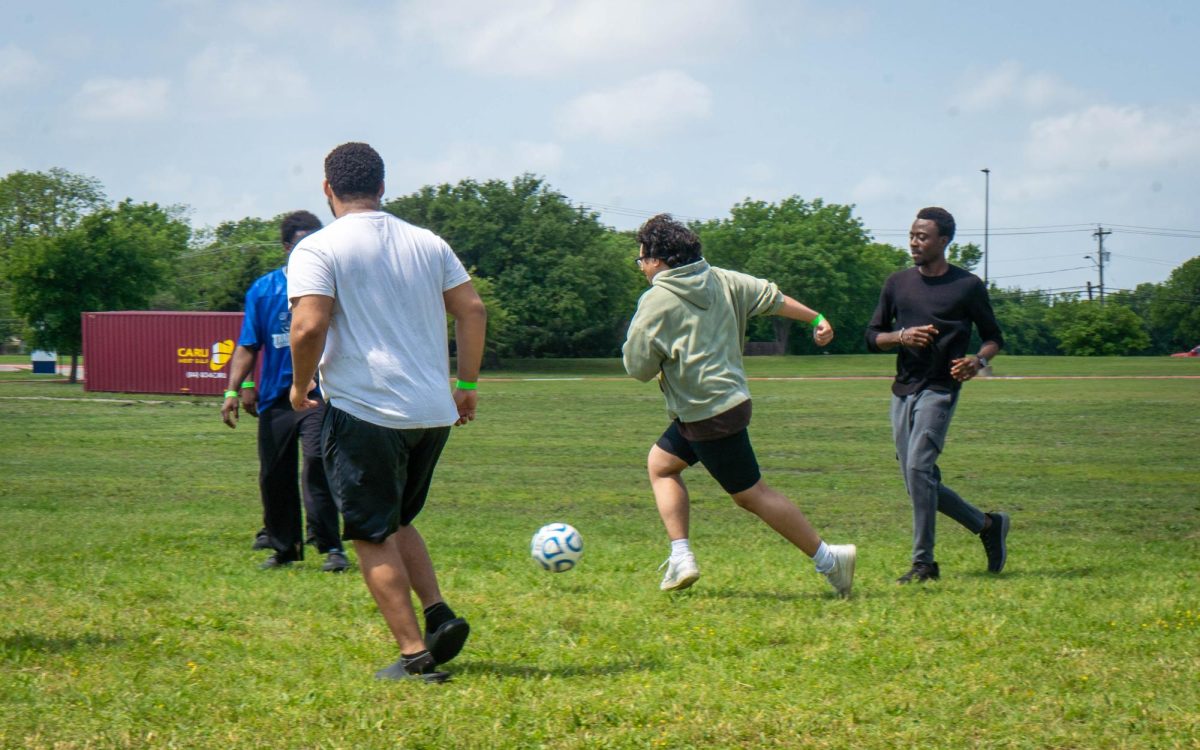
Brianna Gomez, a student activities specialist on TR Campus who oversees recreational sports and campus tours, said planning events often begins weeks or even months in advance.
“If we’re stepping foot off campus, that includes proposals, quotes, waivers and approvals,” Gomez said. “A good timeline would be four to eight weeks.”
Even on-campus events require coordination from reserving space to marketing and outreach. But attracting students to attend remains one of the biggest challenges.
“The biggest part is marketing and gaining interest,” Gomez said. “We have the events, but we want students to come.”
Gomez said she has adjusted event timelines based on participation, including pushing back a volleyball tournament to allow more time for promotion.
“It’s definitely hard,” Gomez said. “After you’re done with classes, you just want to go home. Your battery is dead.”
That reality reflects a broader challenge at community colleges, where many students balance coursework with jobs and commute to campus rather than living on-site.
“We are a community college. We don’t have residence halls,” Bedford said. “So I could see it being harder.”
Still, Bedford emphasized that student involvement plays a key role in shaping the campus experience.
“If you go to campus and you go home, you’re not going to enjoy the experience,” Bedford said. “If you get connected, the experience is better.”
For students involved in organizations, that connection can be significant.
On NE Campus, members of the Neurodiversity Social Club said their involvement has become a central part of their college experience.
“It’s the main thing that I look forward to,” said Chris McGuire, a club member.
Another member, Clementine Cook, said the club provides a structured space for students to build relationships.
“I definitely think it’s necessary to have a social space,” Cook said. “This is a great place to have that.”
Both students said they would like to see more opportunities for involvement across campuses, pointing to a need for more clubs, events and spaces where students can connect outside the classroom.
That desire highlights a broader tension across campuses. While resources and programming exist, students say accessing and navigating them often requires more initiative than expected.
For Stevens, the challenge is not whether the community can exist but how much effort it now takes to create it.
“We were trying to provide a safe space,” Stevens said. “And now we just have to approach it differently.”