














A self-defense class on NW Campus is giving students the real-world knowledge and practical experience necessary to protect themselves.
Patrick Tart has been instructing the class for over 15 years, and in that time roughly 10 current or former self-defense students have informed him of issues they’ve been able to handle. One of his female students escaped an incredibly serious situation.
“A guy broke into her apartment, was trying to pin her on her bed, and she actually was able to flip him off and run out,” he said.
Tart prepares students for a wide variety of situations, giving them a foundation built by concepts from all the different styles of martial arts in which he’s proficient.
His journey with martial arts started in Houston in 1979, when he began practicing Shorin-Ryu karate.
After Tart received his black belt, his instructor also started teaching him Shorinji Kempo, a style he describes as being more physical compared to the finesse-based approach of Shorin-Ryu. However, his desire to compete in the ring using full contact led him to kickboxing, which he did for several years.
After moving to Fort Worth in the mid-90s, he began learning the Keysi Fighting Method, or KFM, which teaches to defend against multiple opponents.
“Headbutt, kick, run, scream, spit – anything you can do to survive,” he said. “It’s not an art.”
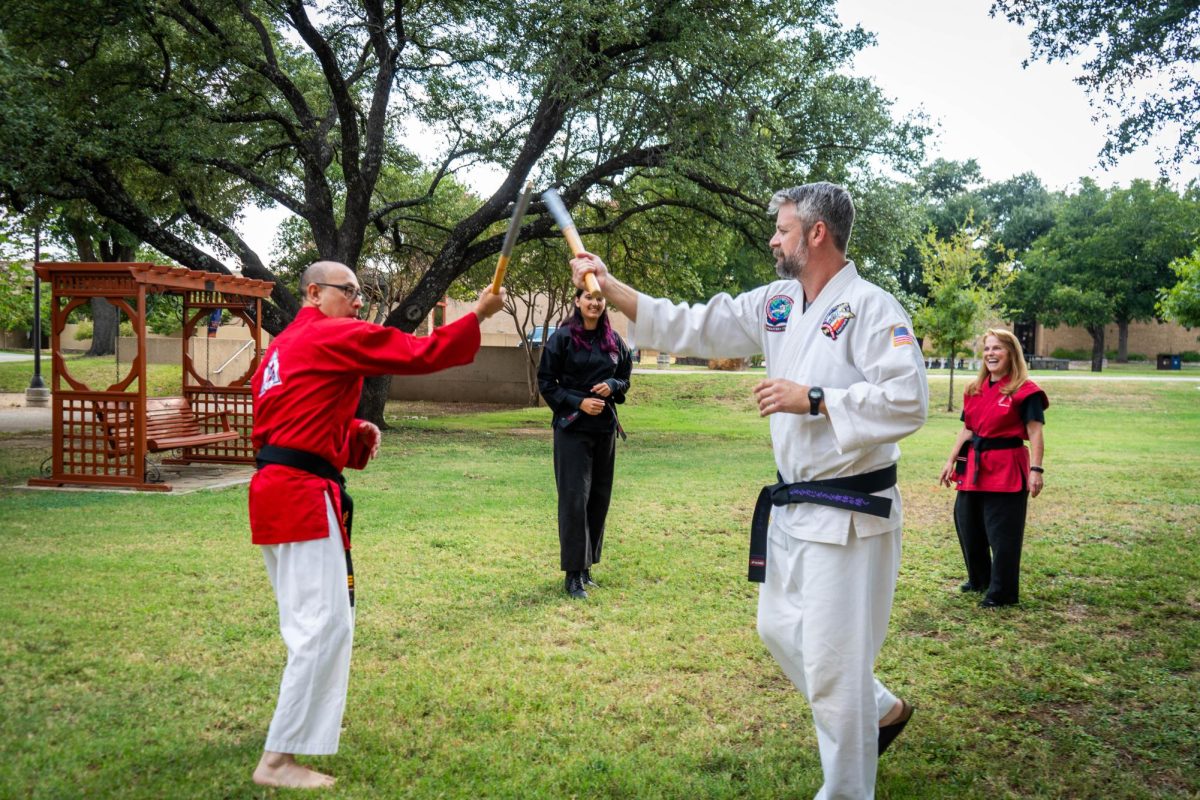
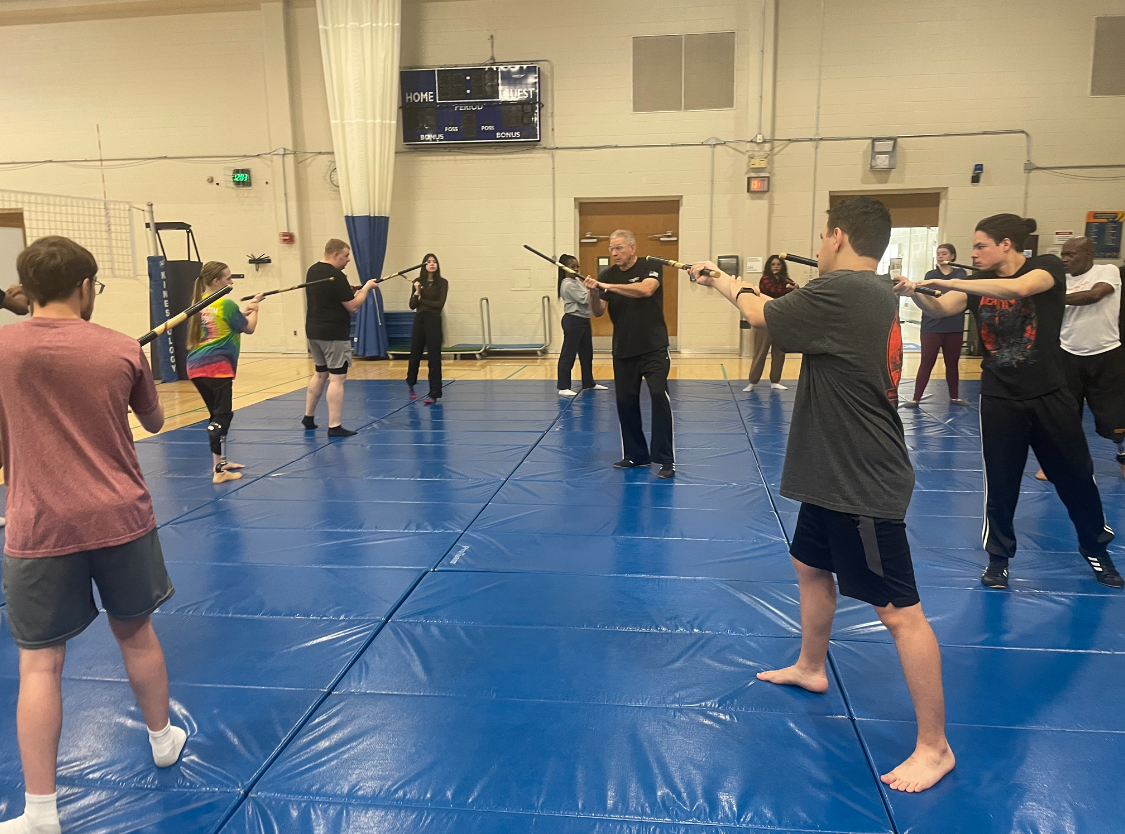
He’s also taken combat submission wrestling, trained at the Academy of Combative Warrior Arts and learned Pekiti-Tirsia Kali, or PTK, a Filipino weapons-based marital art commonly taught using sticks to represent blades.
Students take Tart’s self-defense course for a wide variety of reasons. NW student Rebecca Minjares is taking it, in part, because her brother is learning Brazilian jiu-jitsu.
“I figure to keep things even,” she said. “I’m not going to let myself be taken down a peg by him.”
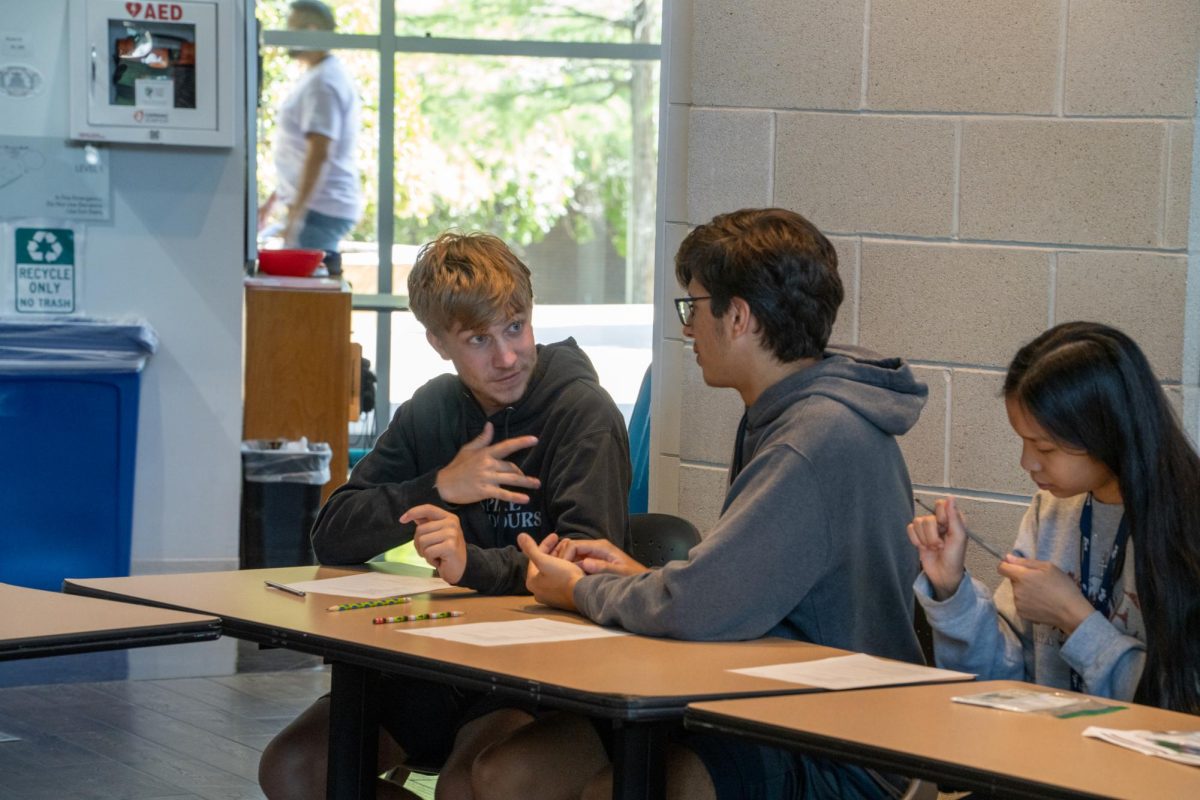
In class, they safely play out different live-action scenarios, always focusing on two key aspects: awareness and movement.
“The one thing you know about self-defense: It’s never predictable, and it’s all situational,” Tart said.
He provides female students with advice on avoiding dangerous situations, including not walking to the car alone after events like parties.
“I think anyone and everyone has some creepy people who are going to try to take advantage of them,” said NW student Madeline Hofford. “Women are mentioned, but men too. People come after men, so I think anyone needs to know how to defend themselves.”
Tart’s instruction style accommodates students of all fitness and experience levels. He gives different options for students who are unable to do certain exercises, ensuring no one is left behind, and everyone is still working hard.
NW student Sydney Durr, who has a lower-limb difference, credits the class for helping her move around better in her everyday life, due to the increased footwork. She also feels more confident in her ability to defend herself.
“I’m a natural target for those who would want to hurt me or anything like that, so I’m getting really good using weapons, sticks and then throwing punches, of course,” Durr said. “Kicks are not really my thing, but it’s been a lot of fun.”
Tart lets students know that it takes years to become truly proficient in martial arts, but in a three-month course they can still gain basic knowledge that could be used in a real-world situation.
He also encourages students who have already trained in martial arts to take the self-defense class, as they can still learn new things and become more well-rounded.
During the course, Tart simulates disarming someone who’s wielding a knife, but he warns that in a real-life scenario, there’s still a possibility of getting wounded or worse. He remains realistic with his students, preventing any false sense of bravado.
Tart emphasizes avoiding physical altercations, if it’s possible. But he wants students to be prepared in case it isn’t.
He also explains that in the event of an active-shooter situation, the best self-defense is looking for barriers, or better yet, exits.
Tiffany Selrick, a kinesiology instructional aide and adjunct instructor on NW Campus, highlighted Tart’s impact on students.
“We’re very lucky to have him,” she said.