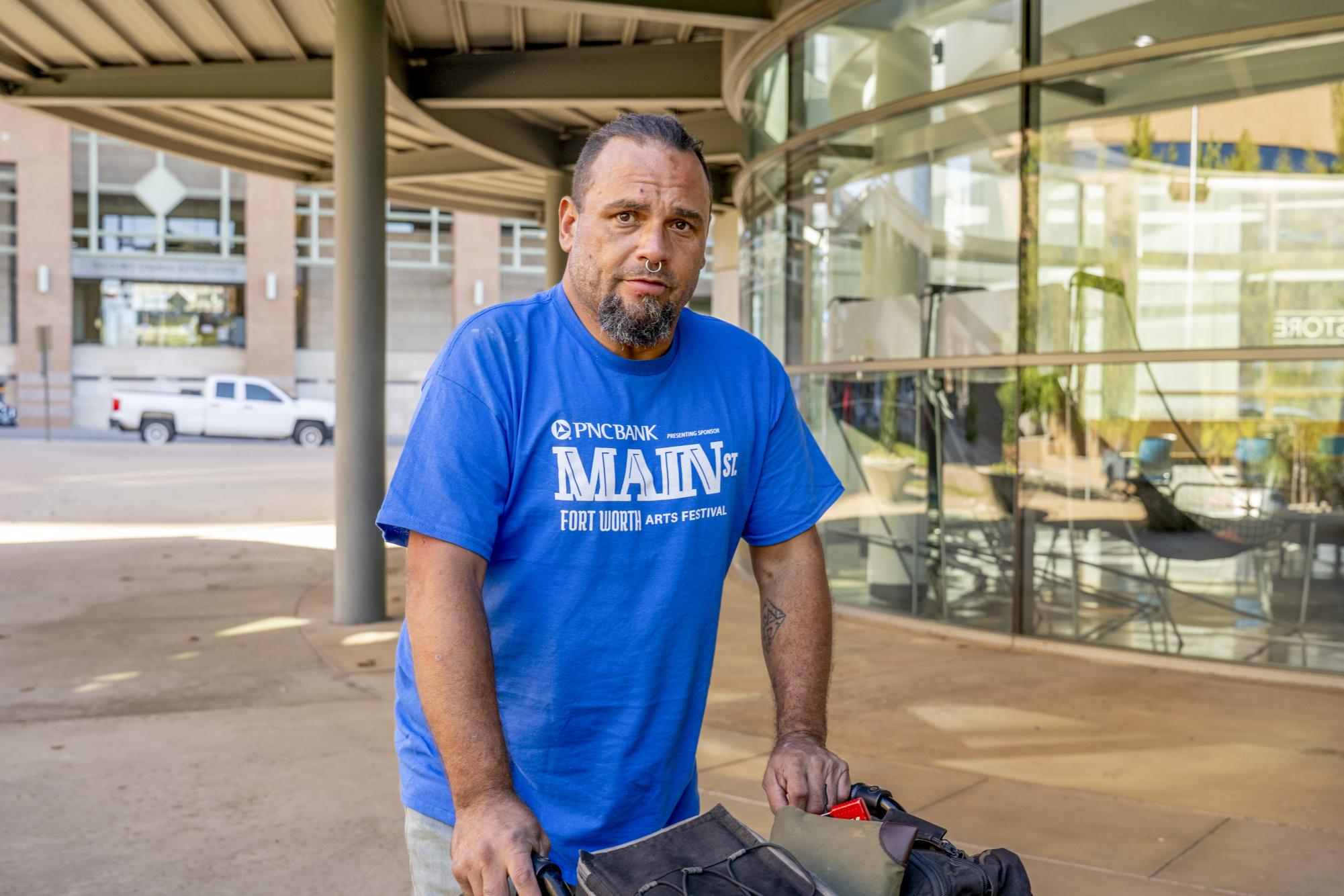
Michael Reed waited for the bus to arrive, grasping the handles of his walker tightly. Everything he owns he carries with him, either bundled on his walker or slung over his shoulders. He’s tired, his back hurts and he knows he has a long day ahead of him. But to him, it’s worth it.
It’s worth it because he’s going to school.
The TR student’s typical morning looks like this: Wake up and take down his tent before the police give
the first warning to leave the street. Get breakfast at the shelter using what he calls his “hobo Mastercard,” a scan card which gives him access to resources. Take a 30-minute bus ride to campus.
“All those little creature comforts — things you take for granted, where your meals are coming from, having a bathroom to go to when it comes time to do that — those are things you’ve got to figure out,” Reed said. “Those are just all things that I said people take for granted when they’re living indoors.”
For many students, college can be a pathway to a better career. For Reed, college is a lifeline. It’s a place to escape the streets for a few hours a day, and hopes it gives him the tools to someday escape for good.
Reed has been homeless since 2015. He’s stayed with relatives and bounced between shelters over the years, but he said he’s always found himself back on the street.
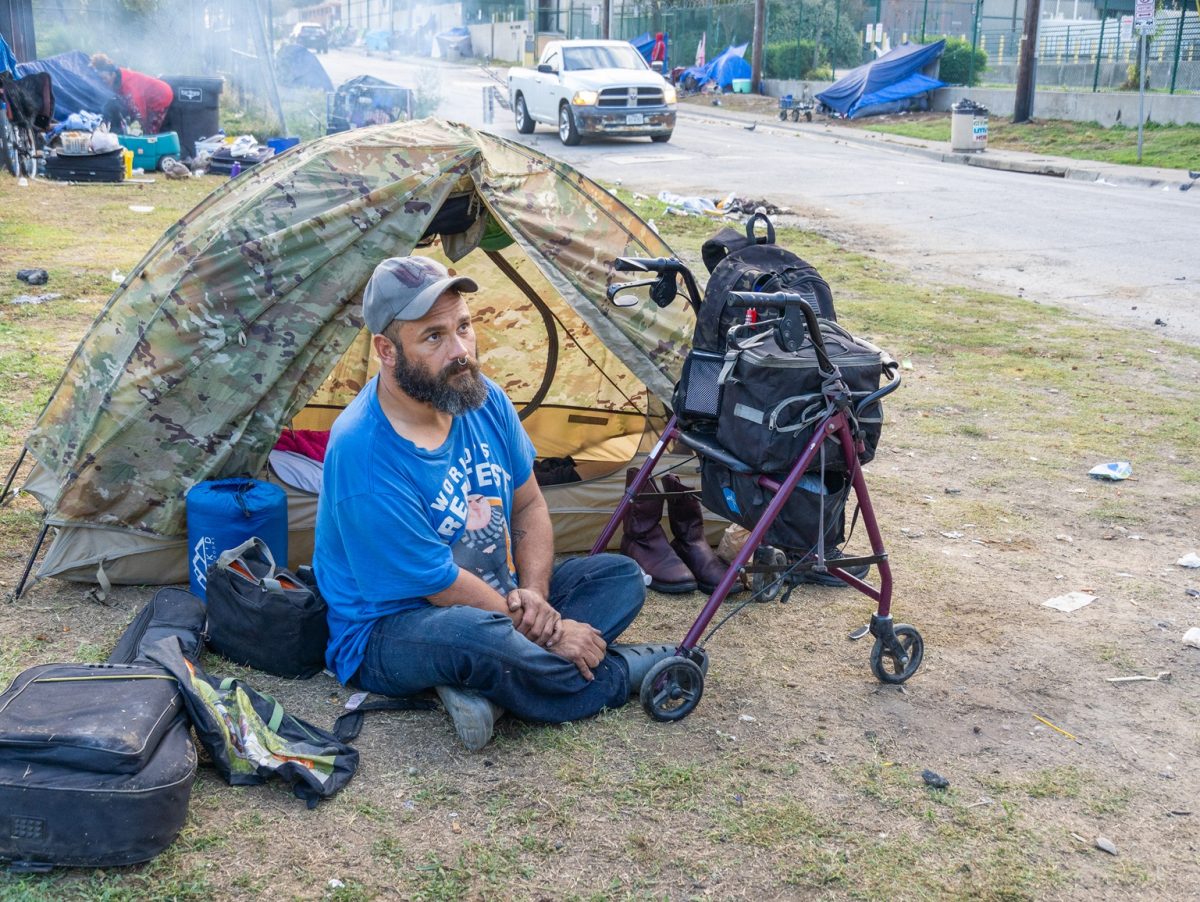
For Reed, all it took for things to snowball was a bad fall on an ordinary day.
“I was just walking, and my ankle buckled. The next week, I had sciatica and paralysis,” he said. “My feet drag because of a bulging disc that is compressing the nerves.”
After he became disabled, it was difficult for Reed to keep working like before. Reed was a welder, and the job demanded more of his body than he could give.
However, he still has a phone that he uses to show snippets of his life and share his thoughts about homelessness and his disability on his TikTok account @themarginwalker.
“To me, it connotes all the cracks I’ve fallen into or margins I’ve walked through in society, like not qualifying for disability because they don’t see me as disabled enough to get disability,” Reed said. “But on the other hand, having a clinic doctor not signing me off fit for work because of my disability. It’s a ‘Catch-22.’”
His account was his idea of spreading awareness about homelessness and providing homeless people with information they may need to find resources.
He currently stays on East Presidio Street in Fort Worth, right next to homeless shelters Presbyterian Night Shelter and Union Gospel Mission. Every morning around 7, police drive through the area and tell people to pack up their belongings and move. If they don’t, they could be fined or even arrested.
“The guy said, ‘You need to move on,’ and I said, ‘Well, where do I go?” Reed said, recounting a previous conversation he had with an officer. “His response was ‘I don’t care. That’s not my problem.’”
Reed said people often view the homeless through a point of bias, allowing stigma and stereotypes about homeless people to keep them from connecting on a human level.
He’s tried panhandling a few times, but he said he hates how others look at him when he does.
“I wouldn’t even care if people gave me money,” he said. “At a certain point, I just wanted them to smile and wave, just to acknowledge me as a human.”
Although he hasn’t been active in a few months on TikTok, Reed said he plans to make more videos.
Reed also plays guitar and writes lyrics, poems, comedy sketches, anything that gives him a chance to express his creativity.
Now, Reed is focused on being a fulltime student working on a degree in radio, television and film. His goal is to use education as a pathway to find a job he’ll actually enjoy.
“The smartest, most productive thing that I could do while I’m here charging my phone would be to work on coursework while I’m here in a professional setting, quiet without distractions, because it’s the exact opposite when I go back to the homeless district,” Reed said. “Some of the people I associate with, they know that I’m going to school, so they try to keep the distractions at a bare minimum.”
Alex Martinez, who Reed said is his brother in all but name, has been by his side for over a decade, living on the streets as well.
“I’m very proud of him for being to be on the street and still be able to make it to school on time and keep his grades going,” Martinez said. “Mike’s very committed to education.”
As a full-time student, it can be hard to juggle all his coursework and class times. But add on being homeless, and there are some barriers Reed faces that students with housing may not.
“It was two days back-to-back where the campus police got called three times ‘cause I was hanging out somewhere charging my phone between classes or whatever,” Reed said. “On my side of things, it’s like, ‘Jesus Christ, I’m a student!’ Yes, I’m homeless. I look disheveled, you know? I don’t look that dapper, but I’m still here for the same purpose. I’m not just hanging out, hitting people up for money or siphoning resources.”
Reed said the campus police have always treated him with respect, checking in on him and saying hi in the hallways.
“One of them gave me some hand-me down clothes the other day and that was really cool because there was a pretty snazzy pair of sneakers he passed down,” Reed said with a small smile. “So, stuff like that’s appreciated, you know, and it goes a long way making you feel human.”
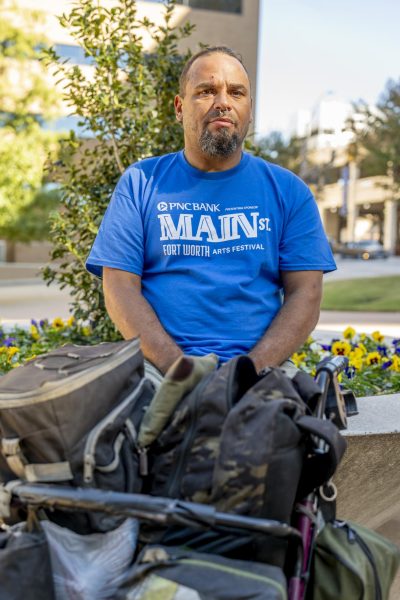
TR student employee Jacob Sheppard had encouraged Reed to enroll in classes because he personally knows what it’s like to be homeless, and he likes to share the resources that got him out of homelessness with others.
“I hate to see people stuck in a rut, or they’re actually trying to clear a hurdle to do something better for themselves, but they can’t move forward because they don’t have the know-how of what they have access to,” Sheppard said. “And sometimes that’s one of the hardest things, especially when you’re hitting the very bottom, to know where to reach up to get help from.”
Sheppard and Reed met at Union Gospel Mission, and while Sheppard is now off the streets living in a residency program, he said he keeps his connections with the local homeless community to help when he can.
“The time that one takes out of their day to survive isn’t always factored into what education sometimes demands when struggling and attempting to be successful,” Sheppard said.
At the end of his day, Reed boards the bus back to East Presidio Street, where he will pitch his tent and try to catch some sleep. The next morning, he’ll do it all over again.
For Reed, walking through the campus doors and enrolling for classes was not an easy decision. Change is scary, he said. But he doesn’t have it in him to accept defeat.
For now, all he needs to know is that there’s a path forward and he’s not backing down.
“I deserve life just as much as anybody else,” Reed said.