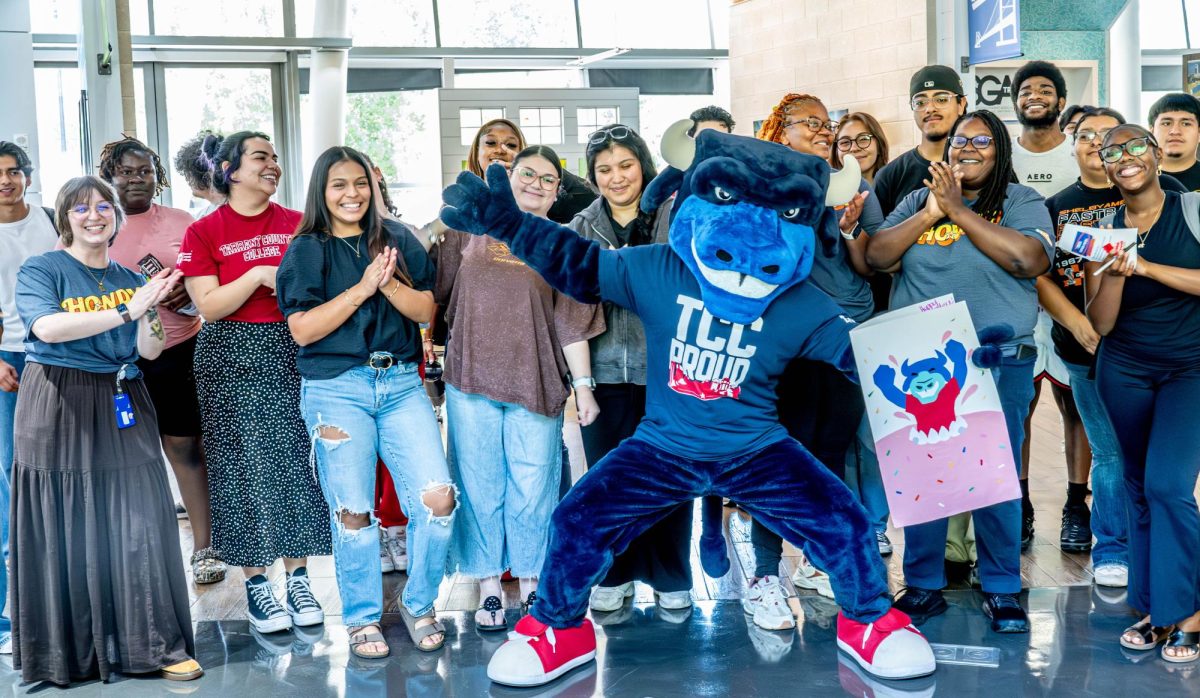
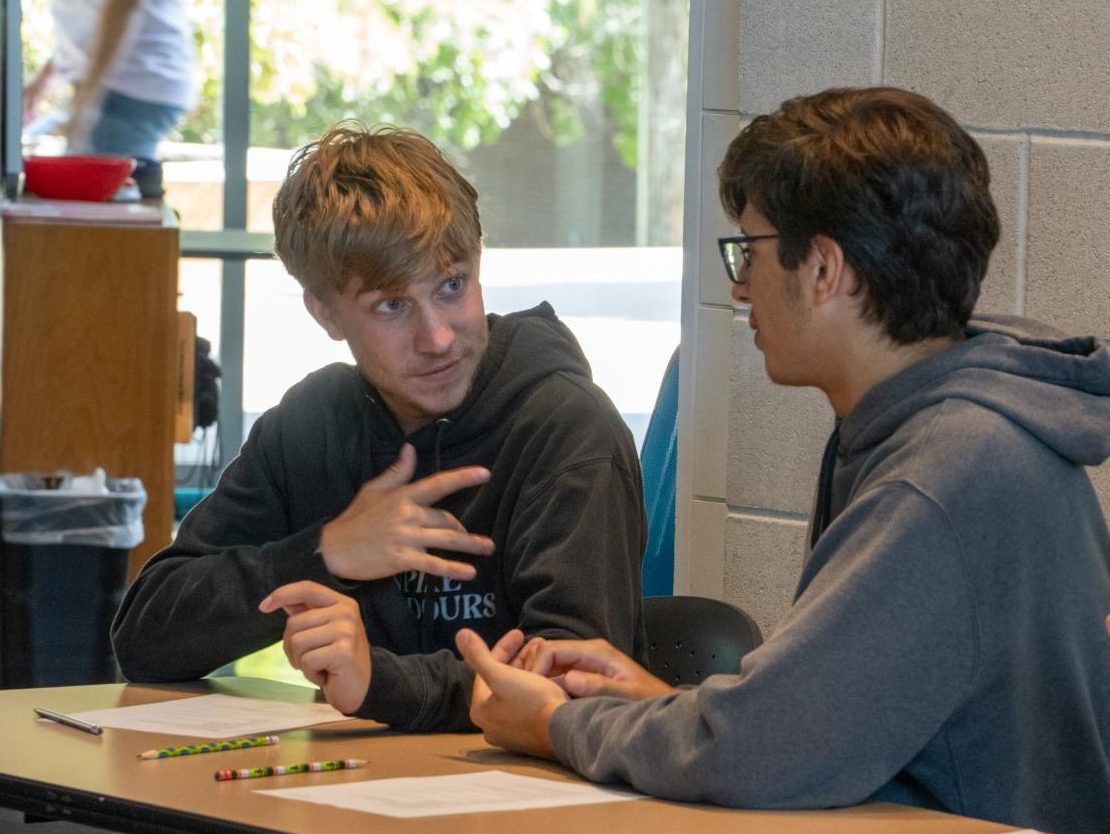
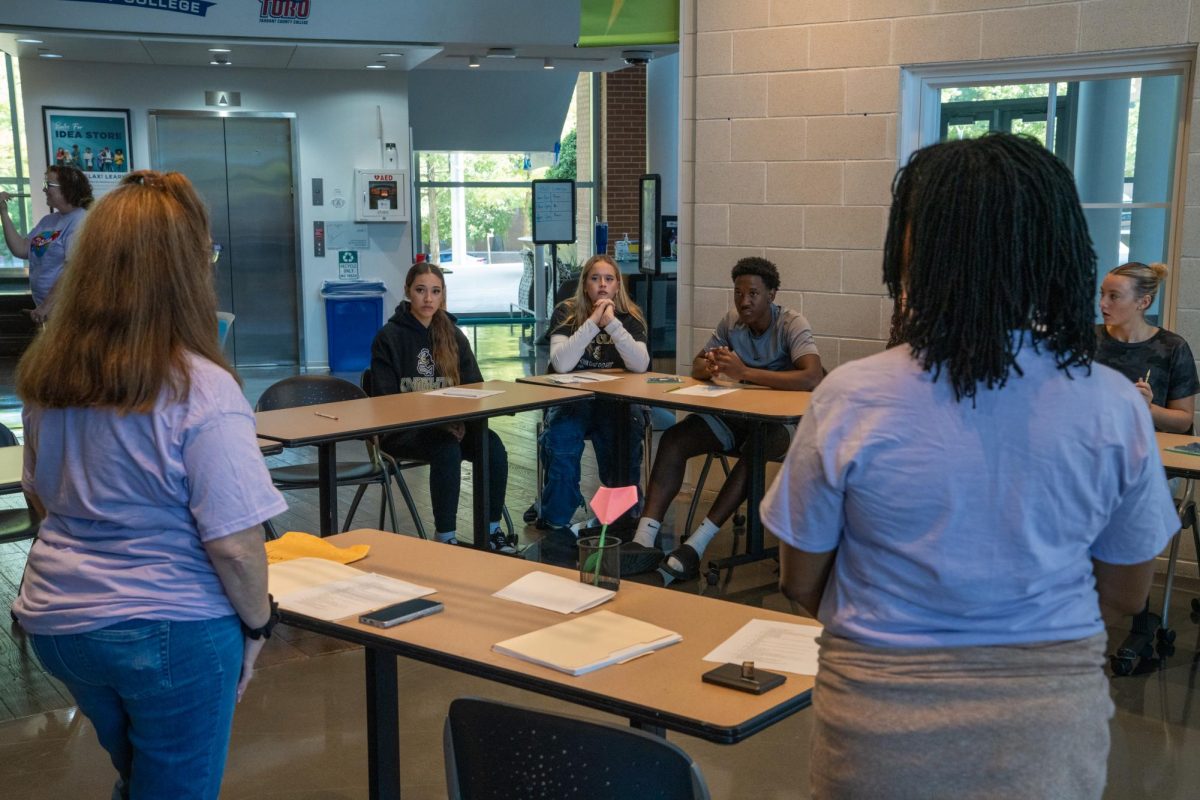
The sign language interpreting program at TR Campus hosted its annual Deaf Deaf World event Oct. 8, with interactive exercises designed to immerse participants in Deaf culture.
TR instructional support specialist Daymond Sands said the uniquely styled events connected to Deaf Deaf World are important to furthering an understanding of Deaf culture.
“We typically live in a hearing world, and we have to – as Deaf folks – write, gesture, figure out how to communicate with hearing folks,” he said through a sign language interpreter. “This is a chance for hearing people to see a day in the life of a Deaf person, to be in our shoes.”
This is Sands’ ninth year working the event, though it has been around far longer than that.
Maureen Denner, technical program director for the sign language interpreting program, said the college was hosting Deaf Deaf World when she was still in the program in 1990, and the department has worked to preserve the tradition of immersion over the last three decades.
“The premise of the whole experience is there is no English talking aloud,” Denner said. “[Students] have to use their ASL or their gesturing or their miming to be able to communicate in the different activities that go on.”
One of the immersive activities was a mock clinic, where participants would explain to a mock doctor what was wrong with them. Afterward, they would head over to a mock pharmacy to pick up their medicine, which was just candy.
Another prominent activity was the Deaf-Blind simulation, which Denner said was run primarily by the second-year interpreting interns. The attendees were guided through the experience of being Deaf and blind.
“They get a blindfold. They get earplugs. There’s no talking anyway, so they have to figure out how to navigate,” she said. “They have to learn to trust this person who’s leading them because they can’t see and they can’t hear. That’s always a very eye-opening experience for a lot of people.”
After the activities came a midday intermission. Many students and community members reconvened in the evening for a closing performance from American Sign Language comedian Keith Wann. They gathered inside the TR Energy Auditorium as the department welcomed the special guest.
Wann’s comedic act largely centered around his experience growing up as a CODA, or Child of Deaf Adults. ASL was the primary language used in the performance, but there was someone with a microphone translating everything Wann said to English for hearing audience members. That choice is intentional, according to Wann.
“I do my show in sign language because I want Deaf people to have first access,” Wann said.
Being asked by others what the CODA experience is like has always been interesting to Wann, he said.
“People say, ‘How is it having Deaf parents?’ For me, it’s like, ‘I don’t know. I never had hearing parents, so I have nothing to compare to,’” Wann said. “Being a child of Deaf adults, what that really says is, ‘Hey, ASL is my first language heavily influenced by these awesome Deaf parents.”
Wann said as a CODA, he feels deeply connected to the community. He said although he is hearing, expressing himself in ASL sometimes comes more naturally than English.
“I’ve always, my whole life, had Deaf friends. ASL has always been a part of my community,” he said. “My identity is not just having Deaf parents. It is being a part of the Deaf community.”
Wann, a performer with over three decades of experience, had already come to TCC in 2014 and said he was more than happy to return when he was invited back.
“The minute I saw the name Tarrant County College, I was all, ‘Oh absolutely,’” he said.
Wann said the interpreting program, support and community offered at TCC is hard to come by, and that makes all the difference.
“There’s not that many hotbeds like that out there,” Wann said. “So, for me, it’s refreshing to come here and just be surrounded with this access, to be surrounded with people who want to learn, to be surrounded with people who want to teach. That speaks volumes about the program.”
This year, TCC partnered with Collin College in Plano and UNT, whose students attended the event.
Denner said TCC always wants to partner with and give back to the Deaf community. She said that the community serves an integral role in educating the interpreting program students. Events like Deaf Deaf World are what helps hearing people gain deeper insight into the Deaf experience and spread awareness, Denner said.
Part of spreading that awareness is to show hearing people that “Deaf can,” according to Denner.
“A lot of times if you’re not involved in the Deaf community, you don’t understand that the only thing they can’t do is hear,” Denner said.
Sands said the goal through events like these is to show people how to navigate being Deaf and become motivated once the experience is over. He said he hopes for people to pick up some basic sign language and want to learn more.
“We want you to leave and remember that struggle and that experience and then think about how to advocate and provide access for everyone,” Sands said. “Things need to change, so if you walk in our shoes, you leave inspired, thinking, ‘Wow, this is what Deaf people experience every day. Now I know how to better support Deaf individuals.’”