














The board of trustees will decide at its Nov. 19 meeting on $57 million in software agreements for a new enterprise resource planning service expected to be completed by 2032.
An ERP is a software platform used to manage day-to-day business processes for administration, student and faculty services. TCC has been planning to implement new ERP services since at least 2021.
“Putting these pieces in place helps us operate more effectively today and positions TCC to take advantage of automation, AI and other capabilities as they develop,” executive program director Marcus Kerr said.
The service would be released in sections over a period lasting a total of 10 years. Beginning with the opening of new financing and budget services, the order of release would be HR and payroll, financial aid, student registration and admissions, class planning and then student
accounts.
The board will decide whether to approve $57 million, but the overall cost will be higher.
“Today, we estimate the total investment at approximately $104.7 million through fiscal year 2036,” Kerr said. “About $75.3 million supports implementation and transition to normal operations while $29.4 million covers software subscriptions that continue beyond implementation.”
Trustee Shannon Wood said the board had set aside $88 million in 2021 for this exact service. She asked where the remaining $16.7 million would come from.
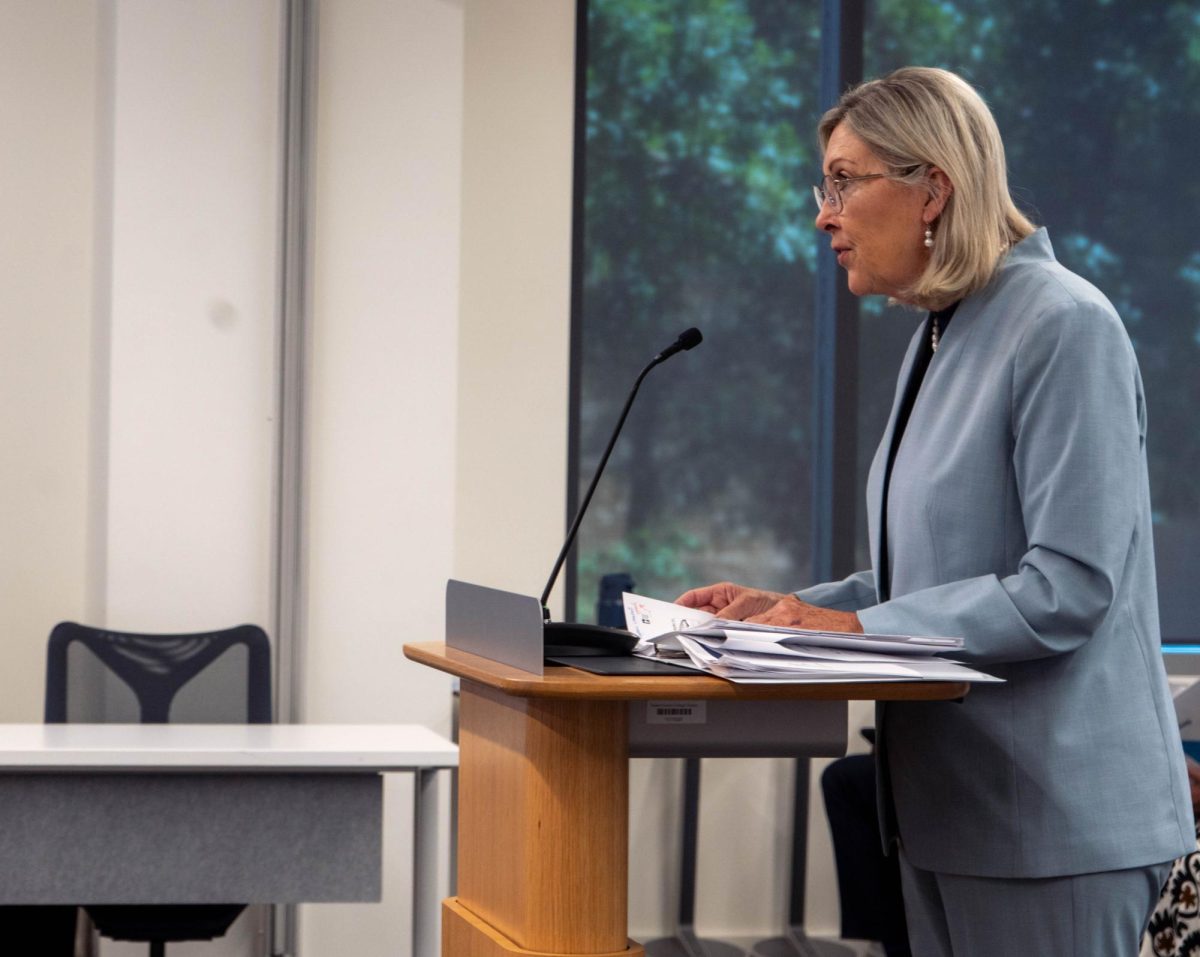
“We currently have $72 million total remaining out of that $88 million set aside for the ERP,” chief financial officer Pamela Anglin said. “But I would propose that we look at over the next 3-4 years go ahead and set aside a bit of additional money each year into the fund 45 so that we have plenty of money set aside to fully fund this.”
Since at least 2024, the board has budgeted $32 million every year into an ERP fund. The 2036 timeline means that 50-year veteran trustee Gwyndolyn Morrison will be retired by the time the project is complete. She said Kerr needed to ask tough questions to the three different contracted companies when directing a project with many moving parts.
“Do those people play well together in the sandbox? Do they even know each other? Do they like each other? Do they all know where we’re trying to go with this, and are they all on board?” Morrison said. “That’s a great concern that I have, maybe having a little bit of history that causes me to have that concern.”
TCC attempted to begin implementation of a new ERP service in 2022 when it reached an agreement with what was then called Anthology. However, TCC terminated the contract saying it had “significant concerns regarding performance.” Anthology sued TCC for breach of contract, and the two sides settled out of court.
Morrison asked Kerr if there was a way for more direct community feedback regarding the new ERP services. She referenced the founding of TCC and its roots in community meetings.
“We started as an idea. There were town hall meetings all over the county,” she said. “And so those town hall meetings should be able to take place within this project and that’s just my thought about it in order for it to be a success. So, think about it.”
TCC’s classes could also see changes in 2028 after a yearly review of its core curriculum. The board will consider removing Mexican-American History I and II, Environmental Biology and Film Appreciation from TCC’s list of core curriculum classes.
“We want to emphasize that these four courses are not being discontinued,” NW president and vice chancellor for student success Zarina Blankenbaker said. “They will remain active in TCC’s catalog and available for student enrollment.”