



















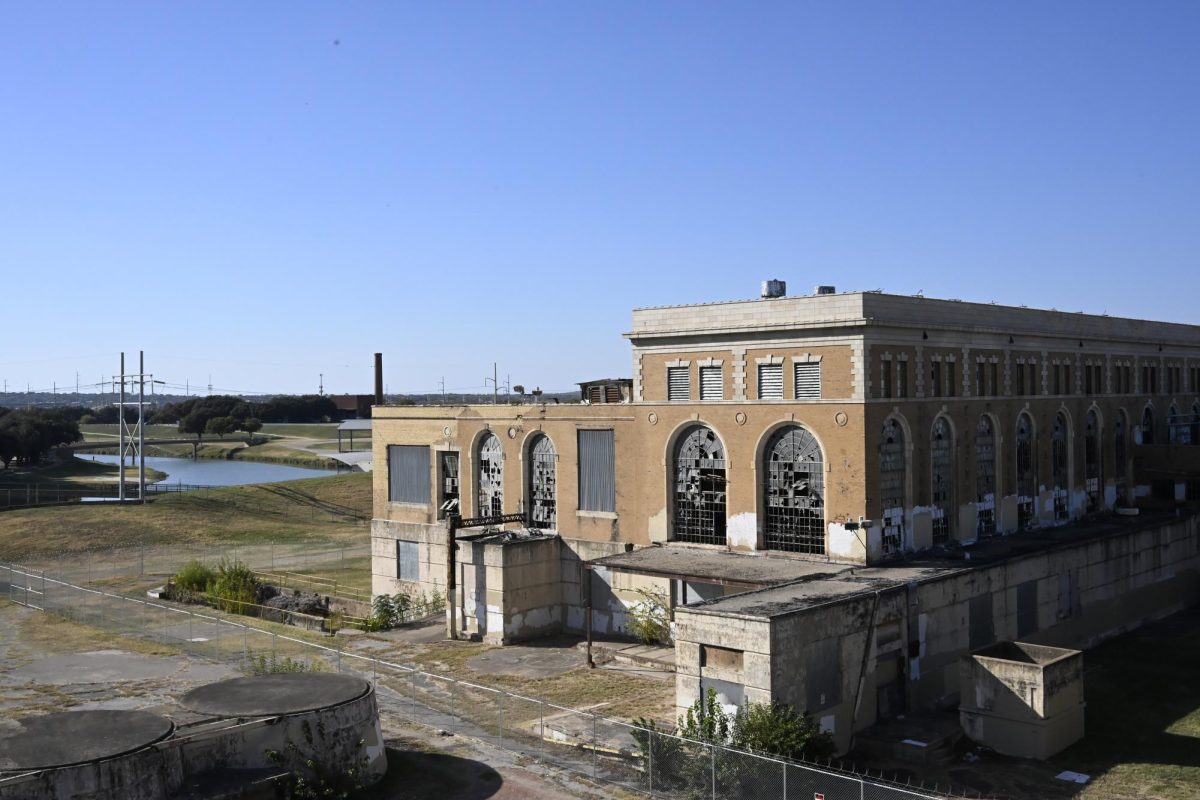
The former TXU Power Plant has been taken off the market after the college received only one bid in an auction, which could not be accepted.
Chief Financial Officer Pamela Anglin briefed the Fort Worth Historic and Cultural Landmarks Commission during its meeting where it voted to recommend adding “Highly Significant Endangered” status to the 113-year-old building on Feb. 9.
Anglin did not return message seeking comment from The Collegian, but she told the Fort Worth Report that the only bid that was received was under the appraised value of the property.
“We’re required (by state law) to get the appraised value,” Anglin said in the interview.
She confirmed the building was no longer for sale, and TCC wouldn’t oppose historic protection.
The Beaux Arts-style industrial building from the early 20th century has been owned by the college since 2004 when it purchased land for the TR East Campus. Built between 1911 to 1913, the plant powered all of Fort Worth for over 40 years.
Multiple organizations requested the college to designate the building as a historical landmark over the years, but their attempts were unsuccessful.
“We really wanted to save the building,” said Bill Perdue, Tarrant County Historical Commission chair. “It’s just sad that they’ve let it go to hell in a handbag.”
Perdue said the commission had sent letters not only requesting the designation of the landmark but also giving advice to the college on how to maintain the power plant.
“There’s federal grants or state grants that could help them offset some of the cost,” he said. “There’s a lot of stuff that we could help them with and do, and they just weren’t interested.”
He said if any historical designation had been put onto the property, the college would have been required to prevent it from deteriorating. The grants they could’ve gotten through the landmark would have helped with those costs, Perdue said.
“Maybe they were afraid it would put restrictions on them,” said Susan Kline, a preservation consultant who specializes in the preparation of nominations for the National Register of Historic Places.
She said by making the building a historical landmark, whoever owns the building must have any rehabilitation plans approved by the landmark commission.
“It will protect it from demolition,” Kline said. “That will ensure that whatever is done to it is done appropriately so that its historic features are kept.”
Making the building a historical landmark doesn’t completely prevent it from being modernized, and Perdue said the commission had recommended it could be used as a facility for classrooms or labs.
“They didn’t follow any of the directions or recommendations that were given to them,” he said. “It’s destruction by neglect. In other words, they didn’t have to do anything, so they didn’t. So, it just fell apart.”
Now that the Fort Worth’s Historical and Cultural Landmark Commission voted to recommend the TXU Power Plant be historically recognized, the Fort Worth City Council, will hear the case in March. The council is the last stop before it becomes a city historical landmark.
“I think we’re still in good shape,” Kline said. “I think there could be positive things happening.”
For Perdue, the current state of the building means more to him than any prospects.
“The thing is, once you have destroyed something … it can never be recreated,” he said.