






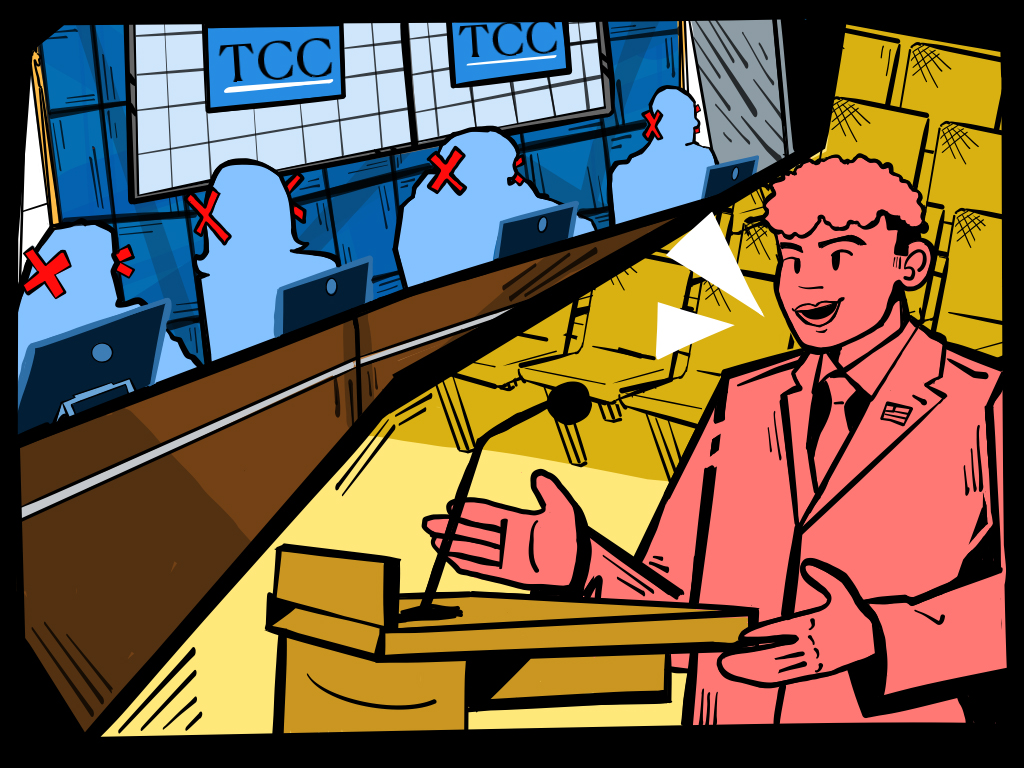









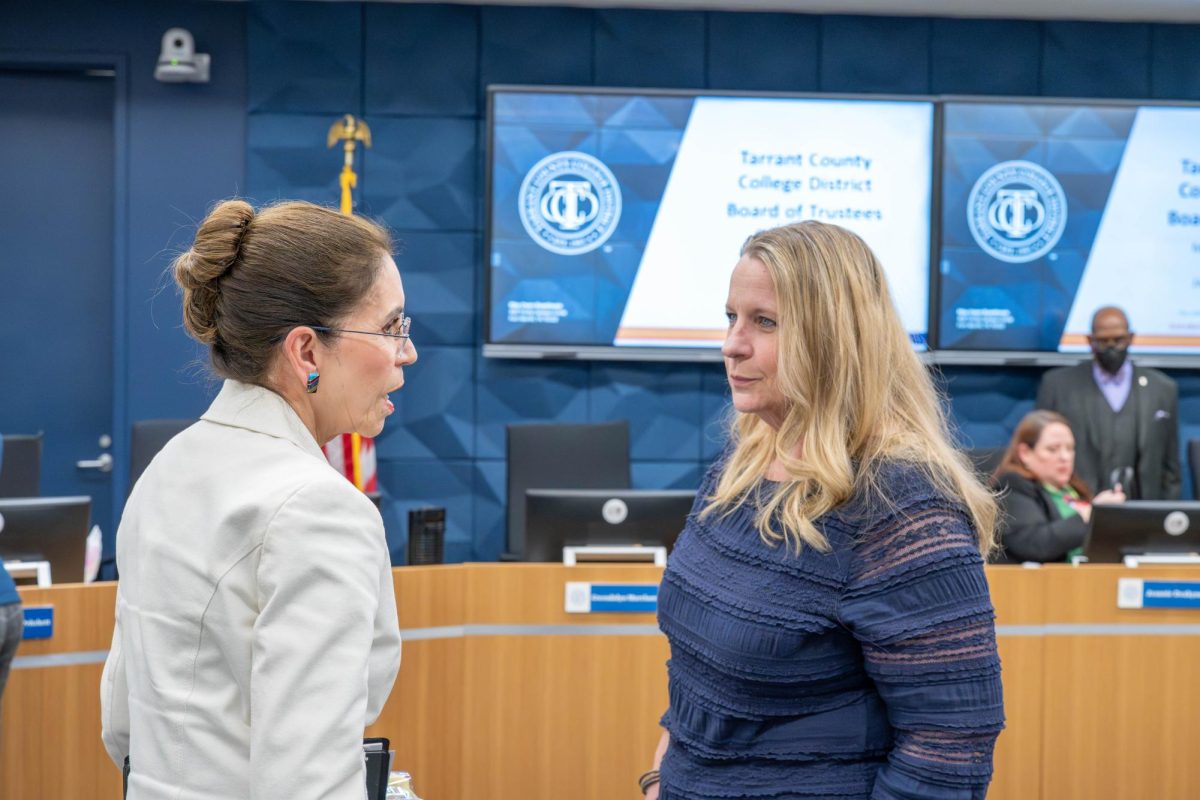
The decision to discontinue 10 Career and Technical Education programs will be voted on by the board of trustees in March.
“If you say yes … we will notify the [Texas Higher Education] Coordinating Board that effective fall of 2026, students will no longer be admitted in these programs,” Director of Curriculum and Educational Planning Issac Rivera told the board at its work session Feb. 19. “But currently enrolled students have a window of five years to finish these programs.”
His department, which develops new programs and revises, maintains and discontinues existing ones, oversees the planning process’ three-year cycle. These discontinuations are based on sustained low enrollment, limited completion and program levels failing.
Rivera said the district conducts several program reviews to ensure courses align with state, workforce and transfer program expectations, as well as the institution’s‘ priorities.
The Architectural Technology Associate of Applied Science degree and Occupational Skills Award, Level One Architectural CAD Operator and Architectural Paraprofessional programs are being requested for discontinuation due to low graduation rates, lack of industry credentials and misalignment with workforce needs, said South Vice President of Academic Affairs Stephen Jones.
“This is an Associate in Applied Science, which has courses that doesn’t directly transfer to the university,” Jones said. “That’s what the students realize. Because if you look at the numbers, we have high enrollment, but once they figure out the courses are not transferable, then they go straight to the university.”
To make these courses transferable to a university, there would need to be additional studio time added to their class. Adding these extra hours would only allow full-time faculty to teach two–to-three classes instead of the required course load of five.
“Which would not be feasible because at the time we only had one full-time faculty member,” Jones said.
TR President Sean Madison requested the Educational Sign Language Interpreting program be deactivated due to the certificate not being a viable credentialing path, and there being no recorded completions of the program for over five years.
“Under the Coordinating Board requirement, a program must reach 25 completions within a five-year window to maintain viable status,” Madison said. “Furthermore, this ESC is currently ineligible for financial aid.”
Other sign language interpreting programs will remain active.
To better allocate resources to better performing technical programs, Madison requested to deactivate a Level One Geographical Information Systems Programmer certificate since it’s only had one completion since 2021.
Then two Marketing OSA programs, representing the same program under different codes, were requested for deactivation by Madison not only to be compliant with state requirements but also because enrollment has fallen below state-driven liability thresholds.
Enrollment for the Flight Instructor Enhance Skills Certificate has declined over the past five years, NW President Zarina Blankenbaker said.
The certificate does not offer clearly defined workforce outcomes after completion, which is one reason why Blankenbaker requested its discontinuation.
While its enrollment has declined over the past five years, the closing of this certificate will not affect the Professional Pilot Degree program.
Level Two Horticulture Business Management was recommended by Blankenbaker due to sustained low enrollment and low completion. It also was not designed as a stackable credential within the horticulture Associates of Applied Science degree plan.
“Advisory Committee feedback did not identify a strong workforce need for this stand-alone credential in its current configuration,” Blankenbaker said.
SE President Andrew Bowne requested two Computer Support Specialist Certificate programs be discontinued. These were made up of six courses, four of which are included in other Information Technology programs.
“This certificate is not leading to enhanced employment opportunities,” Bowne said.
Chancellor Elva LeBlanc said the purpose of the discontinuation presentation at the meeting was to educate them to move forward with their plan to vote at its Feb. 26 meeting. However, due to three board members being absent Feb. 19, it was decided to push the vote to March.
Vice Chancellor for Communications and External Affairs Reginald Gates said this isn’t the college taking away or cutting programs. It’s just deactivating the underperforming ones.
“It makes me think about Spectrum cable,” Gates said. “Theres a lot of channels I don’t watch, but I’m paying for it.”