






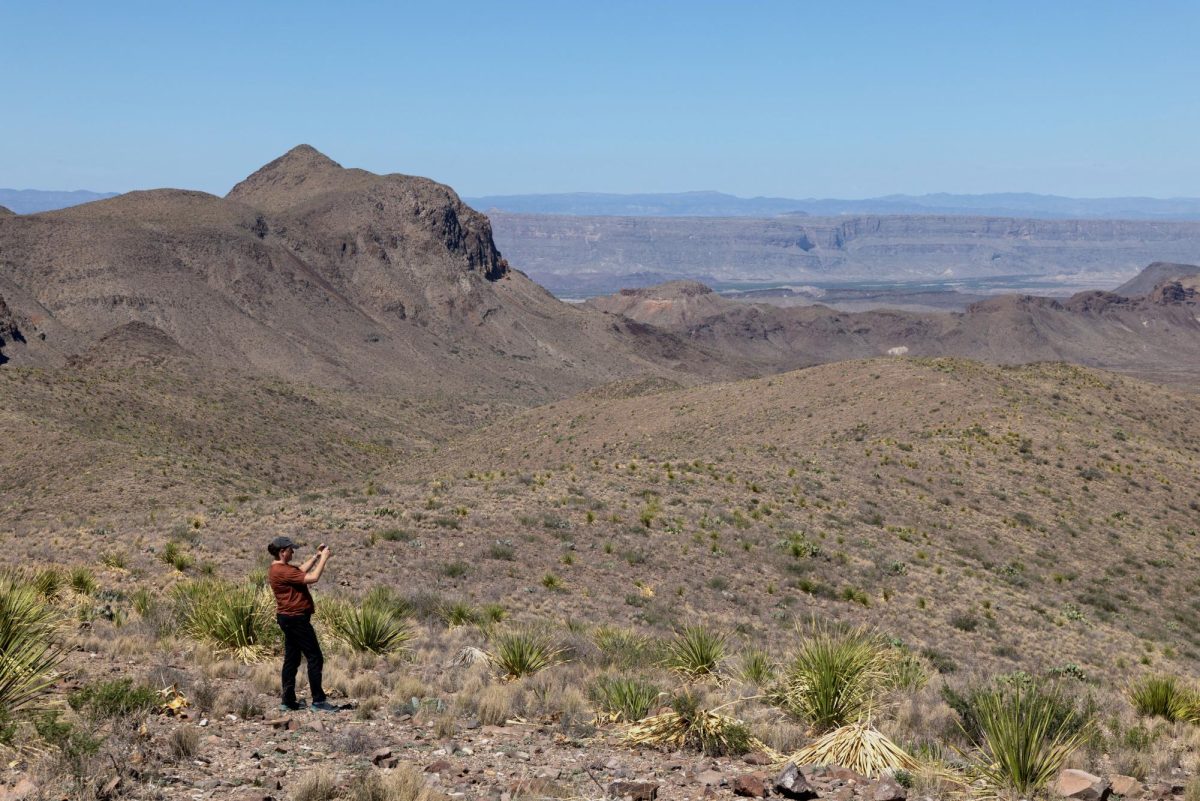
This summer, I spent a scorching day canoeing the winding Rio Grande through the arid Chihuahuan Desert. Heat pressed down on my skin as I flowed through the cool river, finding moments of shade from jagged cliffs reaching into the azure sky.
What I found was that in Big Bend National Park, the U.S. border isn’t just a political talking point. It is natural and tangible. You don’t need to look at lines on a map to see where America and Mexico collide.
In Big Bend, where a formidable natural border is already formed, building a wall risks damaging the wildlife, communities and tourism that make the region worth protecting.
Over the years, there have been several proposals for a border wall to be constructed on the U.S side of the Rio Grande across the entire length of Big Bend National Park in southwestern Texas. A wall might seem like an obvious solution for voters who prioritize border security. But even if border security is the goal, spending $1.7 billion to wall off one of the most remote and naturally defensible sections of the border is difficult to call practical.
A coalition of residents, business owners and activists has established the “No Big Bend Wall” movement. Signs line the roads of Terlingua at the entrance to the park, and local town hall meetings where locals have spoken in protest.
Marfa Public Radio has reported that bulldozers are clearing previously untouched land to construct roads for Border Patrol to access the Rio Grande. This is despite officials assuring locals that the border wall project was scrapped.
Big Bend is unlike the rest of the U.S.-Mexico border. Ninety-foot limestone cliffs flank both sides of the river at several sections, and hundreds of miles of desert divide the nearest cities. A border wall is not only wildly expensive to construct, but also functionally impractical. Border crossings in Big Bend National Park have accounted for less than 0.05% of all migrant apprehensions along the U.S.-Mexico border since 2023, according to data shared by Border Patrol with the National Park Service.
Spending taxpayer money to wall off a remote section of desert isn’t border security. It’s political theater.
For the local communities of Terlingua, Alpine, Marathon and many others, tourism brings in a majority of their income. Around $57 million is spent in gateway communities, supporting about 585 jobs and $17.3 million in labor income from Big Bend National Park. A large reason for this income is the ability of tourists like me to reach the Rio Grande and witness its natural beauty. Four river touring companies and publicly managed trails depend on access to the Rio Grande and are facing an uncertain future.
More than 140 businesses have signed a letter pleading with local leaders to help them prevent the border wall with the understanding that it would greatly reduce revenue.
The people whose livelihoods are dependent on Big Bend will not be the only ones to suffer if a border wall is built.
During my trip I watched a wild horse and her foal lower their heads to sip from the Rio Grande, its current diminished by the tangled political relationship between the U.S. and Mexico over the river’s precious water. Sources of fresh water are rare and highly valued in the vast Chihuahuan Desert. A physical barrier would prevent black bears, mountain lions and other unique Texas wildlife from accessing the river for drinking water and cooling during hot summer months.
Since 2016, there has been an ongoing debate about the role a wall should play in border security with no consensus on the solution.
Allowing political grandstanding to take precedence over the people and wildlife that call Big Bend home is a travesty for the state of Texas.