

















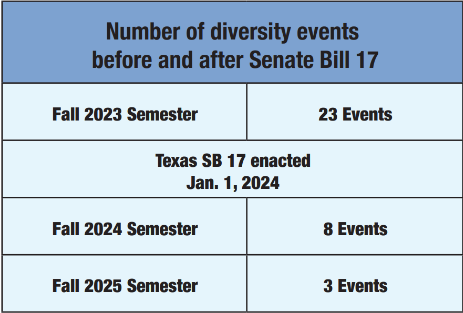
NW students have felt a lack of culture on campus since Texas Senate Bill 17 banned diversity, equity and inclusion activities at public institutions.
Since the bill passed, students have noticed there haven’t been events celebrating the different cultures that make up the TCC community.
NW student Mayuelis Pantojas is from Venezuela, a country with many of its people in different areas of the world. At her schools in Venezuela, Pantojas attended many events that celebrated different cultures.
However, she has noticed culture isn’t celebrated as much at TCC.
“They need to know more about the culture that is here in the country,” she said. “When I saw the activities for culture, or intercultural diversity on this campus, I don’t see my culture, even when I know that [many] people here are from Venezuela and Columbia.”
Pantojas said she wants students who come from different countries to be able to feel comfortable at NW, but it feels like no one is interested in learning more about their cultures.
NW student Diana Rocha remembers friends who attended TCC before her talking about Hispanic heritage month events or Mexican cultural events being held on campus. But she has been at NW for two years and said she’s never noticed any events like that being hosted.
“It’s kind of weird. I feel like I used to see it a lot during high school,” she said. “At least in my high school, they used to have a lot of Day of the Dead stuff or Cinco de Mayo celebrations.”
A Dia de los Muertos event was held on Oct. 30, but it wasn’t in an area where campus events are usually held. Instead, it was in a classroom on the third floor of NW01 that was so crowded people had to sit on the floor.
“It’s kind of like you’re shoved in a corner somewhere,” Rocha said.
TCC website information about SB 17 says that cultural heritage events can be celebrated if the events are inclusive and do not give preferential treatment based on race, ethnicity or other characteristics.
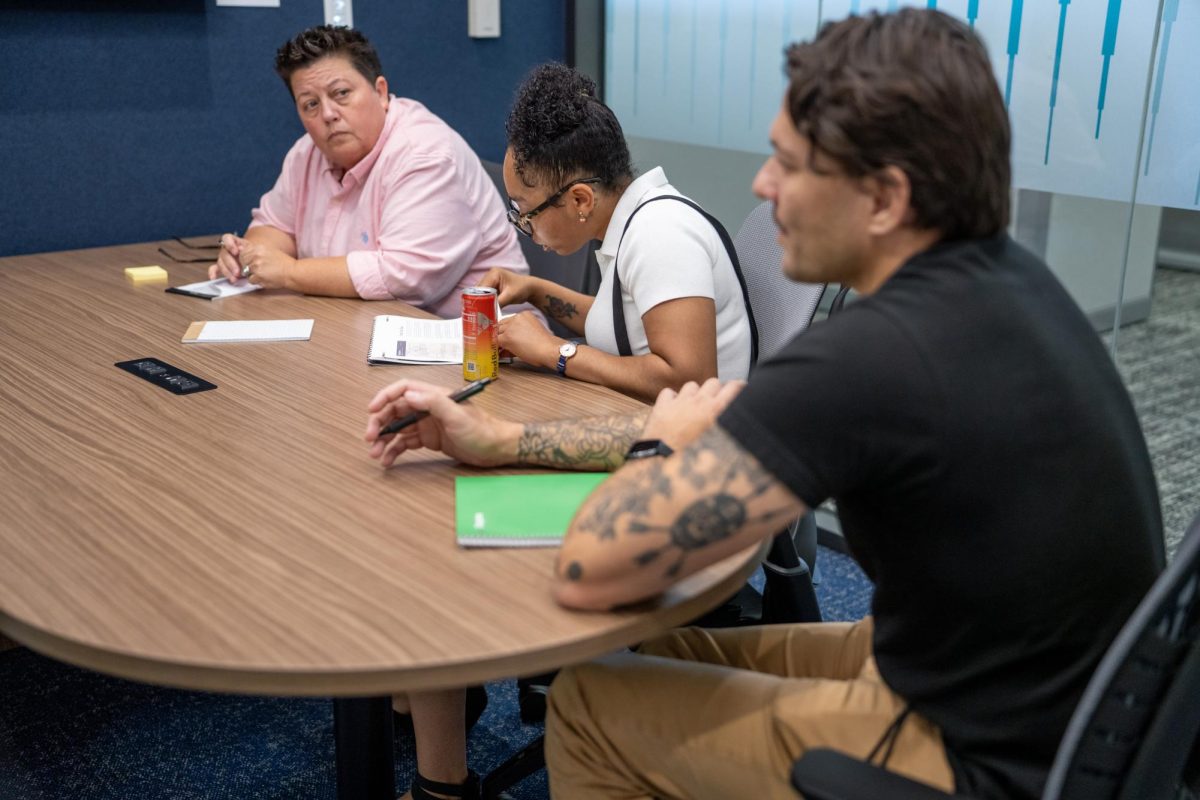
However, Patrick Longoria, president of the NW Student Government Association, said there is still a lot of confusion about what clubs and organizations can and cannot do in order to comply with the law. He said some organizations such as the Latin Club and the African American Student Association are specifically highlighting a demographic group, that is considered noninclusive and DEI reinforces the inclusivity along with many other similar clubs.
“They told us ‘You can do these things, but they have to be purely student led,’ but there is an irony there because every activity we want to have has to be approved by the campus,” Longoria said. “If the campus feels it draws unnecessary attention, they might not want to approve it.”
Candace Soto, sponsor of the Advocating, Solidarity, Inclusivity, & Awareness on Nurturing Cultures club, said that since public institutions are funded by the government and taxpayers, they must be very particular about verbiage on flyers as well as how they conduct them.
“Let’s say if we’re celebrating Hispanic Heritage Month. That has to be worded very specifically, where students know even though we’re celebrating something like this on campus, it’s open to everybody,” she said.
TCC employees have been fired for violating SB-17 because of DEI content being mentioned in a training video. In April, The Collegian reported on this issue and the TCC legal counsel team said that if an employee violates SB-17, they are required by law to either terminate or discipline them.
“A lot of people are so scared of getting that $65 million fine or getting fired that they don’t even want to approach it,” Longoria said.
Longoria said the sponsors of the clubs do a great job of supporting the students, trying to help them in any way they can, but he feels as if the ban leaves them restricted to hosting certain events. He said he was in a meeting with faculty and students, and some of the faculty members were so worried about getting fired that they couldn’t even tell the students what they needed to know.
“I could not, in good faith, blame advisers for wanting to keep their job,” Longoria said. “I blame the people, the policy makers within the campus, who know or whose job is to interpret and understand the legality and then pass that information.”
Longoria said the bill trickles down to people who are scared to speak their mind and have an honest conversation in any capacity.
“I think it’s absolutely asinine that you can’t have a normal conversation with somebody,” he said. “College was the one place that I felt I could exchange ideas with another person.”