

















A Student Government Association leader said students are concerned about how they’ll pay for college next semester after student fees are implemented.
“I’ve spoken with students who are working two jobs just to afford school,” said Aden Golden, senate chair for South Campus’ SGA. “For them, this isn’t just a line item, it’s the difference between taking another class or stepping away for a semester.”
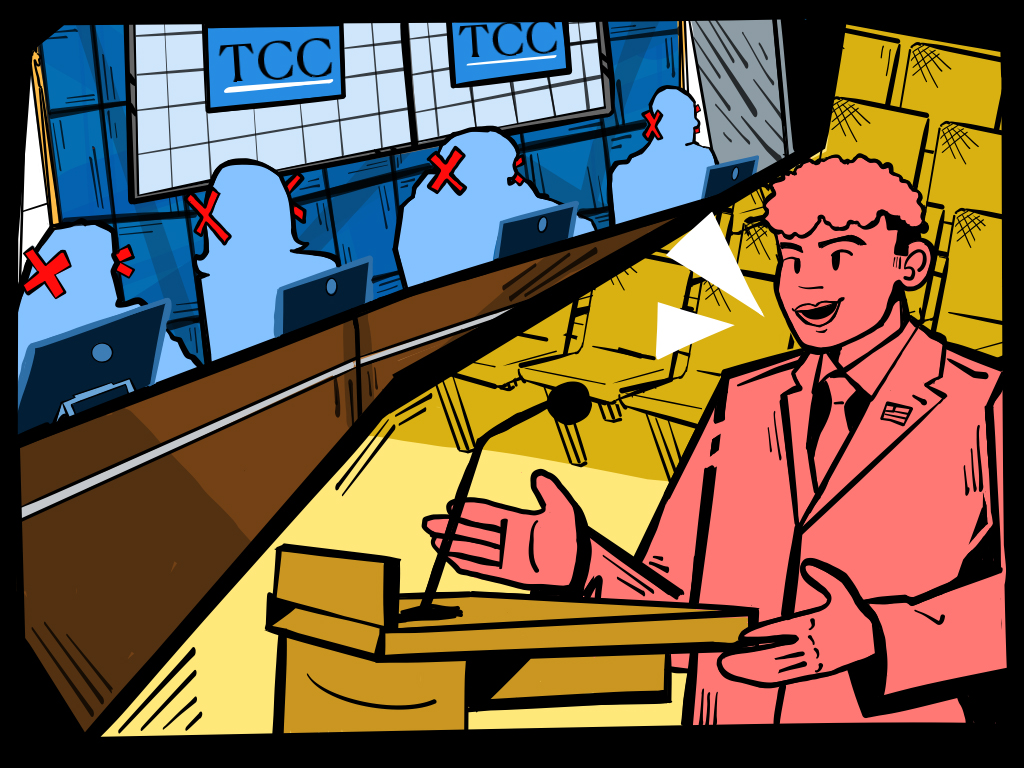
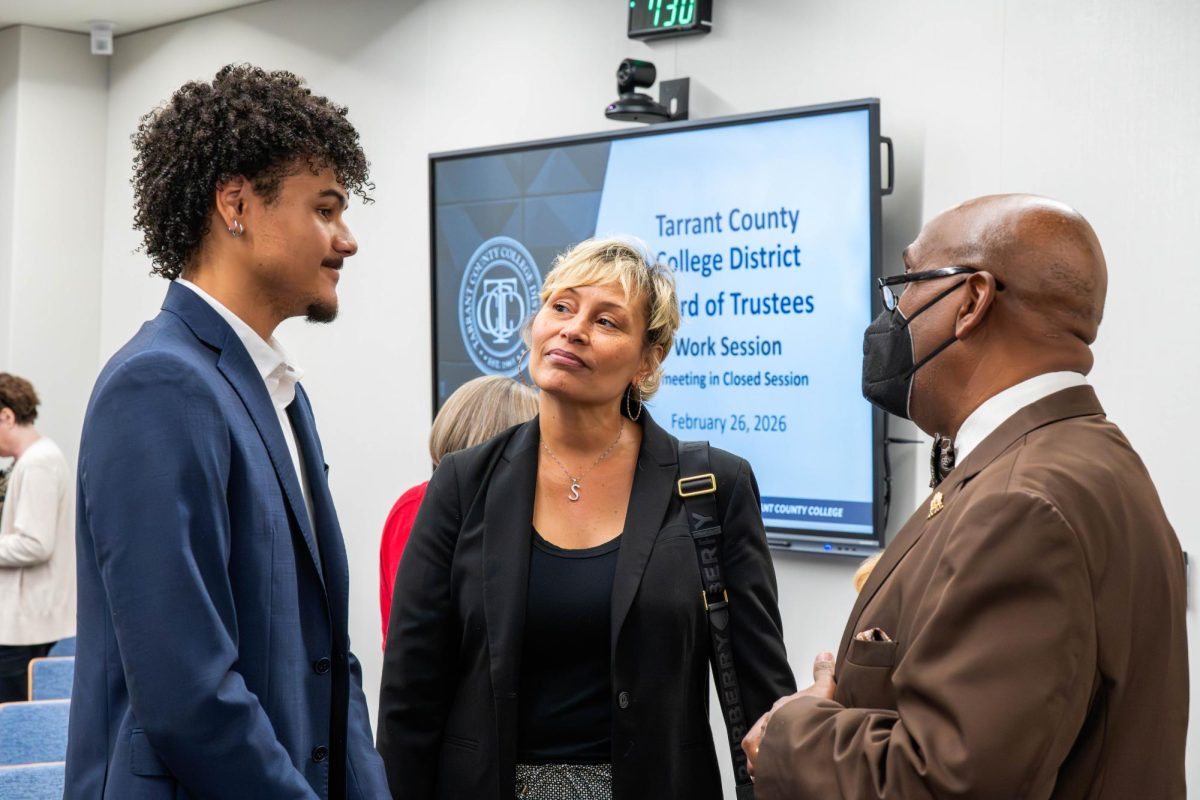
He made a public comment at the Feb. 26 board of trustees meeting where they voted to implement student fees, which will add $672 more to an Associate of Arts degree.
“I understand that the college is navigating real financial pressures, especially with tuition caps and limited flexibility in property tax exemptions,” Golden said. “However, I believe students should be the last group asked to absorb financial strain.”
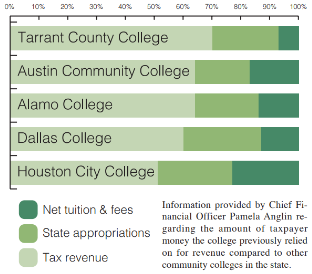
To compensate for the loss in revenue due to a tuition freeze mandated by Gov. Greg Abbott since 2024 and multiple legislative tax exemptions, Chief Financial Officer Pamela Anglin said the college put together a group to explore all the ways the college could increase its revenue.
“There had been a plan put in place to increase tuition $5 a year,” Anglin said. “I think, with the situation now, we’d probably be looking at some fees also.”
Different campus deans, vice presidents and student success organizations compared TCC to other Texas colleges similar in size. They determined there were many amenities TCC paid on behalf of students that those colleges didn’t, as well as credit hour fees the state allows that were never implemented.
“The impact for that full degree would be going from $4,440 to $5,112, based on a typical student schedule,” Anglin said.
All students will be charged $10 more per credit hour and $24 more per lab-credit hour. This means if a student takes five classes in the fall and two classes have one lab hour, then they’ll pay $174 more than they did this semester.
“Increases in student fees may look small on paper, but for many of our students, even a modest increase can have a significant impact,” Golden said.
Music students will pay $100 more for their private music lessons, and courses utilizing Capstone will be charged $50 for the software. Nursing students, both registered and vocational, will have additional technology fees.
“This is to provide them their access code to the software that provides them their training,” Anglin said.
Golden said he is a self-supporting student barely making it by. Along with the SGA, he’s taking 17 credit hours, working two jobs and teaching tennis on the side.
“I do not think they kept students’ struggles in mind when making the decision, which is why I had to step up and speak up,” he said.
At the meeting, all board members praised Golden for his courage to stand before them and speak on behalf of the student body.
Board President Jeannie Deakyne said she had been in his place before, approaching her college’s board about how fees affected students when she was a part of the SGA.
“I’d like to say a few things that are specifically tailored for the student who’s listening,” Deakyne said. “TCC has done an exceptional job of evaluating the environment that our tuition and fees are being administered in today.”
She encouraged students to be active in their state and local government to express how legislative tax exemptions are affecting the student and public college experience.
However, Golden said he felt like the administration lacked any communication with students before or after its decision.
“Many were disappointed and felt [it was] another way for the school to dig into their pockets,” he said. “I don’t think the college made it a priority to inform students, as a vast majority of them had no idea and learned about it either though their teachers or through SGA and fellow students.”
Golden said the college missed the opportunity for deeper student engagement, and instead just made students feel like they’re only recipients of outcomes to TCC’s decisions.
“Students want to be partners in problem solving,” Golden said. “Greater transparency, earlier communication and structured opportunities for student input before decisions are finalized would go a long way. When students feel heard and included, even difficult decisions become easier to understand.”