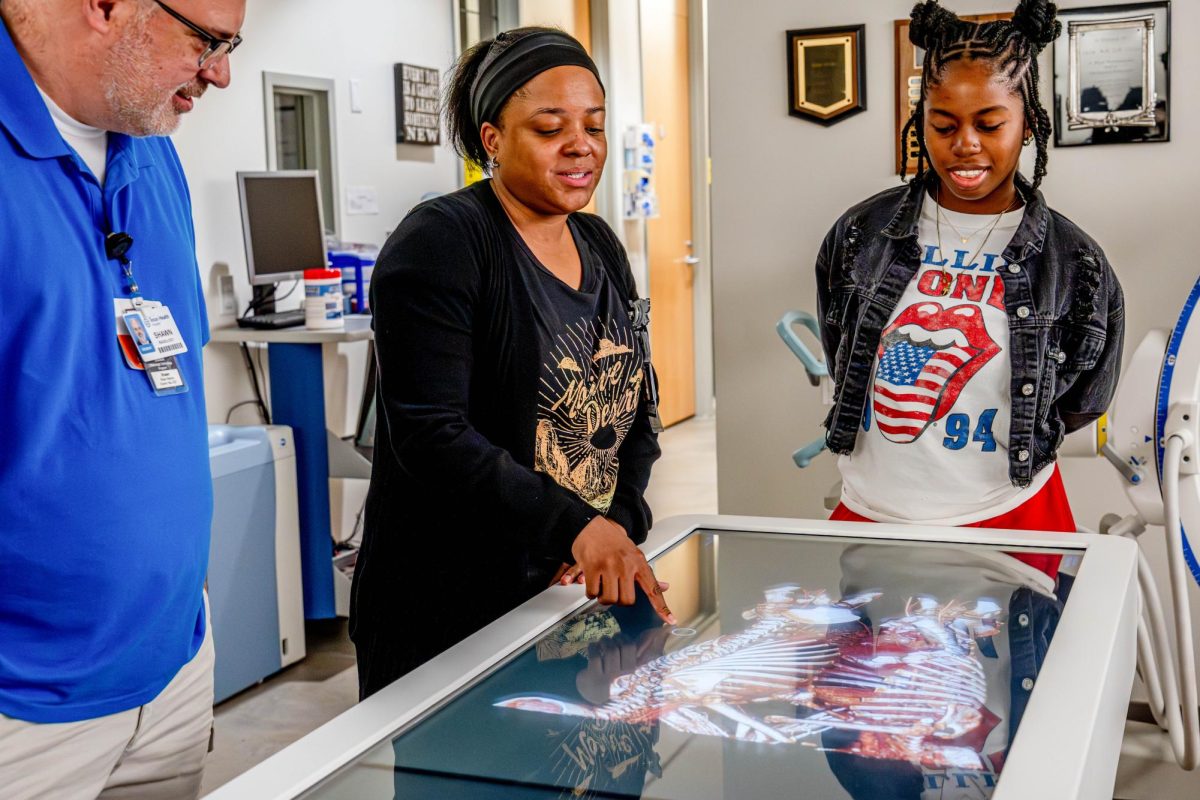


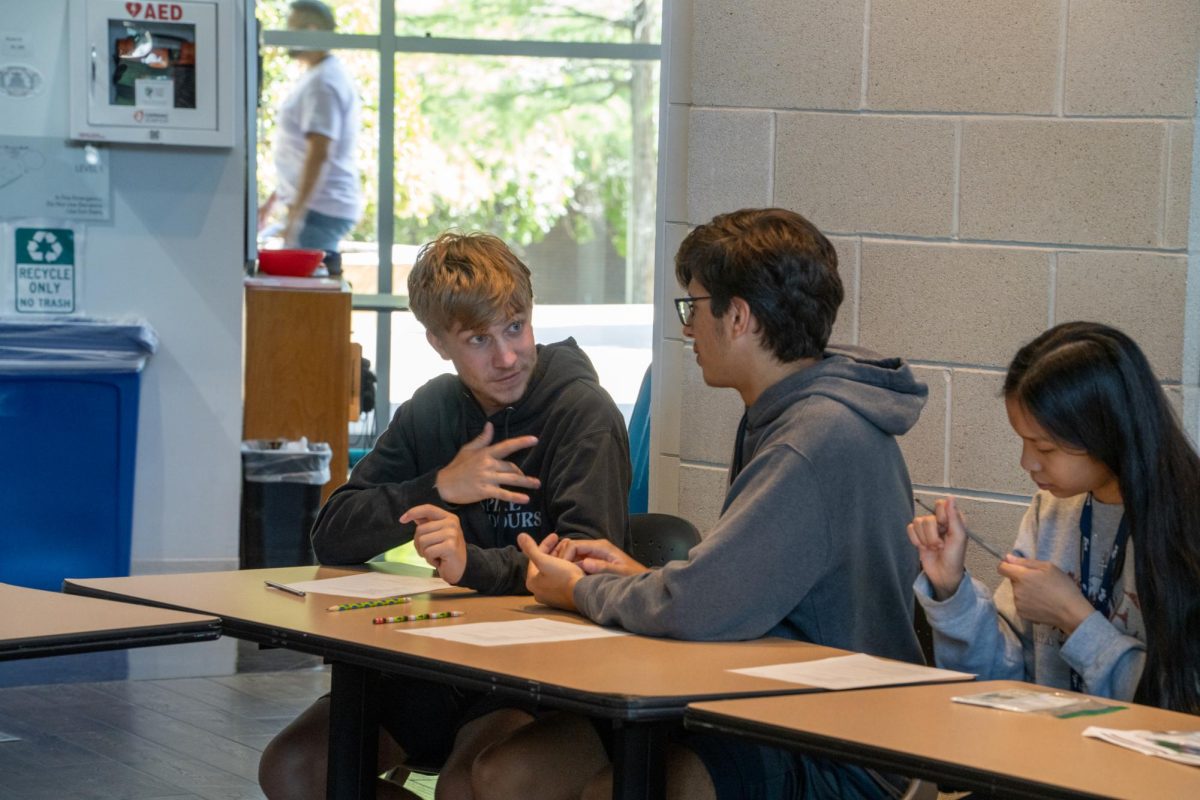
















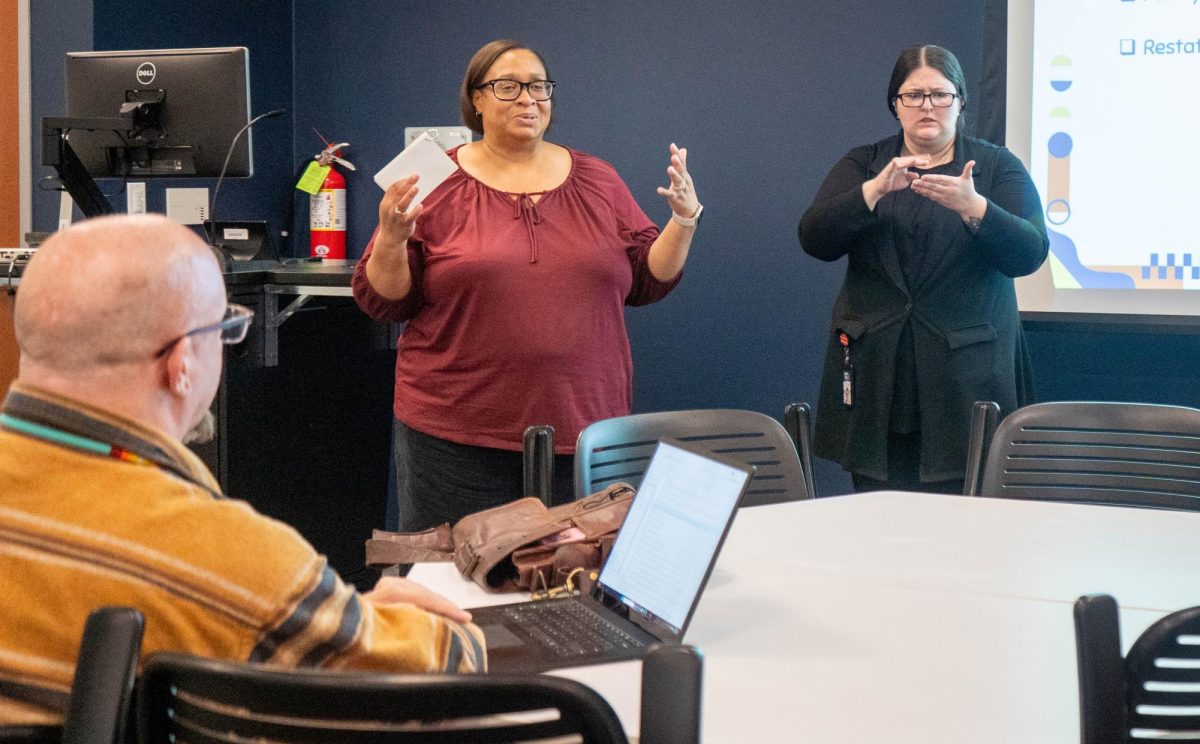
Students learned strategies to manage test anxiety during a “Calming the Chaos: Stress Relief and Exam Readiness Workshop” March 25 on TR Campus with a second session April 2.
TR Director of Student Accessibility Resources Presttee Robinson during the workshop said managing test anxiety begins with understanding that stress before an exam is normal.
“Every student experiences it at some level or another,” she said. “Adding that anxiety can trigger a fight-or-flight response that disrupts memory, focus and higher order thinking.”
Robinson said this “anxiety hijack” can cause blanking out, racing thoughts and physical symptoms such as rapid heartbeat.
“Your brain is not broken,” she said. “It’s just overwhelmed.”
The goal is not to eliminate anxiety but to manage it before and during an exam, Robinson said. One technique she emphasized was box breathing, a structured method of breathing to reset the nervous system.
Robinson also encouraged students to prepare through “structured preparation,” which includes knowing the test format, practicing under timed conditions, planning test day logistics and using campus support systems such as tutoring, counseling and Student Accessibility Resources. She said accommodations such as extended time may be available for students diagnosed with generalized anxiety.
Testing Services Manager Tywanna Jones discussed strategies students can use once the exam begins. She said scanning the test, noting question types and checking point values can help students plan their approach.
“Your approach to taking an exam is just as important as how you prepare for the exam,” Jones said.
Jones encouraged students to answer easy questions first, restate difficult questions in their own words and avoid leaving answers blank unless guessing is penalized. She also warned against changing answers without evidence.
“More often than not, your first choice was probably the right choice,” she said.
Melissa Sanders, director of Student Conduct and Prevention Education, explained that her office ensures fairness, academic integrity and compliance with college policy.
Sanders said even unintentional behaviors can violate exam expectations.
“They cannot prove that you cheated, but they can absolutely prove that you violated the expectations,” Sanders said.
Sanders said accommodations are not retroactive and urged students to communicate with instructors before an exam if they have concerns about testing conditions, technology requirements or anxiety. She also reminded students that campus spaces such as the math lab and library are available for those who need a quiet place to test.
“We want to support you,” Sanders said. “What that looks like is going to be different for each student, but we are here.”