








TCC is entering new territory as it works toward solving a problem looming over the community — a shortage of teachers.
The college’s response is to launch its first bachelor’s degree program since opening in 1967. Students can now earn a Bachelor of Applied Science in early childhood education and teaching. Classes are scheduled to begin during the second eight-week session of the fall semester.
The teacher shortage is not unique to Tarrant County. Across the country, schools have struggled to recruit and retain educators.
According to the Learning Policy Institute, in 2026 over 425,000, or 1 in 8 teaching positions nationwide are either vacant or filled by uncertified teachers.
“After COVID, the teacher shortage was significant because some teachers didn’t want to return to the classroom,” said Rebecca Luig, an education instructor on South Campus.
Unlike some bachelor’s degrees in the field that are designed exclusively around classroom teaching, the TCC program covers other career paths like childcare and social services.
The bachelor’s program is not limited to students with an Associate of Arts in Teaching. Students with other eligible associate degrees, including an Associate of Arts or Associate of Applied Science, can also transfer into the program.
That flexibility could widen the pool of future educators.
School districts faced with overwhelming vacancies have had to place college graduates into classrooms while those individuals are still working toward becoming certified to teach.
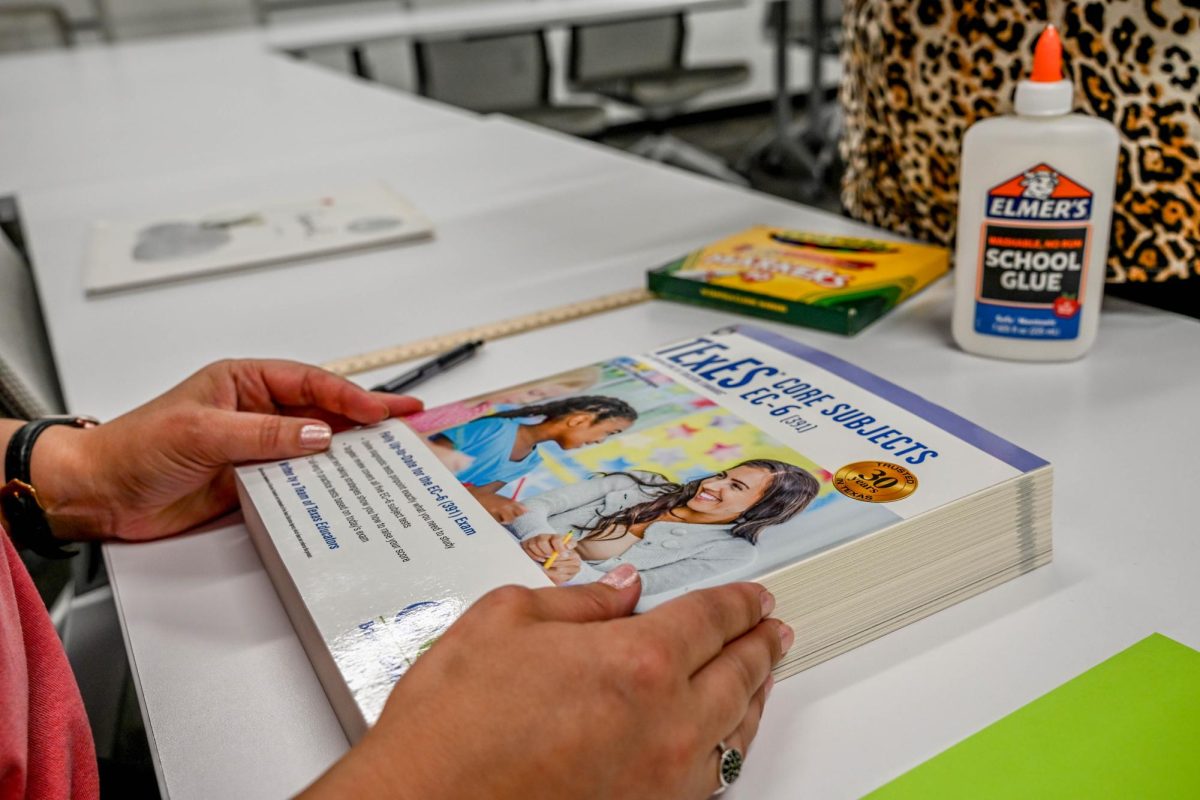
To produce more certified classroom teachers, TCC launched its Educator Preparation Program in the spring. It is designed for people who already hold a bachelor’s degree or higher and wish to obtain certification.
“You don’t have to curate knowledge and curriculum and lesson plans and everything on your own,” said South Campus education instructor Niesha Jones, facilitator of the EPP. “That’s why I believe in the formal preparation.”
The college is now able to provide a comprehensive and more affordable track from start to finish for students with aspirations of teaching.
“Our complete bachelor’s program would cost roughly 10,000 U.S. dollars,” said South Campus education professor Jeffrey Herr. “My own son goes to Tarleton State University. One year of his four costs $20,000 alone, and that’s a state funded school. That’s not TCU and SMU.”
For a job that is not historically associated with large salaries, the cost of entering the field matters. A prospective teacher who graduates with significantly less debt has more freedom to remain in the profession, support a family and build a life in the same community where they teach.
In that sense, the affordability becomes more than a perk for students. It acts as a workforce strategy, helping make teaching possible for people who otherwise might not have the means to attend a larger university.
TCC will use a cohort model where groups of students progress through the program together, ensuring students know their instructors, and their instructors know them.
“You’ll really be able to build relationships and contacts and networking-type attributes that maybe you wouldn’t be able to do at a university that doesn’t have a cohort model,” Herr said.
The program maintains connections with local school districts, allowing educators to understand directly what is needed from future teachers. It also builds relationships with the schools that will employ its graduates, highlighting the path from college courses to leading a classroom.
“The most wonderful profession anyone could ever hope to have is one that you’re choosing,” Herr said.