







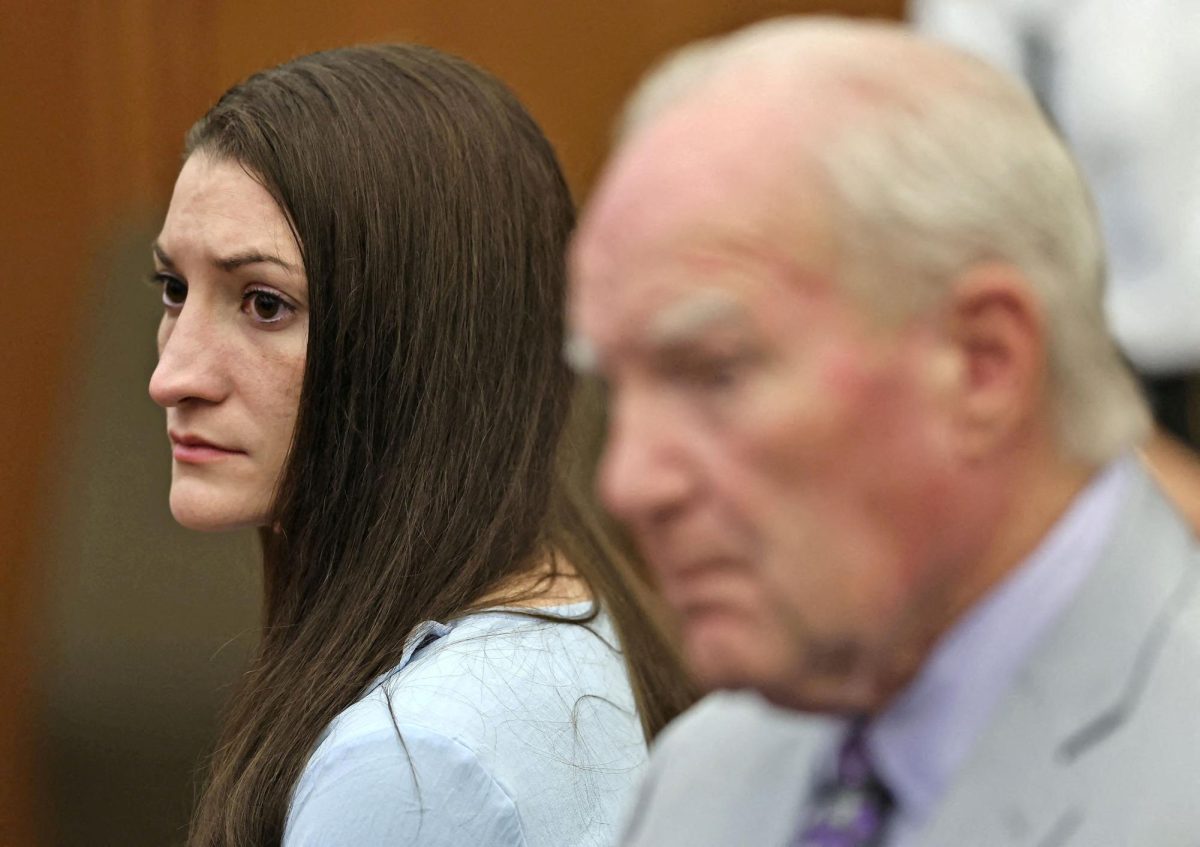









Three young Massachusetts children who were brutally murdered by their own mother in 2023 still haven’t received justice.
As the trial of Lindsay Clancy unfolded over the past few weeks, a troubling shift occurred in the public commentary. What should have been a unanimous demand for accountability morphed into a polarizing cultural issue after an outpouring of support for the killer.
Postpartum mental illness is a serious medical reality that deserves research and compassion. Millions of mothers struggle with it on a daily basis. But most of them don’t kill their kids.
When this type of violence occurs, a civilized society must draw a clear line between mental illness and legal immunity. When the line is crossed, the value of human life is lost.
The primary narrative of Clancy’s defenders is that she was in a temporary state of uncontrollable psychosis. But the physical facts of the crime dispute this.
What Clancy did required deliberation. She sent her husband, Patrick Clancy, out on a string of errands to guarantee an uninterrupted window of time. Then she strangled her defenseless children to death one by one with an exercise band.
Even if her mental state was temporary, what guarantees she doesn’t slip back into it?
Many criminals could make a case for mental illness. That doesn’t mean they deserve leniency.
As a labor and delivery nurse, she understands anatomy better than most. The disparity between the slow execution of her kids and her own subsequent non-fatal self-harm raises serious questions. She made tiny and horizontal cuts on her arm before dropping herself from a second-story window, typically not a death sentence.
In the event of a temporary breakdown resulting in the murder of their children, any parent who actually loves their kids wouldn’t switch into self-preservation mode, complete with defensive legal strategies and a public relations campaign.
The hypocrisy and lack of value for innocent life shown by the countless TikTok-inspired activists defending her is despicable.
Imagine a father suffering from mental illness who waits for his wife to leave, viciously strangles his three kids and makes an unsuccessful suicide attempt despite having a medical background.
Nobody would start an online fundraiser for him, much less one that raises over $1 million. Nobody would paint him as an innocent victim of a broken medical system, and there would be no nuanced discussion about his mental health. He would be accurately branded as a monster.
This support infantilizes women rather than treating them like autonomous adults accountable for their own actions. By treating maternal violence as a blameless byproduct of postpartum illness, these people do a profound disservice to the millions of mothers who fight it every day without committing infanticide. They’re stigmatizing the very women they claim to be supporting.
Baseless social media conspiracy theories attempting to deflect blame onto the traumatized and grieving father show how emotional investment can spiral into toxic harassment.
On Sept. 4, a mistrial was declared after a hung jury, with 11 of the 12 jurors actually ruling for leniency with a finding of “not guilty by reason of insanity.” The one man who stood firmly on the side of justice committed a heroic act in the eyes of loving parents across the country.
Under Massachusetts law, if Clancy is committed to a state psychiatric facility following an insanity verdict, she’s subject to periodic judicial reviews. If clinicians eventually determine her psychosis has supposedly resolved and it no longer poses an active danger, the court can order her to be released back into society once everyone has forgotten the names of Cora, Dawson and Callan Clancy.
Temporary institutionalization with a loophole to freedom is an insult to those kids. A crime like this demands indefinite isolation from society, and the only way is life in prison without parole.
Our compassion should be with the victims, not the killer.
Cora, Dawson and Callan had their entire lives stolen. They took their last breaths scared and confused, looking at the person who was supposed to protect them no matter what.
They deserve a justice system that looks at uncomfortable facts instead of comfortable excuses.
Mental illness can always help explain the context of a crime, but it doesn’t erase that individual’s accountability.
If society still cares about the value of innocent life, permanent actions must carry permanent punishments.