















Updated Nov. 20 to include an email from the provost to faculty.
Dozens of full-time faculty members will be required to pay back portions of their salary due to incorrect contract information regarding their courseload.
“The college acknowledges that faculty members were provided with incorrect information contrary to TCC policy and state law,” said Chancellor Elva LeBlanc in a statement given to The Collegian.
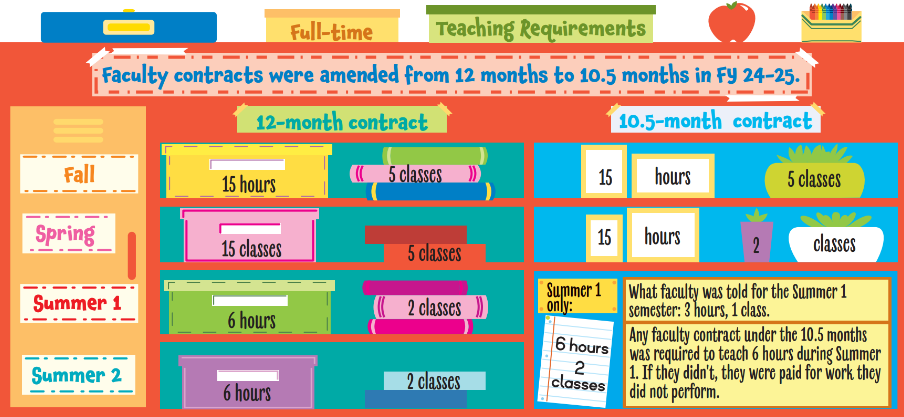
Full-time faculty members whose 12-month contracts were amended to 10.5 months were required to teach 15 hours in the fall, 15 hours in the spring and six hours in the first summer semester during their Aug. 12, 2024 to July 7, 2025 contract.
The difference between the two contracts was the required number of teaching hours over the Summer I and II semesters. Instead of teaching six hours for both, the 10.5-month contract removed Summer II from their schedule and only required six hours during Summer I.
“Compensation provided to faculty under the 10.5-month contract was based on faculty teaching six hours during the Summer I session,” LeBlanc said. “Therefore, any faculty that failed to teach six hours under their contract were paid for work they did not perform.”
Vice Chancellor for Communications and External Affairs Reginald Gates said Human Resources informed him 65 employees were impacted. However, he wasn’t sure all employees affected had been informed.
“The information I have is that they would be contacted in the next coming weeks,” Gates said. “I think they’re compiling again. It just happened this summer, so they’re going through records and pulling up information.”
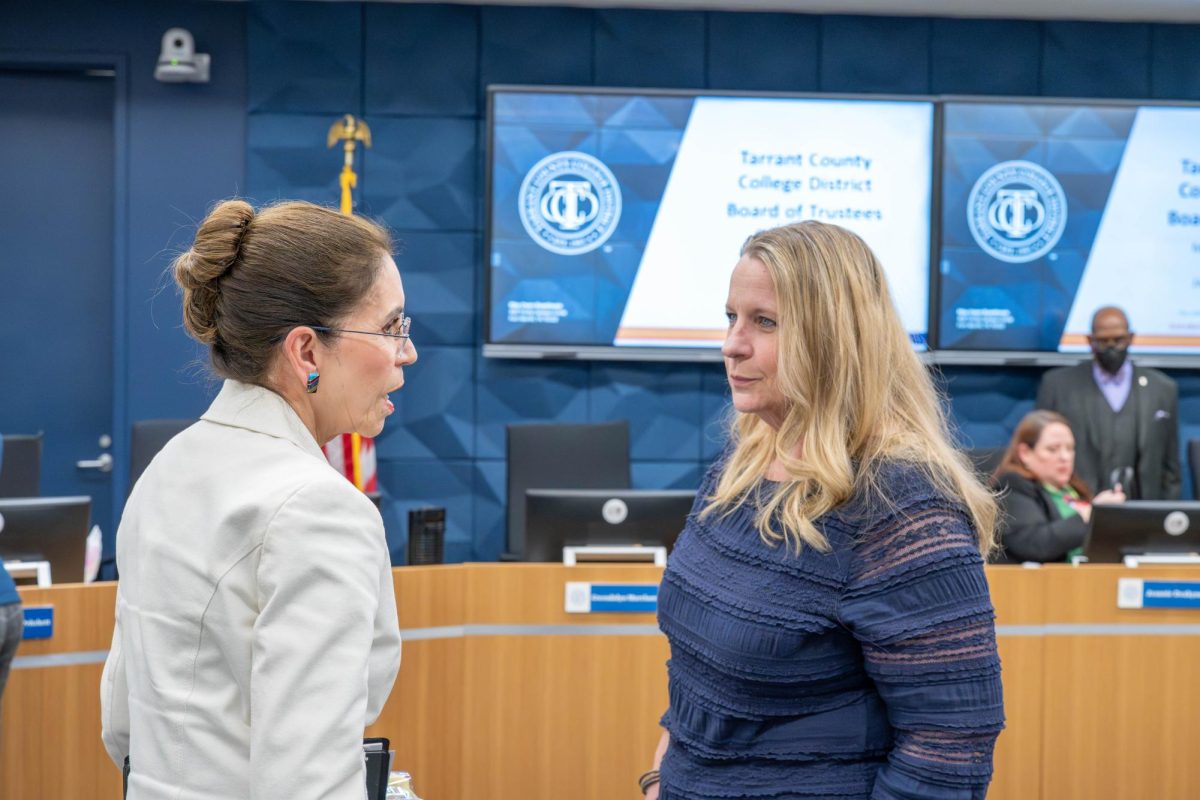
On Nov. 5, some Connect Campus faculty were called into an in-person mandatory meeting where LeBlanc, General Counsel Antonio Allen and Chief Human Resources Officer Gloria Maddox-Powell informed them they were overcompensated, according to a faculty member who attended the meeting and asked to remain anonymous for fear of retaliation.
Portions of the meeting’s audio were anonymously uploaded to YouTube, and in the recording a person identified as a department chair said at first the summer expectation was two classes.
“At some point, from somewhere, so many in this room got the information ‘No, that’s been changed to one [class],’” the department chair said. “We didn’t change it. It was changed for us.”
LeBlanc, Maddox-Powell and Allen said the individual was correct.
“You received communication that says something other than what it should have said,” Allen said in the audio.
In an Oct. 2024 email given to The Collegian by a faculty member who asked for anonymity for fear of retaliation, Vice Chancellor and Provost Shelley Pearson said to Connect Campus Vice President for Academic Affairs Zena Jackson in Oct. 2024 that the Summer 1 teaching requirement for full-time faculty was a minimum of one course.
As a public institution, the college is accountable for the overspent money to the taxpayers of Tarrant County, according to Allen in the audio. Those members who were paid salaries for teaching fewer classes, even though they were informed incorrectly, still violated their contract, he said.
“As employees of the college, we don’t have the authority to spend public dollars that have not been authorized to be spent by the board,” Allen said. “We are required to recoup that overpayment. We don’t have a choice about that.”
In her statement, LeBlanc said the college has been transparent with faculty about the ramifications.
“Tarrant County College remains dedicated to supporting its faculty and staff while ensuring that all employment practices are consistent with board policies and state law,” she said.
The overcompensation to these full-time faculty members should not have affected the just-released Compensation and Classification Study because it was based on faculty positions, not hours worked, according to Gates.
“It’s kind of separate,” he said. “Even if those employers were part of the Comp. and Class Study, it had to do with their position and where they were by job, family and things like that.”
Affected individuals will be provided with fair and flexible repayment options.
“It’ll probably be a range of agreements based on the individual employee,” Gates said.
Some faculty members have even submitted plan recommendations to the college for the administration to review for consideration.
“We’re going to take every measure to provide them a flexible kind of option for paying back the dollar,” Gates said. “It’s going to be based on a reasonable, convenient plan. So it’s not an attempt on our part to put someone through a hardship.”