















Student fees are inevitable. We get it.
Revenue has gone down while expenses have gone up, and our college is scrambling to make ends meet. That sounds like faculty, staff and students’ daily life.
But when the community isn’t involved in the process, our administration can’t say it keeps the TCC community in mind when it makes decisions.
Every semester, it seems the administration makes changes that affect our budgets without actually having us involved in the conversation.
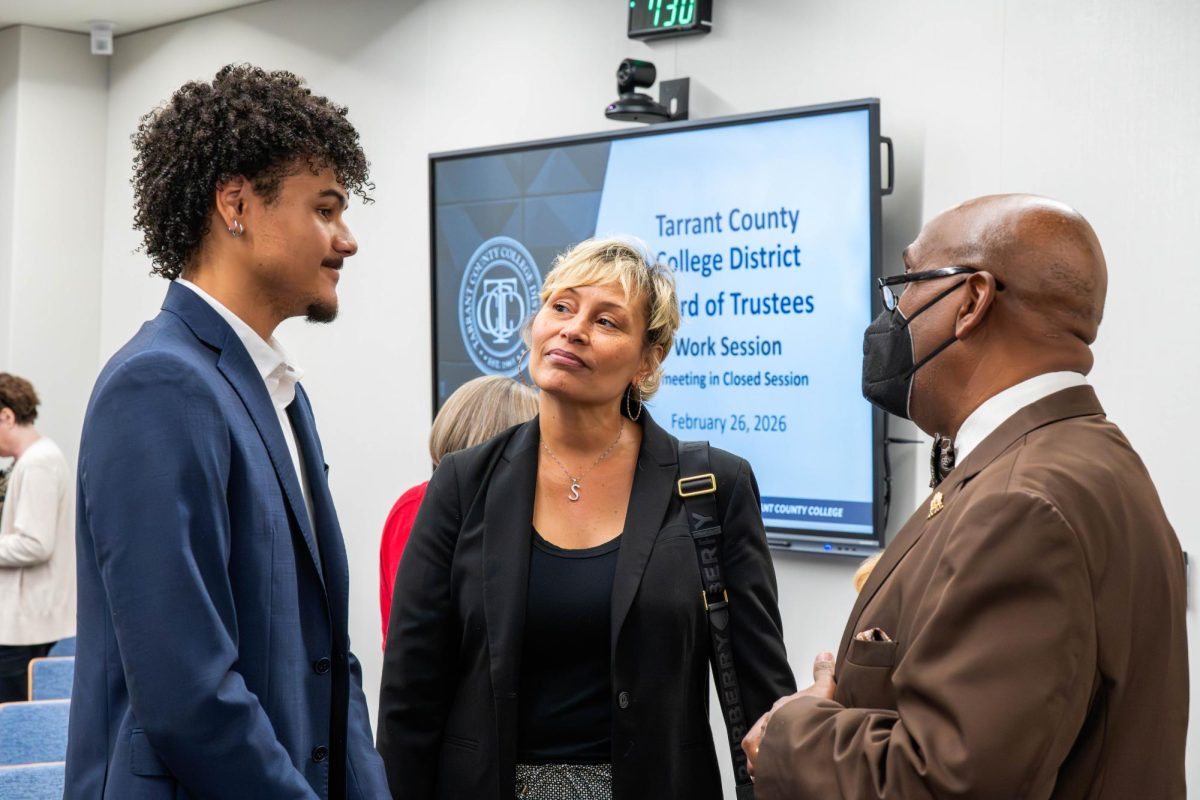
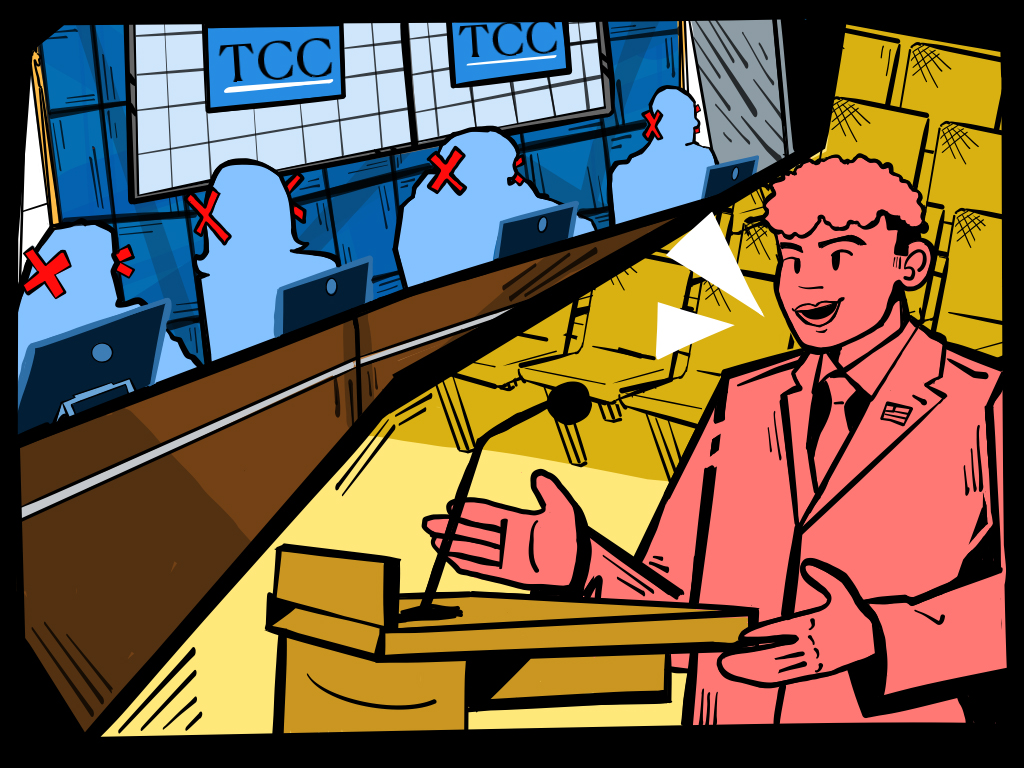
Students may have been more understanding about adding fees if the first time we heard about them was before the trustees debated our future at their work session.
Also, the information would be easier to swallow if we hadn’t also heard about board members attending a convention in Washington, DC, where they discussed new legislation and funding procedures.
While they were eating nice warm meals, sipping cocktails and enjoying the city, we were stuck here trying to navigate the implications of their decision.
They work hard and deserve their cup of tea. We’re not saying they don’t.
However, it’s hard to not be upset when the college asks us to cough up the money it’s lost in revenue, when the chancellor makes $551,565 annually, plus stipends.
It’d also be easier to swallow if the individuals involved in the student fee decision weren’t vice presidents and deans, whose salaries are over $120,000 and who students barely, if ever, interact with.
Everyone is feeling the weight of inflation, so while a six-figure salary seems grand to us who struggle to keep any money in a savings account, it’s not wise for us to assume this doesn’t affect everyone.
When board member Laura Pritchett says “$50 is not a significant amount, but also not insignificant,” shows how out of touch from our reality they are.
For a lot of students, $50 is equivalent to about five hours of working at our part-time job. Sure, that doesn’t sound too bad on paper, but $50 doesn’t even cover a week’s worth of groceries for one person anymore.
Their math evaluating how much fees would add to the overall cost of an associate of art degree is only for a student on a two-year path. The additional $627 their PowerPoint presentation said will be added to an AA degree doesn’t consider the “real” community college student.
Not all of us begin our journey knowing what we want to do. If we do, it’s more likely that our path will change or we will try something different.
That’s why we chose community college, to have the option to experiment and decide what it is we want to do for the rest of our lives before heading off to a university where a degree change costs us an arm and a leg.
The state has changed how it funds community colleges from being enrollment-based to now focusing on how many of us complete a degree. So, our college is demanding high school students, 18-year-olds and 27-year-olds with families to have everything figured out within two years to get us out of TCC for revenue benefits.
It doesn’t sound like a very “student-focused” decision.
For those of us who’ve been on campus since before the fall 2024 semester, we know how fun our campuses used to be. Now, after all the budget cuts, our community is gone. No more events where we learn how to dance, play interactive-educational games or celebrate culture with food and music.
We just get informational tables with pamphlets.
And now to add on top of all these cuts, we’re being asked to pay more for a college that doesn’t want to support student success if it’s outside the classroom.
Again, we are mindful of how operating costs, legislative mandates and funding changes affect the college’s revenue. But did the college think about how all these changes affect us?
If the administration would like a more positive response to their decisions, they should try having real conversations with students about their daily life, struggles and needs, not just congratulating them when they receive an award.