

















What started out as a class project became three students’ discovery of a potential solution to a student issue.
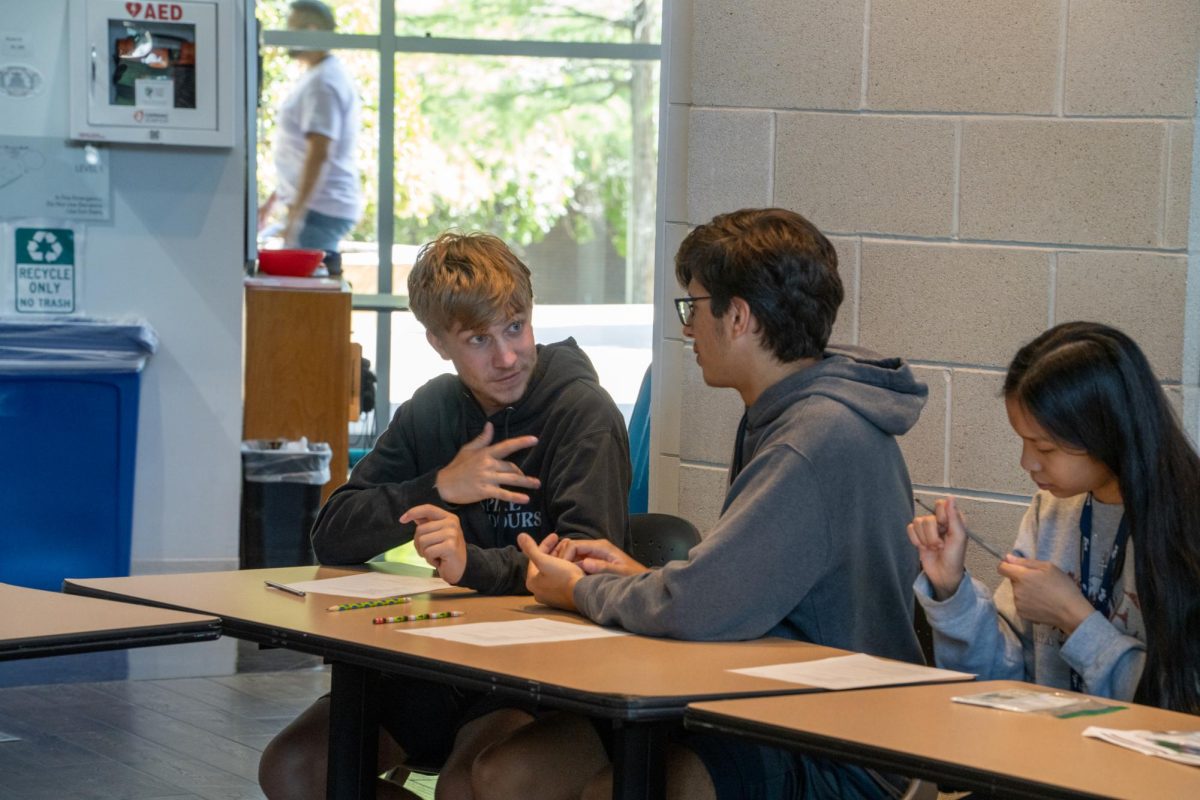
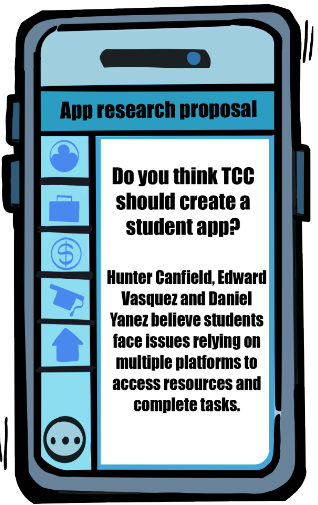
For their Technical and Business Writing class, Hunter Canfield, Edward Vasquez and Daniel Yanez had to write a business proposal to solve a problem at TCC.
NE English professor Stacy Stuewe said the goal is to have students collaborate on the proposal research and work together through challenges.
“I love this assignment because students gain experience doing their own primary and secondary research, and they develop leadership skills that they can list on their resumes or discuss during job interviews,” Stuewe said. “Being successful requires overcoming a number of challenges together as a group, such as figuring out how to handle interpersonal situations as well as practical ones.”
Originally, their group wanted to find a better way to help students navigate their campus, but once they started conducting research, they determined there was more to the issue.
“The deeper we started researching into navigation, we found that the issue is accessibility to campus resources,” Canfield said. “Right now, it takes a minimum of seven different access points to reach all of the campus resources.”
Microsoft Outlook, Canvas, MyTCCTrack, HelloTCC, AlertAware, TCC-E Library and TCC’s website are the main platforms students use.
What they’ve found is students find it difficult to keep up with notifications, register for class, access their records, find informational contacts and schedule advising appointments with so many platforms to select from.
“We don’t have a central point to access everything. Canvas for your classes. MyTCCTrack for financial stuff,” Yanez said. “Then AlertAware I didn’t even know existed.”
Yanez has been a student for almost two years, while Vasquez and Canfield have been on campus for about two semesters. They all said they struggled in their first semester to find which platform to use for what they needed.
“I still have to go digging around trying to find what I’m looking for,” Canfield said. “Some things are easier to find than others, but it could be more efficient.”
Their solution was for TCC to create an app with all these pieces incorporated as separate tabs on one platform.
“Just to be able to have all of that in one spot instead of having to click around on TCC’s website to find stuff,” Yanez said. “Maybe the website was cool 10, 15 years ago, but it’d be better to have an app where we can access most of those resources.”
While working on their project, they found colleges and universities with an app have seen student communication, engagement, connection and organization greatly improve from before.
They conducted campus research to back up their claim by creating their own survey to ask TCC students what they struggle with most through a QR code they posted online and in Canvas.
“The majority do struggle with navigation and keeping track of their assignments,” Canfield said. “But 50% struggle with contacting administrators or campus services and finding study groups or connecting with other students.”
Their outside research found 1 in 4 students feel lonely while in college, and that loneliness can impact a student’s ability to focus on schoolwork.
Knowing this, they asked in their survey if students thought an app would help them with what they were struggling with on campus.
“All of them, 100%, said they would use the app,” Canfield said. “TCC has the resources, but it’s a lack of awareness.”
Vasquez is in school for computer engineering, and he said an app’s interface would be easier to update than a website. While implementing it would require labor, maintaining it would be a breeze.
“To update a website, you have to take it down for a bit,” Vasquez said. “With an app, all you have to do is update it for the new version. They could also personalize it for students.”
They found that some student apps have first-year student notifications dedicated to their orientation schedules. Then for students who are graduating soon, or others who have to upload documents, they can have notifications sent out through the app tailored specifically to their needs.
“It’s crazy to think about how we just had one idea, navigation, and it turned into this,” Vasquez said.
While their class project won’t be submitted for the college’s approval, they want to get as many students as possible to respond to the survey to receive an accurate TCC student response.
“There needs to be a sense of priority for implementation,” Canfield said. “We just want to at least show them there is a priority for this.”
All three said they weren’t sure what they would learn in a business writing class. After this project, they said they now understand how to turn an idea into a well-researched and documented proposal.
“It’s an interesting way to have us engaging with each other while learning,” Yanez said. “If you have an idea, or something like this, all you have to do is think outside the box.”
Stuewe said she knows projects like these can be difficult, but she’s seen how they’re highly rewarding for students once they overcome all the hard work and present their project.
“What is most rewarding for me to see as a teacher is when students become genuinely invested in their project, like Hunter, Edward and Daniel have,” Stuewe said. “I’m thrilled with how inventive they were.”