




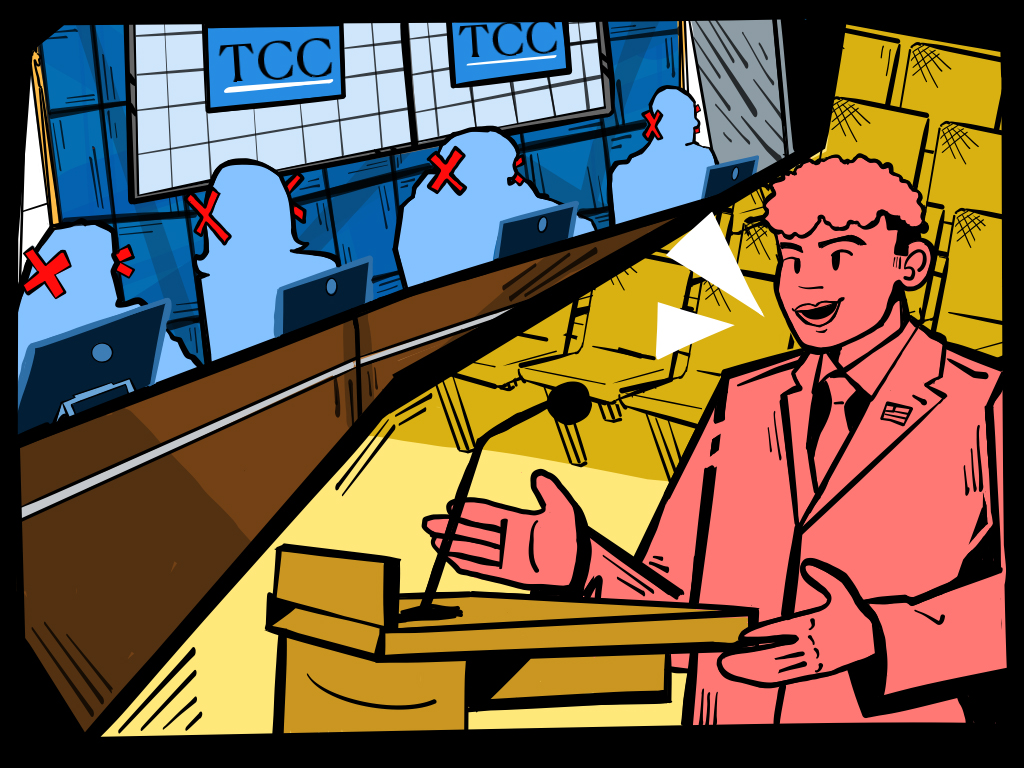








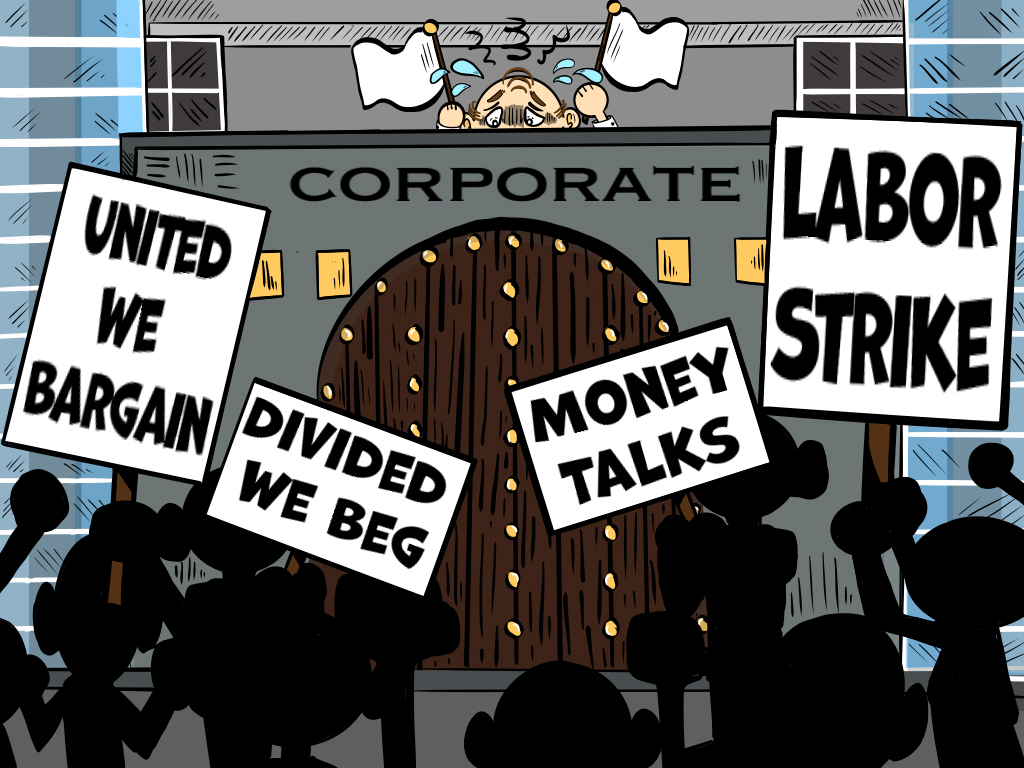
If Americans want their government to change, they’ll have to speak to politicians in a language they understand, money.
How can we speak in money? Through labor strikes.
Historically, labor strikes have been successful at forcing management to negotiate with its employees’ demands.
In 1936, General Motors workers demanded GM to provide safer working conditions and better pay. When GM didn’t listen, a 44-day sit-down strike took place where workers didn’t produce anything.
Thousands of UPS workers participated in a strike to demand full-time jobs, job security and higher pay in 1997. Their efforts shut down the company’s operations for 15 days, costing UPS millions of dollars.
These are just two examples of labor strikes successfully leading to employees’ demands being heard. This proves people can demand their rights by decreasing a corporation’s profit.
However, it seems there has been a rapid decline in these attempts.
Many people attribute this to the increase in corporations’ power within the government by using Political Action Committees and super PACs to fund candidates.
Since federal candidates and political parties receive corporate donations, it isn’t surprising to know our government’s decisions are swayed more by what benefits the corporation rather than the people.
While boycotting corporations to get them to stop funding certain people or organizations has been organized, the attempts have been lackluster and unsuccessful. Most Americans will eventually break a boycott either because of their loyalty to a brand or product or because they’re dependent on its convenience.
Convenience is what drives us, and for good reasons. Our 12-plus-hour workdays can make it almost impossible for us to not use Amazon, go through a drive-thru or buy a Keurig coffee machine.
While we know it’s not the greatest for the planet or humanity, if it means our lives are just a little easier, then so be it.
So, due to corporations controlling politics and Americans needing convenience, the possibility of change seemed to dwindle more and more after each failed attempt.
However, in the past year, strikes have proven to be successful again.
The Target boycott started in January 2025 after the company rolled back its diversity, equity and inclusion initiatives. By October, the company lost nearly $12.5 billion in market value and had a 7.9% drop in foot traffic, according to Ultima Markets.
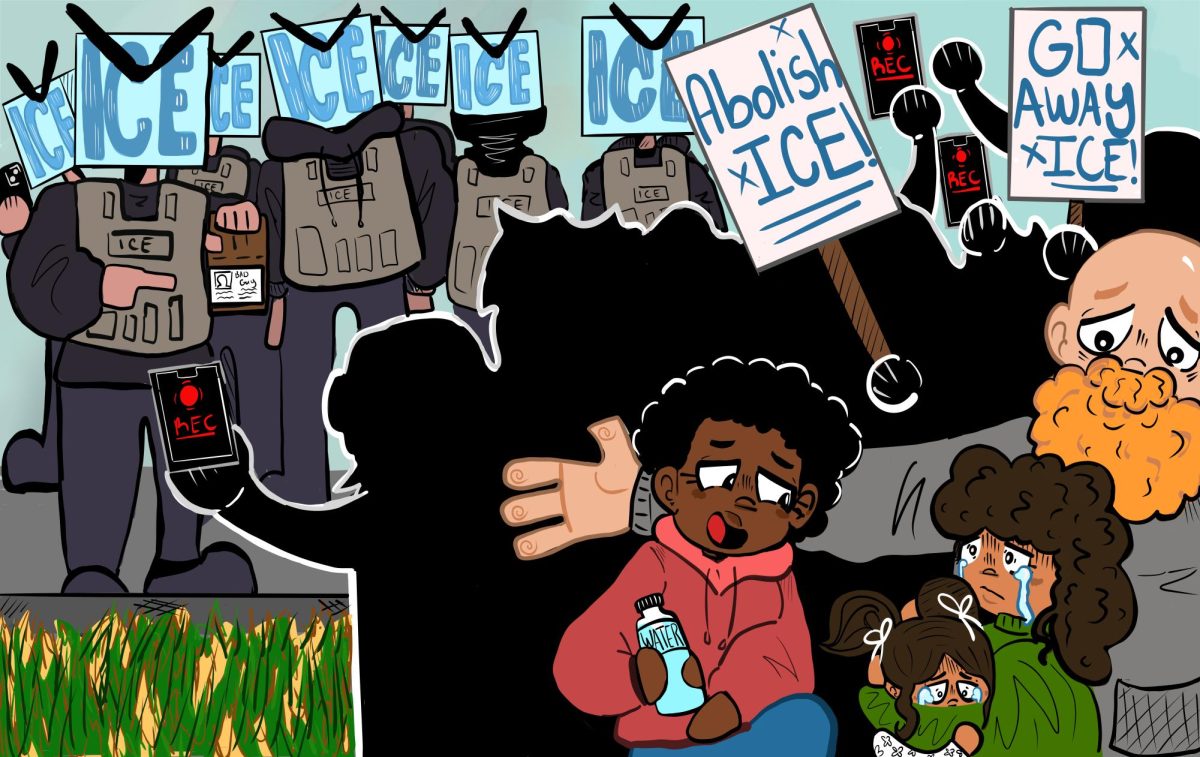
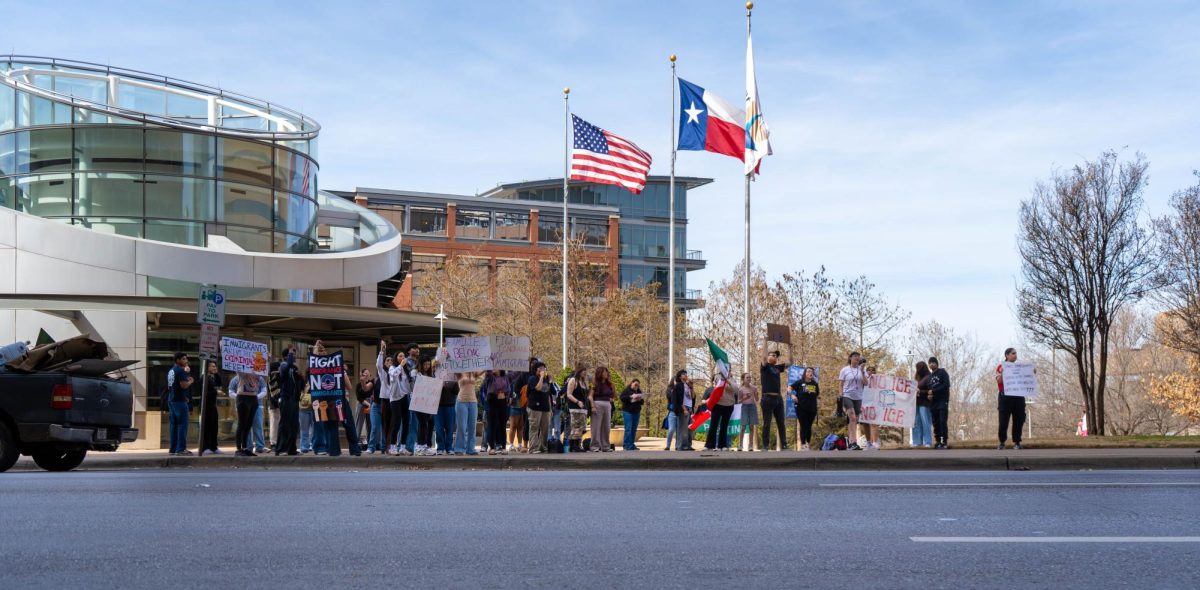
The Minnesota general strike called for an economic blackout on Jan 23., protesting ICE taking over the state. Over 700 businesses reportedly closed while thousands marched in the streets.
It only took two days for the strike to get 60 of the biggest CEOs to give in and formally write a letter asking the current administration for an immediate de-escalation of tension.
Posted onto Minnesota Chamber of Commerce’s website, the letter acknowledges the murder of Alex Pretti by a Border Patrol officer on Jan. 24 as the reason it was created.
But what the 60 CEOs signed is a plea to get ICE out of Minnesota so they can properly function economically again.
“We call for peace and focused cooperation … to resume our work to build a bright and prosperous future,” the letter said.
Among the signatures are CEOs from the companies Best Buy, General Mills, Mayo Clinic, Sleep Number, Target and UnitedHealth Group.
This should reignite a spark in all of us. What we’re seeing is proof our actions do speak louder than our words.
While corporations can persuade politicians with their money, we affect how much money a corporation makes.
Stop relying on convenience and think about who and what you support when you make a purchase.