










Criminal justice students on TR Campus recently had the opportunity to learn from a former-TCC-student-turned-police officer and a veteran Department of Public Safety sergeant.
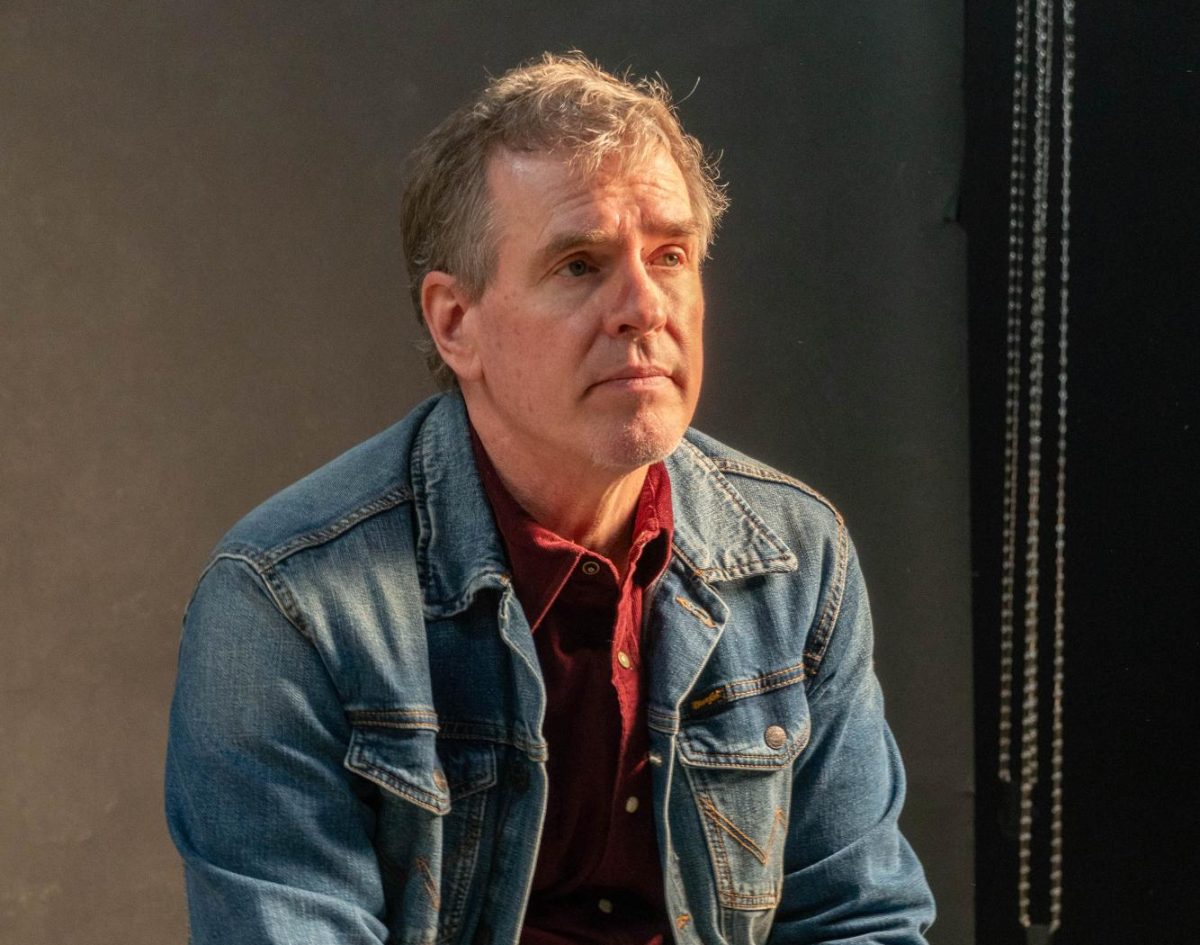
TR instructor Steve Romero, a former federal agent, organized the visits where the law enforcement officers answered students’ questions and shared their experiences.
Dallas police officer Hismael Veloz, who was a student of Romero’s, told the students he is not a recruiter and will not answer questions like a recruiter.
“I do want to help out people, those who can’t help themselves,” Veloz said. “But then there’s the main part for me, which was this job just looked fun. You know, you drive fast and have a badge and a gun. Every day is a new day.”
Veloz graduated from TCC in 2024, transitioning from sitting in a classroom studying criminal justice to enforcing it. He said after he graduated from TCC, Romero kept in touch with him and recently asked him to speak with the class.
“It’s very important not to get emotionally involved because people will push buttons, try to push you to the limit,” Veloz said. “I try to be like a Robocop.”
Veloz explained the police academy training process and what the job looks like for him on a daily basis.
The police academy is usually around 10 months long and is made up of four phases, including rigorous physical training and on-the-job training. The police academy also has law enforcement students undergo a psychological exam, where the students are judged on how they would handle frightening and personal hypothetical situations.
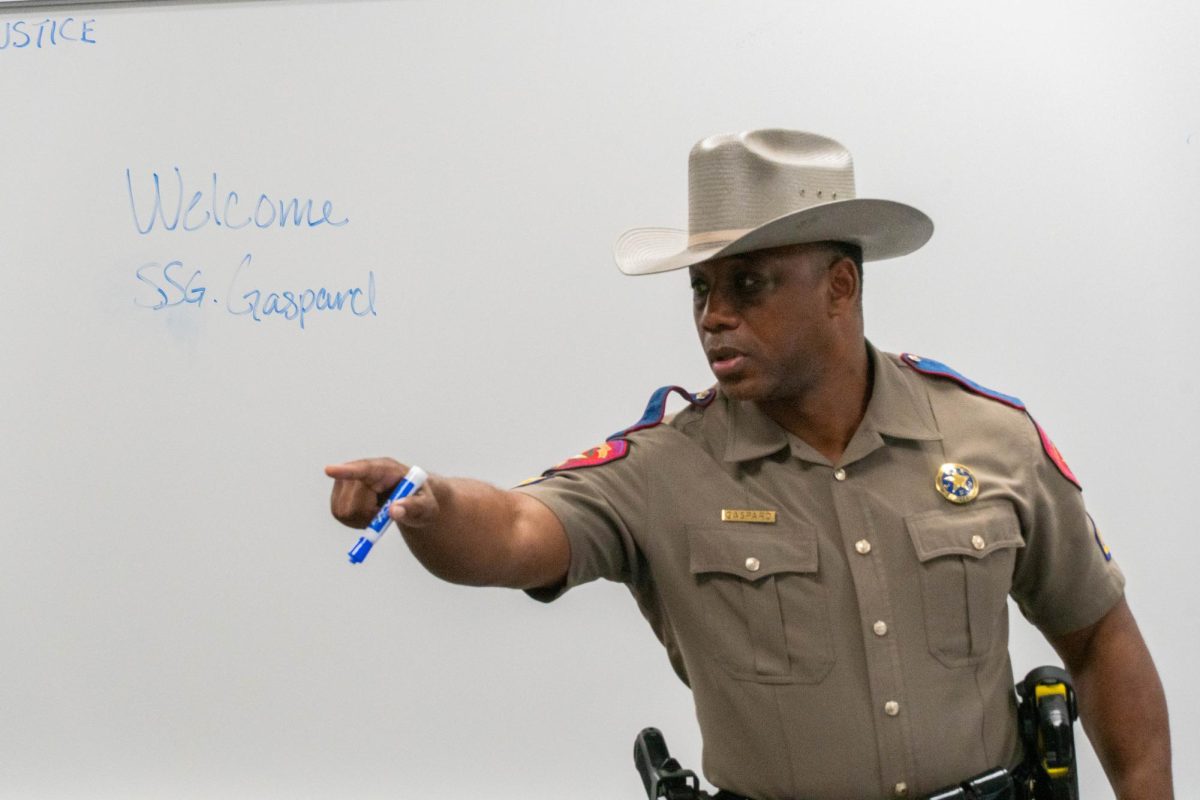
Texas Ranger Sgt. Germaine Gaspard, unlike Veloz who is fresh to law enforcement, has 25 years under his belt. He is a recruiter for the Department of Public Safety, which is responsible for statewide law enforcement and driver license administration.
“What differentiates us between the county and the PD [police department] is that we are a proactive law enforcement agency,” Gaspard said. “They are reactive. It’s not good. It’s not bad. It’s just a difference.”
As a Texas Ranger, Gaspard investigates a range of crimes from homicide to smuggling contraband to political corruption. Texas Rangers also act as emergency tactical relief and handle organized crime such as human trafficking and gangs.
“What I can promise you, if you wear this uniform, we’re gonna put you in a patrol car. I’m not going to give you a partner,” Gaspard said. “We’ll give you four weapons systems. We’ll give you a gun to put on your hip. I’m gonna give you a backup weapon, a long gun and a shotgun. … I’m going to send you to the most dangerous places in Texas, and I’m not going to guarantee that you have backup right around the corner. That’s the job, right?”
Gaspard emphasized the need to effectively communicate and connect with people as well as maintaining a level-headed control of every situation one enters. He called this a command presence.
Both command presence and integrity, to Gaspard, are vital for law enforcement.
“Your integrity is your ability to think, speak and do the same thing,” Gaspard said. “What we’re looking for are people that are intelligent enough to be attorneys and hard enough to stop bad people from doing bad things.”
Chandler Webb, one of Romero’s students, is completing his base curriculum classes at TCC before he transfers to Tarleton to study to become either a game warden or border patrol.
Webb said what stuck out to him about Gaspard’s talk with is the emphasis on communication.
“It’s one of those things of not necessarily knowing when to leave work at the door but knowing how to get through work and find the right people to surround you,” Webb said.
Both Gaspard and Veloz highlighted communication as a vital skill in their fields.
“Believe it or not, a majority of our job is talking to people,” Veloz said. “This is something called verbal judo. It’s a lot of communicating or deescalating with words, interacting, building rapport.”
Romero said he often applies the tools he used managing federal agents to how he runs his classroom.
“This is what I tell them when they come to this classroom. I said, ‘If you don’t like controversy, you’re probably not in the right course,’” Romero said.
TR Campus will host a free criminal justice job fair on March 10 with over 45 law enforcement agencies to speak directly with participants and criminal justice students. The event will be on Main Street from 10 a.m. to 2 p.m.