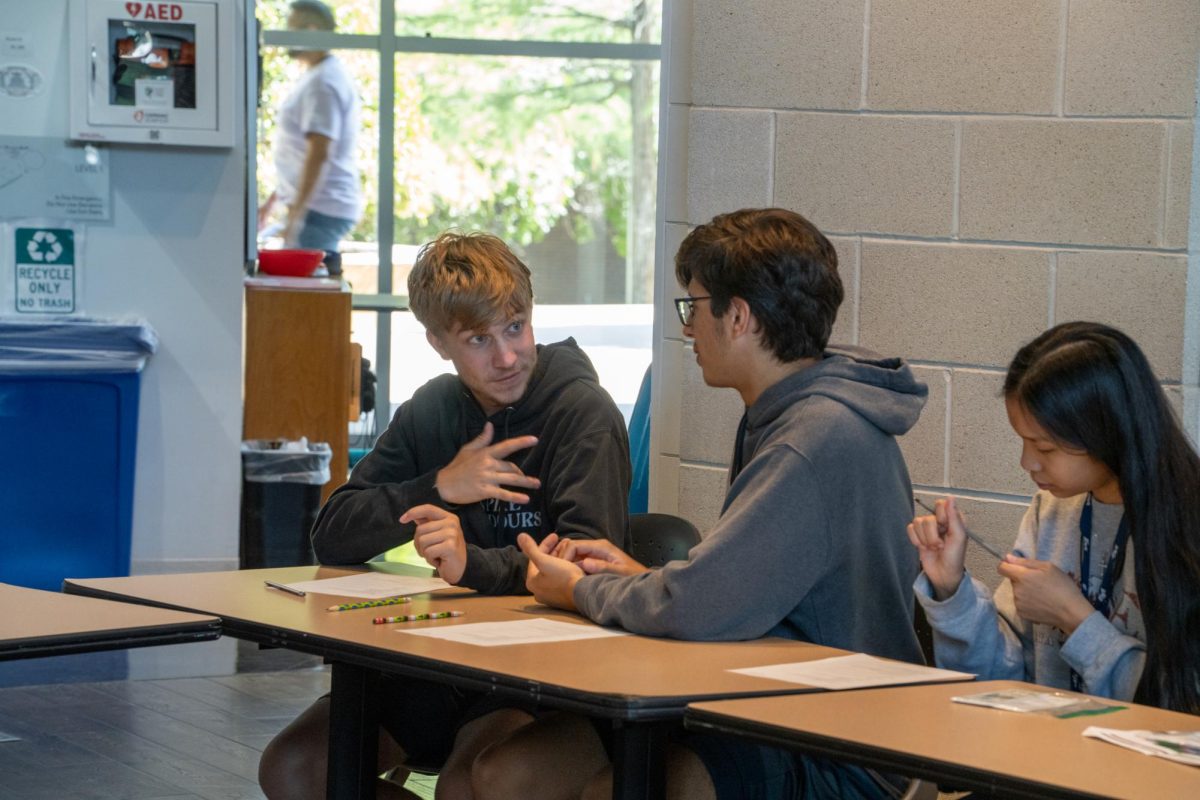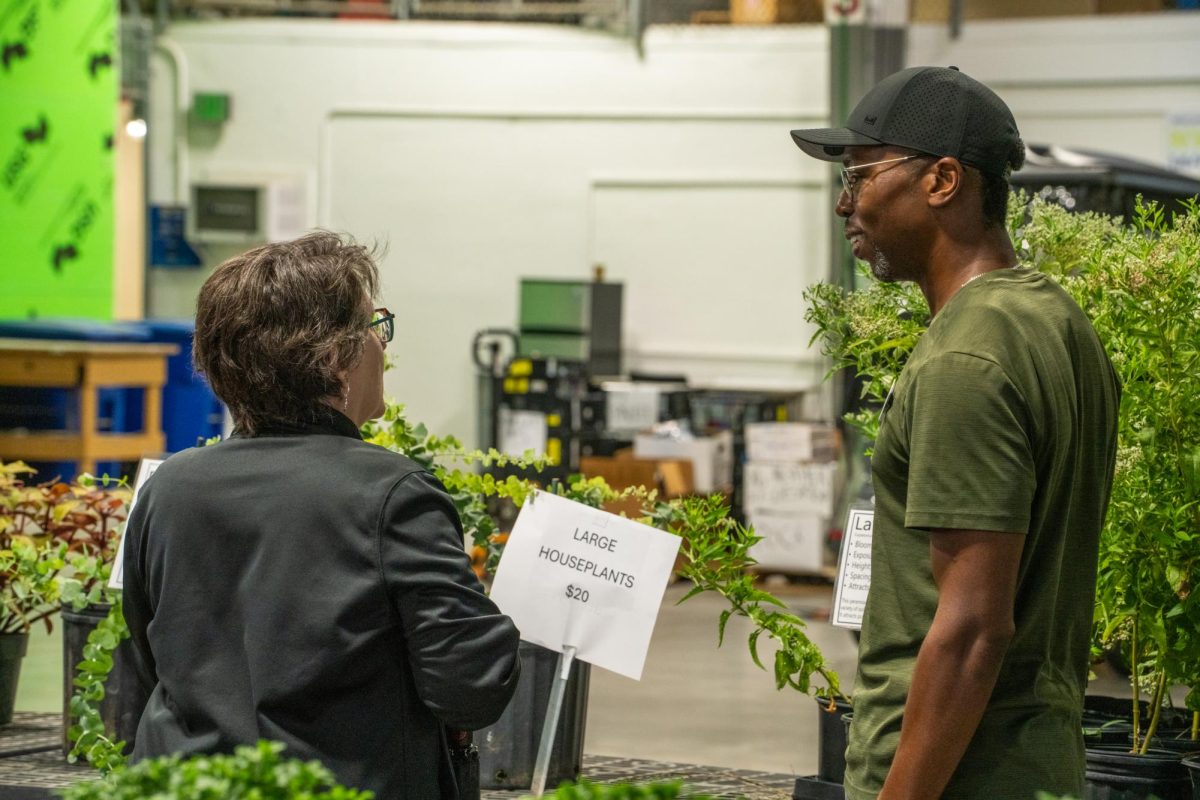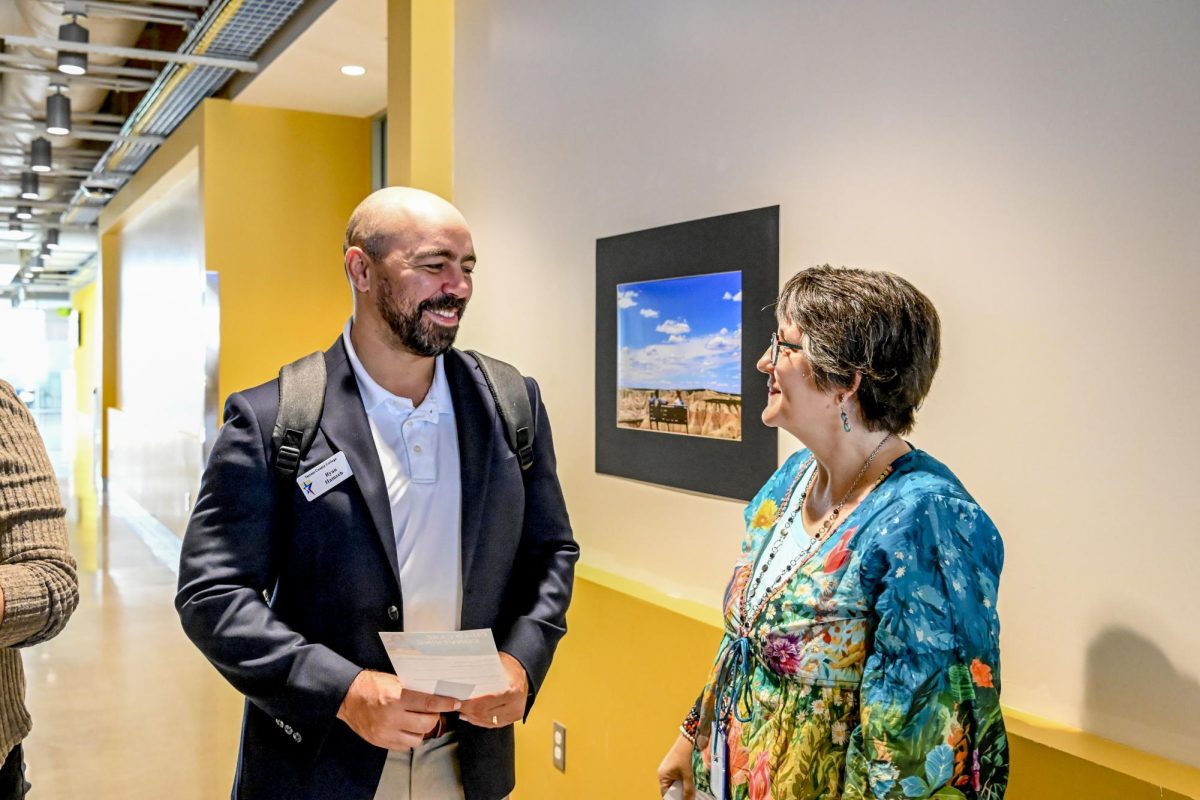

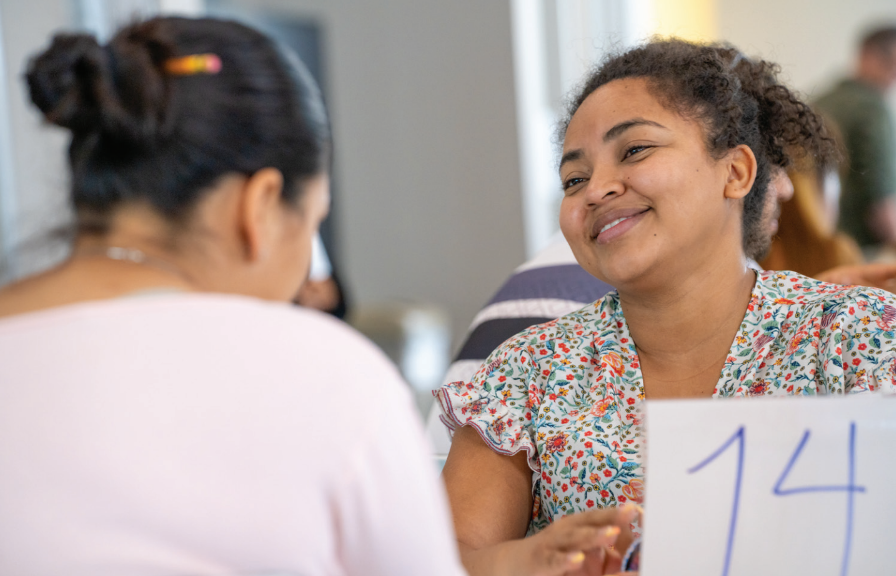












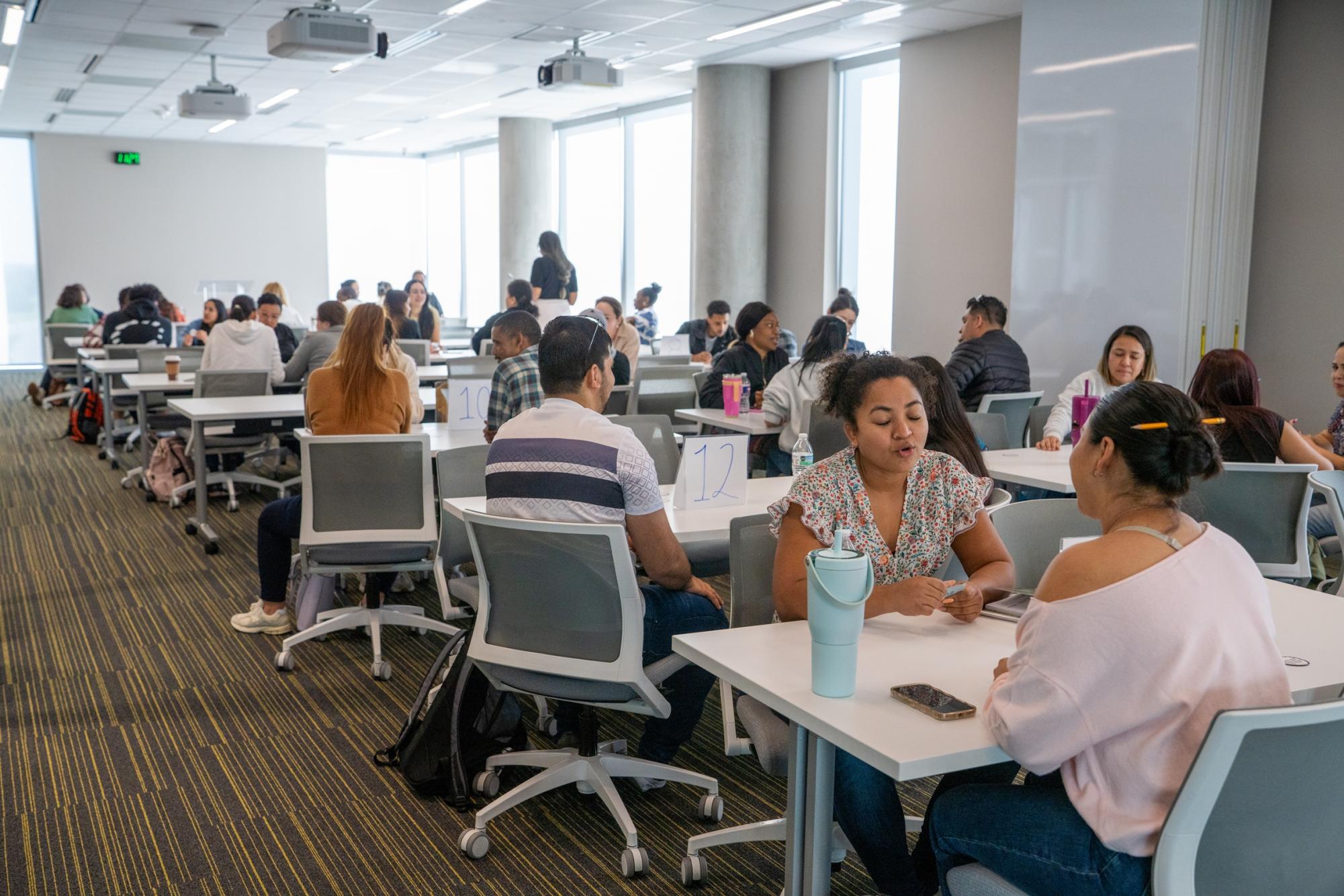
Students of all different backgrounds clustered in a NW01 classroom for one thing: to strengthen their English skills.
Embedded Conversations is an English Second Language Program initiative where students from each language level meet to test their English on Wednesdays and Thursdays.
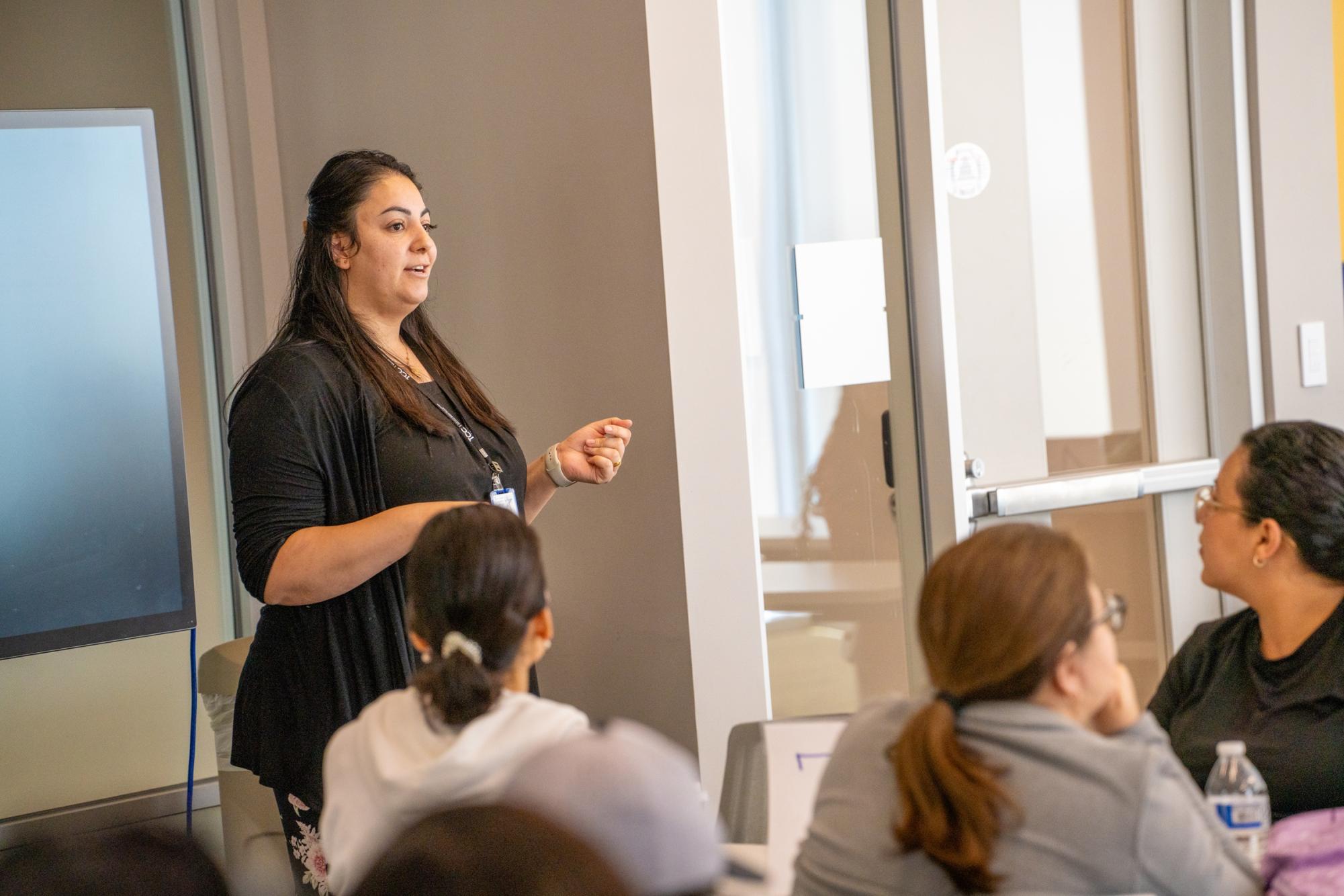
“This initiative is solely focused on conversation, natural conversation where it’s not scripted by the textbook,” said Lourdes Davenport, NW English Language Learning Program coordinator and ESL adjunct instructor.
Assistant instructor Rand Fakhouri looked around the room of chattering students. She once was in their shoes, learning English through the ESL program at TCC.
“I can feel what they’re feeling now, and everything I’m doing here is just for the students to help them with everything,” Fakhouri
said.
Fakhouri moved to the U.S. from Jordan around six years ago, she said. Her first language is Arabic. Although she took English classes in Jordan, she wanted to advance her understanding.
“If I learn more words, I can put them into sentence and I can talk more confident with people,” she said. “When I took Level Four, I was nervous and I didn’t have the words to talk. But all the instructors here, they are amazing.”
According to a 2024 KFF.org report, people who are not proficient in English experience disproportionate difficulty accessing U.S. healthcare coverage and resources compared to English speakers. The Department of Labor also reported in 2024 that immigrants and workers who are not fluent in English face employment barriers that native English speakers do not.
“It’s important for people to recognize that when people are learning a new language, especially English, give them a second,” Davenport said. “Give them a second to process an idea, a thought, an answer – because they’re looking for the right words.”
The ESL program is split into two pathways: workforce classes, which prepare students for a career, and then pre-academic
classes which help students pursue higher education.
“Many of them, they are professionals from their countries,” Davenport said. “So when they’re here, they don’t want to make mistakes. … By the time they reach Level Five, they should come out of there with a functioning resume and a functioning cover letter. And so along with that, they would have gotten other skills on how to communicate to somebody what their strengths are.”
NW student Paul Brice Fakou has been attending TCC for a little over two weeks to pursue a degree in business administration. He immigrated with his family a year ago from Cameroon, a country in Central Africa with a large population of French speakers.
Fakou said that every language is challenging to learn, but English is more common in Cameroon, so he has a familiarity with it.
“I remember that it was very difficult to me to share with people because when you want to say something, you’re scared to make a mistake,” he said. “But when you start studying, it starts to be easy because you can say something, maybe if it’s a mistake some people can say, ‘Hey, next time say that.’ Or, ‘Don’t say that.’”
Davenport said that a few years ago, students could practice English at meetings called “Small Talk,” but attendance tapered off. In August, the ESL center and the Writing and Language center collaborated on starting Embedded Conversations to give students that safe space again.
“It’s impactful in the way that they are practicing conversation like they weren’t in the past. So it’s a different setting they’re being exposed to,” said Daniela Serrano, a Learning Commons specialist who works in the Writing and Language center.
Aside from challenging students in their language studies, Embedded Conversations has helped students find community, several of the instructors said.
“There’s a lot of interchanging of phone numbers, and I think there’s a lot of friendships that are coming out of the program,” Serrano said.
Fakhouri said that she still meets up with her former ESL classmates from her time in the program two years ago. They get together to catch up and help each other with their conversational skills in English.