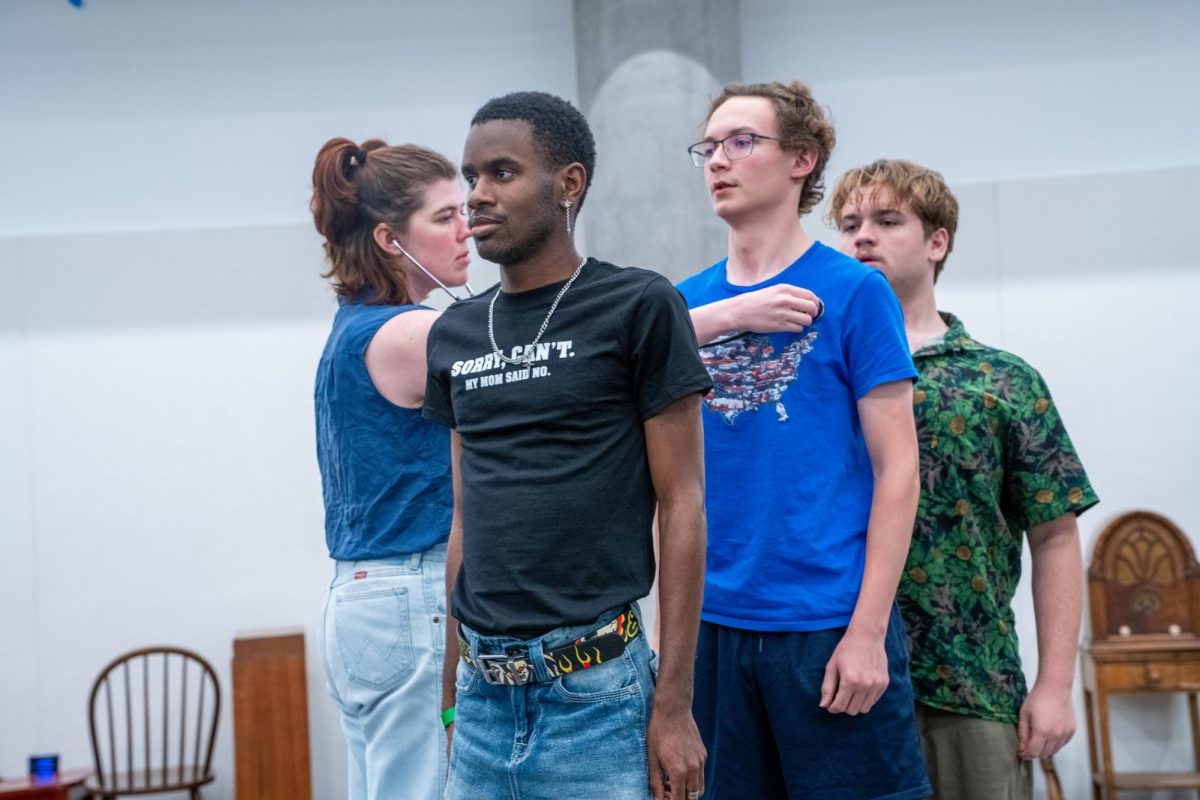
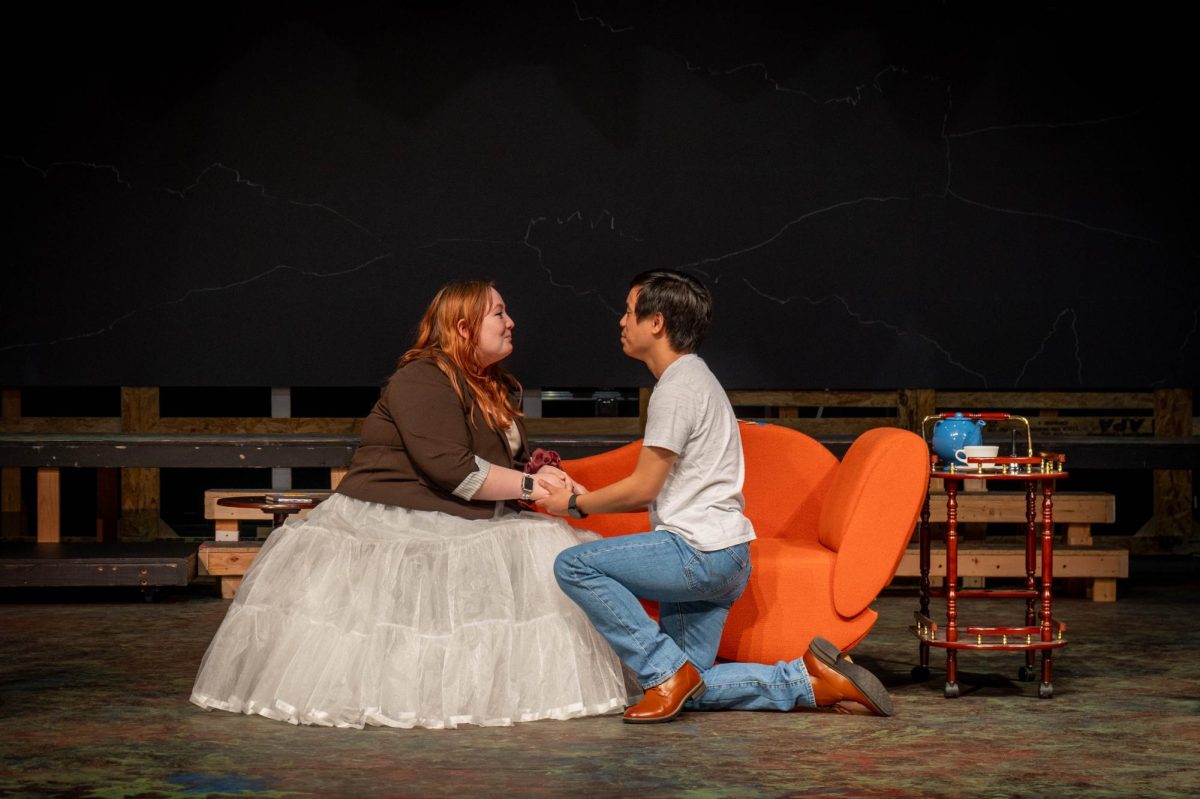















Theatre Northwest shines a harrowing spotlight onto a nation’s descent into fascism in its alternate-history production of “It Can’t Happen Here” by American novelist Sinclair Lewis.
The play, running through Nov. 17 20 with a Nov. 21 matinee, follows Doremus Jessup, played by Gavin Barron, who is a newspaper editor in 1936 faced with political retaliation for his reporting on a tyrannical takeover of the American government.
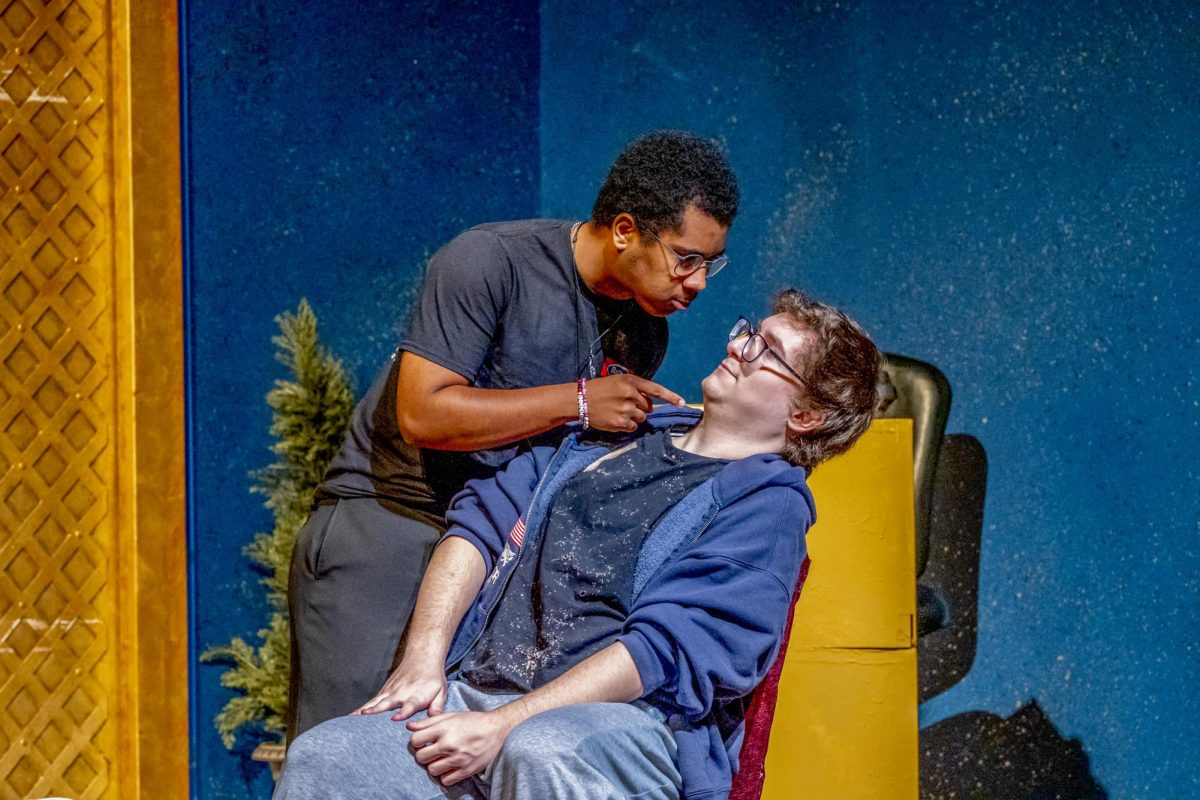
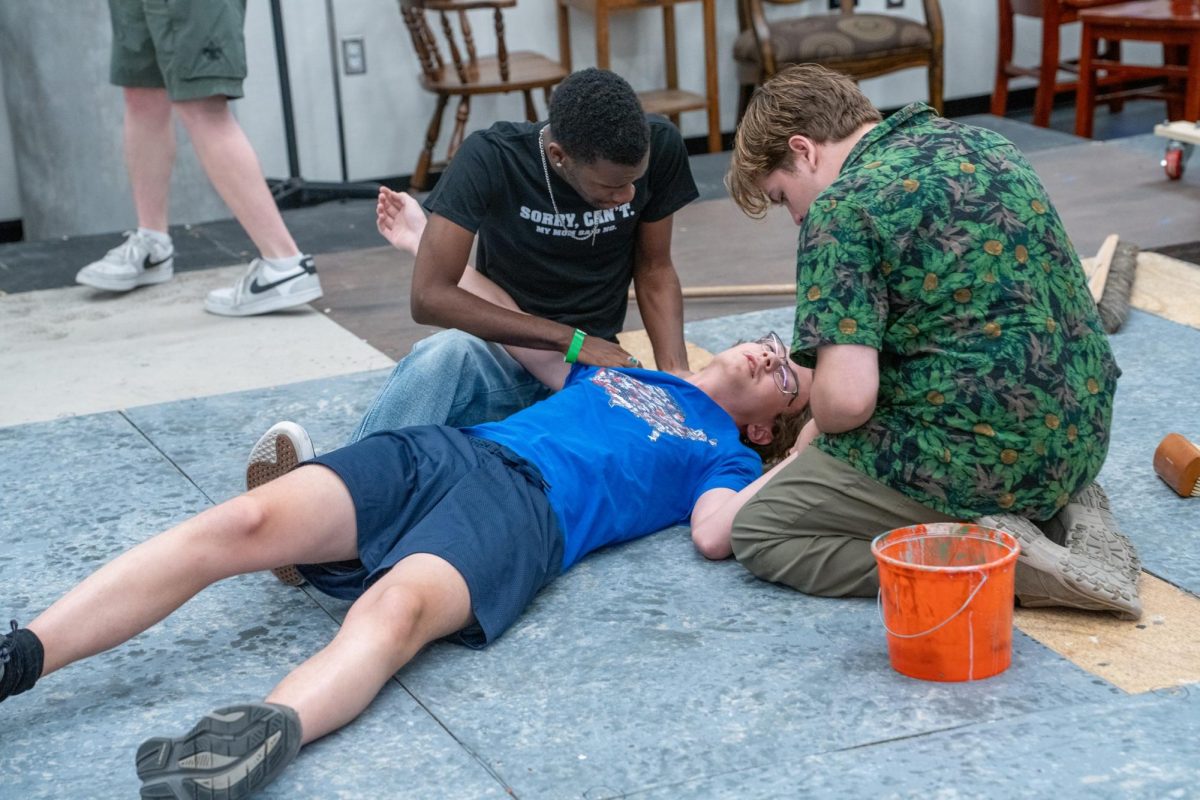
“There’s simulated gunfire. There’s bloodshed. There’s murder. There’s death,” said Joshua Jones, who plays the two main villains. “There’s all types of human atrocities as well as human ingenuity and human creativity.”
President Buzz Windrip, the fascist figurehead in the story, swindles the nation with his charisma and his promises of crushing America’s opponents.
The entire story is a response to the idea that fascism cannot happen in the U.S. because this is the land of the free, several of the cast members said. Although it was written with the rise of Nazism in Germany in mind, several of the cast members drew parallels between Sinclair’s fictional U.S. and the current state of the nation.
“I find it fascinating how prophetic Sinclair Lewis was in his time,” Barron said. “We don’t directly mention anything about the current administration, but the fact that you can so very clearly see our world in this play I think is very telling.”
Military Judge Effingham Swan, played by Jones, forces Doremus Jessup to write propaganda pieces after he was arrested for writing an article opposing Windrip’s actions.
“Doremus has a character arc of reluctance into activism,” Barron said. “He went from kind of hiding and shying away and disbelief of the state of the world, to acting out in his own way, which does get his son-in-law killed. And then finally, he joins the resistance and that eventually gets him thrown into a concentration camp.”
Doremus’ teenage daughter, Sissy, played by Vivienne Lawson, is a more active member of the resistance than her father. Lawson said her character is like a Molotov cocktail.
“She is very quick to go off on her own and be her own flavor of rebel,” she said. “And I feel like it is a lot of times when the government starts getting a bit fascist, it’s usually the kids who fight back fast.”
Director and adjunct instructor Hunter Houston Willis said he and Kim Jackson, stage manager and English assistant professor, were adamant from the start that Windrip is not President Donald Trump.
“I don’t want this to become more political noise, you know?” Willis said. “Which is why I’m so glad that we’re performing after the midterms, so that we can say we’re not trying to sway anything. But I think the students have seen the themes in the play reflected in their own lives and I would hope the audience would see that as well.”
Jackson said that theater gives people space to have difficult conversations.
“Theater – the arts in general – gives us the vehicle not to make it personal but to talk about it,” she said. “I find that if you just use literature or art as a proxy for the real world, [the audience] can make connections and talk about it more freely.”
Willis said he chose the Whitebox theater instead of the larger theater to elicit a certain feeling from the audience.
“I wanted everything to be very claustrophobic – to feel like we’ve all gathered in an underground, secretive space to witness the story of Doremus,” he said. “I didn’t want the privilege of space. I wanted everybody to be on top of each other so that we can’t escape the message and we can’t check out of what is happening on stage because it’s right in front of us.”
The play will be free for students, faculty and staff. Scholarship donations for the performing students will be available but not required.