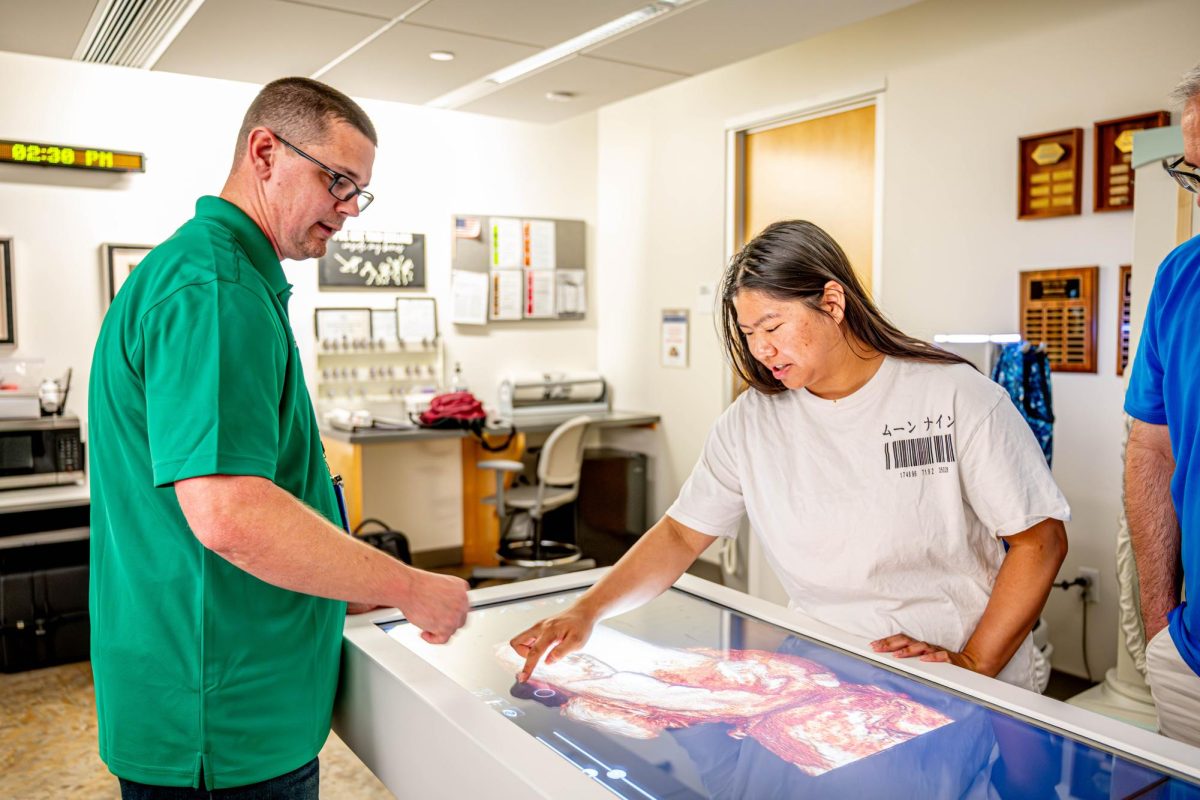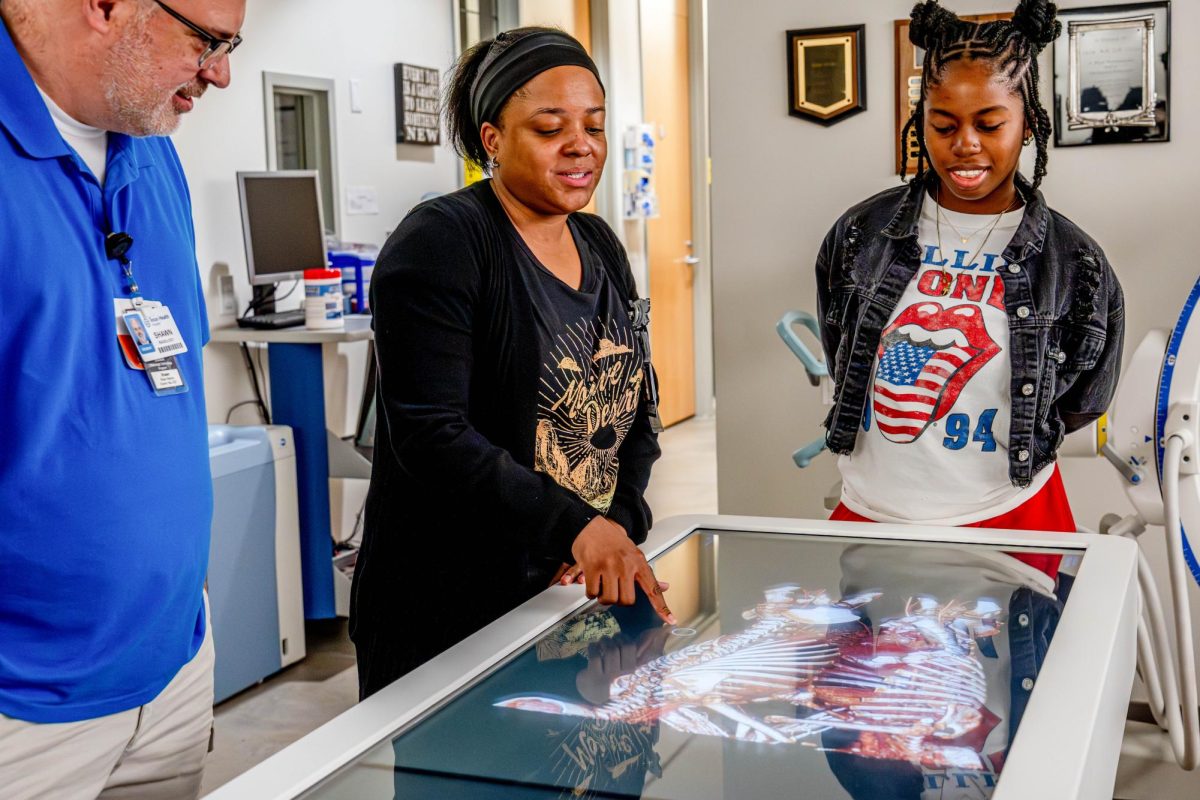







In the center of a dimly lit room on TR East Campus, four students watched as Brian Spence removed a padded cover from a white table to reveal a screen, roughly 7 feet in length.
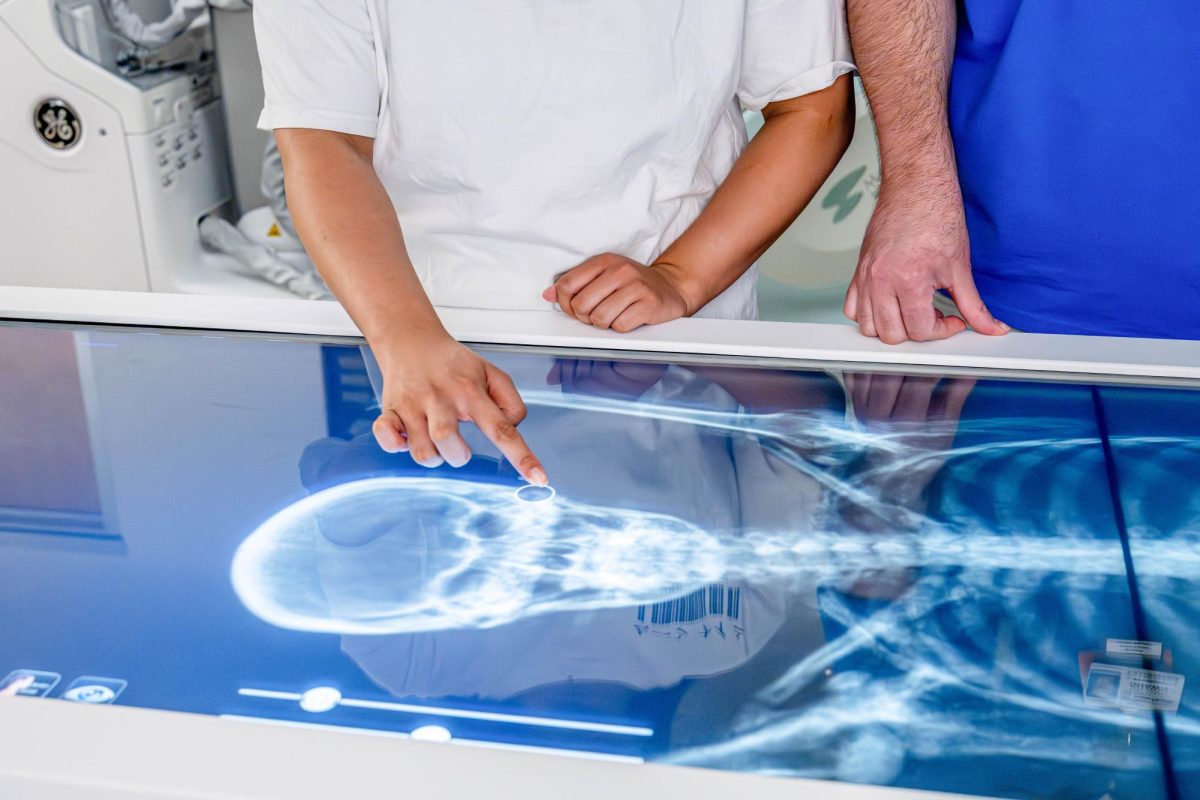
A low hum whirred from within as it quickly came to life, revealing a life-sized X-ray of the human skeleton which glowed on the tempered glass.
The Anatomage Table is a virtual dissection and 3D visualization system of digitized cadavers that Spence has integrated into the healthcare program since 2013.
“When we got our first table, I was probably the most excited about it,” he said. “I just instantly could think of how we could use it in our program.”
His use of the technology helped him win the Outstanding Teacher Award in the undergraduate category at the Anatomage Conference in Santa Clara, California on July 24. As director of the radiologic technology program, he implements strategies to encourage engagement with learning and instill competence and confidence in his students preparing for clinical settings.
After receiving the Anatomage award, Spence said the Anatomage Table has transformed his teaching because there’s no other learning tool as hands-on and effective in teaching students the challenging concepts of anatomy, pathology and X-ray patient positioning.
“Mastering these concepts is critical for students to successfully complete the program, pass the national certification exam and gain employment as entry-level radiologic technologists,” he said.
Spence and Amy Russell, the program’s clinical coordinator, recently published a study they conducted in 2024 on the correlation between student use of the Anatomage Table and their success in the course.
The instructors held table review sessions where a handful of students would review upcoming lab test information related to labeling anatomy and evaluating images. They conducted a survey for students to examine their own performance in the course, and the two compared these students’ scores to the previous fall scores that didn’t hold these review sessions.
Spence and Russell found that the students who used the table had significantly higher scores. The majority of the students surveyed said that the table improved their knowledge of anatomy and their ability to read radiologic images. The table activities also improved their recall during lab exams.
“It really seems to engage the students as they’re manipulating the cadavers around,” Spence said. “They’re very satisfied with their experience in using it.”
Radiologic technology student Shawn Malone demonstrated how manipulating the brightness and contrast on the X-ray image can show outlines of the heart, liver or kidney but slide the scale in the opposite direction and just the bones of the skeleton remain.
Radiologic student Aydia Cobb said practicing at the table helps her identify which bones are where and how they would present on a scan based on patient positioning.
“This is what our X-ray vision — which we develop in the program — this is what it looks like,” Cobb said.
Malone said that different scans require patients to be in different positions. He dragged a finger across the glass as he rotated the skeleton to its side, back, other side and front again and zoomed in on the bones that demonstrated how structures change or shift based on position.
“Using this to visualize and take what’s on the paper and bring it to real life is really helpful,” student Jade Montague said.
As they near graduation, students in the program must research a pathology and present their knowledge on the condition or disease using the table to demonstrate.
At the table, students can choose from a menu full of pathologies spanning from very common to very rare. Montague chose to present on conjoined twins for her project.
Spence pulled up the scan for her to demonstrate, but it filled less than half of the table space, so student Jenna Nguyen slid the scan from the far side of the table over to Montague like it was shuffleboard.
To prepare for their pathology presentations and study for labs, students can manipulate the table, draw or trace and ask questions while Spence operates as a guide.
“While they’re doing that, they’re really, in a way, teaching each other, which is very powerful,” he said.