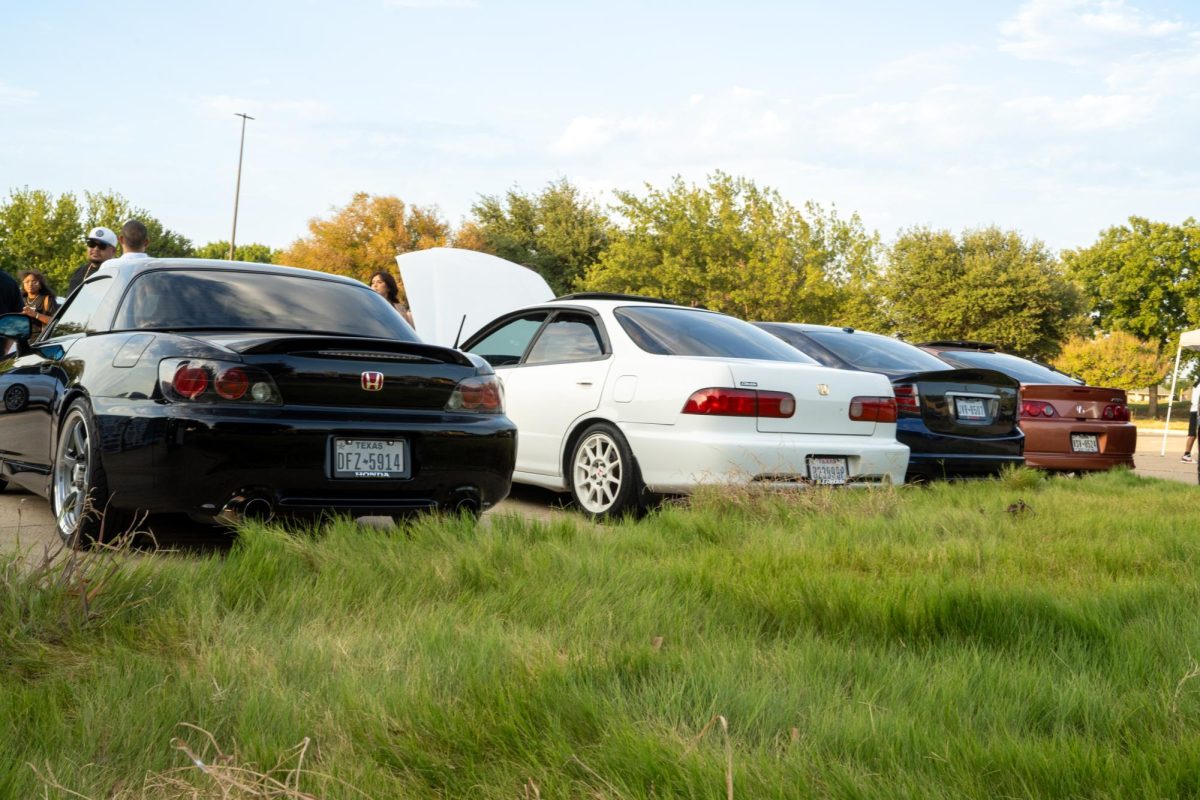



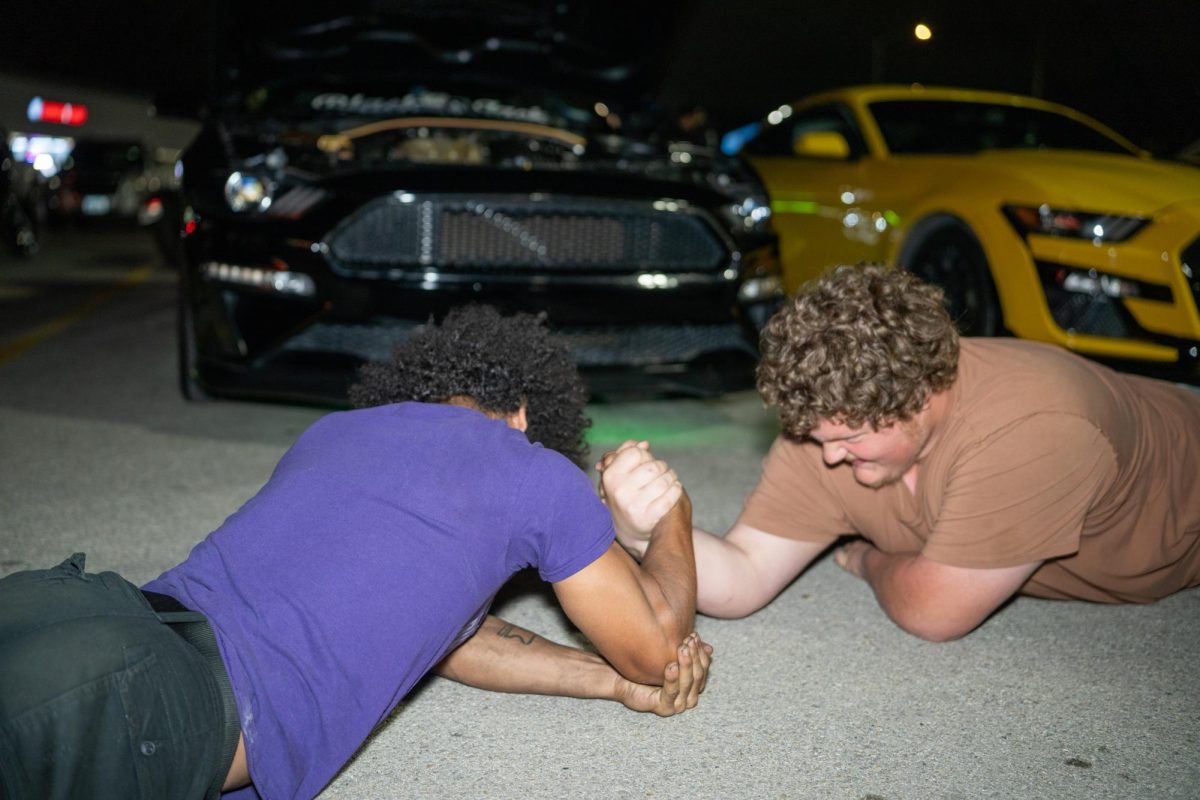
The night starts in an otherwise quiet AutoZone parking lot in south Fort Worth filled with cars of all styles and makes lined up from a 1990s BMW 3 Series to a Ford Mustang gilded in a gold Red Bull livery and green underglow.
This is one of the many weekly meets hosted by Lake Worth Car Meets. People show off their cars, but they also play music, banter and build relationships.
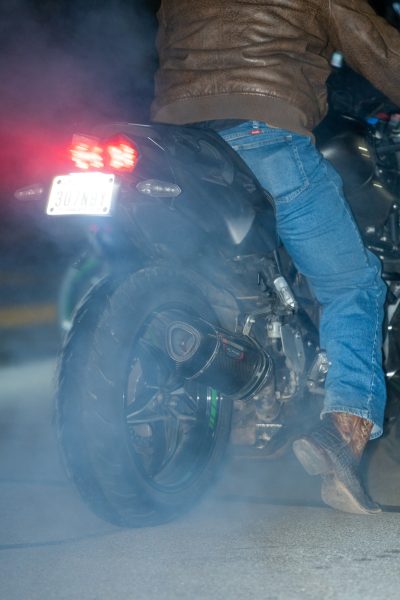
Hours pass with the smell of gasoline and rubber in the air before the roar of inline four Yamahas and V-twin Harleys flood the parking lot and surrounding blocks. They prepare to leave for the Buc-ee’s off Interstate 35W, some cars burning out of the lot leaving black trails behind. As the night dies down further, others discuss leaving for parties or street racing down the George Bush Turnpike.
Despite the palpable grime of these meets, the car scene attracts some of the most diverse cultures in the Metroplex from Southlake residents in Porsches to Amazon workers in retired cop cars.
NE student and biker Nicholas Santiago can be spotted on his Pearl Citron Yellow 1997 Honda CBR 900rr sporting a loud livery from the factory and a louder exhaust from the aftermarket, which Santiago believes shows a piece of himself.
“That kind of ties into the whole bike community and car community. Everyone has their bike or their car [which] is a reflection of their personal preferences,” Santiago said. “You can do whatever you want to, and that’s one of the most enjoyable parts of the scene.”
He expressed that a deeper aspect of the personal side of car culture is the comraderie – the sense of belonging to a group that picks each other up when they’re down, for many this belonging occurs faster and easier in this environment.
“It’s a great culture, I wouldn’t trade it for anything,” Santiago said. “You can meet someone yesterday, and your bike breaks down today, and they’ll be there in an hour. They’ll stay till 2 a.m. helping you fix it.”
Despite this, Santiago stated a belief that the car and bike community is moving in a negative direction driven by social media. He said this not only creates a more surface-level appreciation of materialism but also adds additional risk to what can already be a dangerous hobby.
“You want the speed, you want the adrenaline rush … especially nowadays with the social media clout,” Santiago said. “Everyone wants to go 200 miles an hour between cars, to get a couple of views on Instagram.”
He contrasts this with the way riders who have more experience operate, not just experience in years but also in knowing the area.
“They know where the potholes are,” Santiago said. “They know where the turns are, where there might be a cop, where there might not be a cop, where it’s safe to speed, where it’s not safe to speed.” With this counter-cultural grit and rebellion similar to other parallel and connected movements like hip hop and punk, its advocates say car culture creates an avenue for personal expression with these machines as their canvases.
A black cherry ornament shined through the grayscale gloss sea of the NE parking lot in the form of a three-door 1999 Honda Civic hatch sat on bronze wheels driven by NE EMT student Isaiah Raho with plans to further build it into a low-rider-inspired show build on air suspension.
“Every new car person that I meet that’s into whatever it is that they specialize in I could see that they have that gift of expressing themselves through their car,” Raho said.
He looks at the car community as a place for people to fill niches created by their own nurturing. For Raho, he expresses his Hispanic heritage through the style of his build.
“I’ll express myself through more lowend cars. But through the Hispanic community, we can go with trucks, GMCs, and just with that, there are different ways, different sets of cultures that like to express themselves,” Raho said. “I love lowriders. I’m not gonna lie, lowriders are so awesome.”
Beyond a personal connection to cars, Raho also praises another side of the car world through charity meets.
“I feel like our community does give out a lot. They do a lot of charity stuff towards stuff like that down in Fort Worth, I know they do truck shows,” Raho said. “People just get to go out, and if I’m not mistaken, I do think they give out food and stuff like that, but all that goes towards charity.”