








For Quiosha Jefferson, it only took a couple of missed paychecks for her life to change.
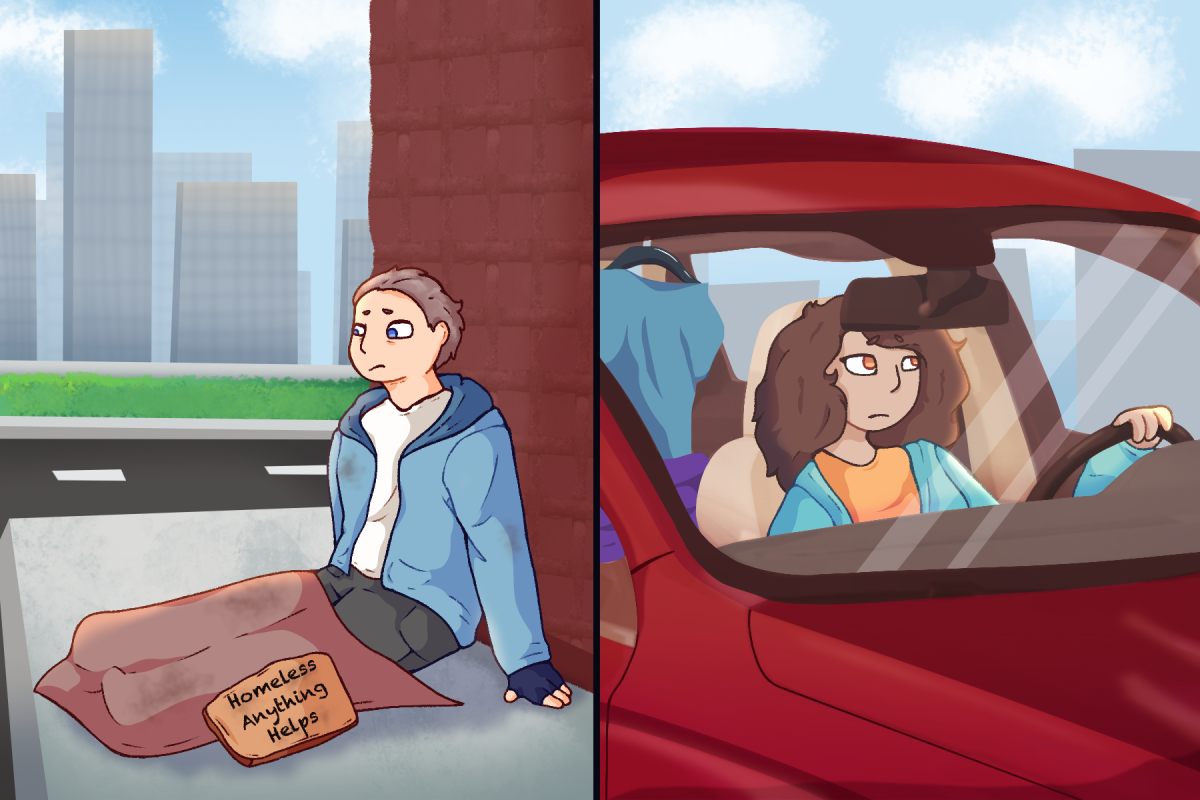
The South student found herself in a tough situation. She was living in her car after losing her apartment.
“It was stressful, trying to get everything out of my apartment, trying to make sure to get a gym membership and all that so I can shower,” she said. “It was just a lot that I was trying to do.”
With the help of the South Campus CARE team, an emergency student support service, Jefferson moved out of her car and into a room at Union Gospel Missions, a local shelter for homeless people.
While it does provide a roof over her head and steady meals, Jefferson has a hard time blocking out the shelter noise to focus on her homework.
“The earliest they tell us we’re allowed to leave is like 5 a.m.,” she said. “I leave because I’m not used to having all these other people in my space, so I just leave and stay busy until it’s time for me to go back.”
The Texas Homeless Network, an organization which addresses and collects data on the rates of homelessness in Texas, reported more than 53,000 Texans are currently struggling with homelessness.
Professor Tina Jenkins manages Visions Unlimited, a 20-year-old South program focused on empowering students struggling with homelessness and helping them navigate the unique challenges they face.
“The thought process behind that was if they can come and obtain a degree or certificate, then hopefully that would lead to success
not only in academia, but in their personal lives as far as housing stability also job opportunities,” she said. “You can imagine if a person is living in a shelter, their confidence, of course, may diminish. The kind of loss of identity is a common thing that we see, and so this program really has been, I would say, a key instrument in helping to rebuild those things.”
Typically, the program onboards around 15 students per semester who are referred by their shelter of residency. However, the program has been placed on temporary pause for budget evaluation, she said.
“There’s no program anywhere else that does what this program does, as far as in higher-ed institutions,” Jenkins said. “We need to be able to pay our faculty and staff that are involved with this program, and program-wise from a structural point of view, the things that we’ve been doing need financial support.”
Visions Unlimited currently has the capacity to continue supporting the students enrolled this semester but cannot take on any more than that. The future of the program is up in the air.
“Homelessness isn’t about having a roof over your head,” former TCC employee Jesse Herrera said. “It’s about losing your support system.”
Herrera is the founder and executive director of the Real Stories program for COACT, a North Texas nonprofit focused on addressing social struggles through design. Real Stories is a traveling art exhibit that shares the testimonies of homeless college students in Texas.
He said people often don’t consider that college students could be homeless. Homelessness, he said, doesn’t always look the same.
“For some students, this might mean that they’re couch surfing, or sleeping in their car — using the facilities at the campus to be able to get through day to day,” he said. “For some, it might mean actually living in a shelter and trying to balance program requirements at the shelter and the priorities that come with education.”
Real Stories has displayed exhibits at TCC in the past, but Herrera said that with the crackdown of Texas Senate Bill 17 that outlawed diversity, equity and inclusion initiatives in higher education, it’s been difficult to outreach to students like before.
“We actually do have installations that we’re planning for Tarrant County,” he said. “Now, the last one we did for the resource fair, I mean that was a reintroduction of Real Stories at Tarrant County College, since we haven’t been out there in a little over three years. So we’re definitely hoping that this will open up some additional doors and maybe some ways that we can partner with the institution again.”
Herrera hopes that through the art installation, not only will homeless students be empowered, but the public will be better informed about housing insecurity. He said the biggest issue he’s seeing that affects housing among students is the rising cost of living.
“Students don’t always have a traditional two-parent household and because that, a lot of them are juggling day to day how to make enough money, how to make enough time to complete my studies and to make sure I got everything taken care of,” Herrera said.
“How people typically engage those experiencing homelessness, there’s often this distance or this awkwardness that you create. You try to avoid them, and all you see is what you see. It’s not until you actually build those spaces where you can come together that you learn about what this person is going through and also what their potential is.”